
Fashion Communication - MA
Currently viewing course to start in 2027/28 Entry.
Our MA in Fashion Communication explores fashion communication as a critical, creative and research-led field within the contemporary fashion and beauty industries....
- Level Postgraduate Taught
- Study mode Full Time
- Award MA
- Start date September 2027
- Fees View course fees
- Subject
- Location City Centre
This course is:
Available with Professional Placement option
Open to International Students
Overview
Our MA in Fashion Communication explores fashion communication as a critical, creative and research-led field within the contemporary fashion and beauty industries.
On this course you will examine how these industries communicate ideas, engage audiences, and shape values, identities and cultural meaning through visual culture, storytelling, media and as a professional practice in both local and global contexts.
This course is suitable for both recent graduates and qualified mature students who aim to work in the fashion and beauty industries. We will support you to develop the knowledge, skills and experience to prepare you for employment and freelance practice within marketing, styling, art direction, social media, PR, fashion journalism, trend forecasting and associated careers in fashion and beauty communication.
You will choose one of two areas to specialise in, and you will be in your specialism from the start of the course.


MA Fashion Communication: Styling and Art Direction
- Develop advanced skills in visual communication, storytelling and image-making through experimentation, conceptual development, studio practice and contextual research.
- Explore how fashion images are constructed, how styling and art direction communicate meaning, and how visual practice responds to cultural and critical issues.
MA Fashion Communication: Fashion and Beauty Marketing
- Develop advanced understanding of brand communication, consumer insight and cultural change through strategic thinking, industry engagement and live briefs.
- Explore how brands respond to changing contexts and critical issues, while strengthening storytelling, pitching and problem-solving skills.
While modules will be shared by students aligned to both pathways, you will have specialism-specific seminars which will allow you to focus your research and outputs on your chosen area.
In both specialisms you will learn to harness the power of compelling storytelling, visual aesthetics, and consumer research, to effectively engage audiences and drive impactful brand narratives. Adopting an international approach, you will be encouraged to reflect on your own heritage, culture, and identity to promote cross-cultural dialogue and understanding, helping you to become a professional who can navigate the global landscape of the fashion and beauty industries.
You will be encouraged to interrogate ideas, assumptions, practices and contexts, and to consider how fashion communication and storytelling can contribute to more inclusive, informed and future-focused forms of practice. You will build your technical and digital skills by applying creative tools to produce digital communication, short-form moving image, platform-specific content and print media.
The course combines critical, creative and professional approaches to fashion communication across cultural, industry and practice-based contexts. You will develop postgraduate research skills, including critical reading, contextual analysis and methodological planning, and apply these through specialist study, live industry projects, the Major Project (including proposal).
You will need to work confidently with information that is complex, ambiguous and incomplete, and use your independent judgement in response to creative, strategic and research-led projects. You are also encouraged to take responsibility for your own learning by planning effectively, prioritising tasks and solving problems to meet all briefs and deadlines, and by becoming an autonomous learner.
What's covered in this course?
- Industry knowledge: You will develop advanced understanding of fashion and beauty communication, including visual culture, storytelling, audience engagement, industry practice, and the cultural, social, ethical and environmental issues shaping contemporary and future-facing practice.
- Creative and technical development: You will build technical and digital skills through workshops, studio practice and creative development, applying a range of creative tools across digital communication, short-form moving image, platform-specific content and print media.
- Research and ideation: You will develop postgraduate research, ideation and critical enquiry skills through critical reading, contextual analysis, methodological planning, experimentation and concept development.
- Staff with industry experience and Industry engagement: The course is taught by staff with professional experience across fashion communication, supported by guest speakers and industry engagement that connect learning to contemporary practice.
- Career development: The course supports the development of professional identity, employability and industry-facing practice through live briefs, portfolio development, CV development and online presence.
- Experiential Learning and Authentic Assessment: you will learn by doing and the assessments will mirror the work you might create in industry. Take advantage of organised trips to exhibitions and inspirational stores and cities.
Assessment may include
- research and development workbooks
- visually enriched proposals, pitch decks or zines
- resolved visual, creative and/or strategic outcomes
- speculative future scenarios and creative responses
- editorial [print/digital media]
- marketing / brand campaign materials [print/digital media]
- verbal presentations and professional pitches
- portfolios, CVs
- substantial creative projects with supporting critical material
- a dissertation
Professional Placement option
This course offers an optional professional placement. This allows you to spend 20 weeks with an employer, following completion of your taught modules, and is a great way to enhance your employability.
The experience you gain through your placement will allow you to evidence your professional skills, attitudes and behaviours at the point of entry to the postgraduate job market.
If you choose the placement option, you will be responsible for finding and securing a suitable placement to complement your chosen area of study. You will be able to draw on the University’s extensive network of local, regional and national employers, and the support of our Careers teams. If you do not secure a suitable placement, you will automatically be transferred back to the standard, non-placement version of the course.
Please note: Placements will only be confirmed following a competitive, employer-led selection process. As such, the University will not be able to guarantee placements for students who have registered for the professional placement option.
I wanted to take a moment to thank you all for your incredible guidance and support throughout my MA. The experience has been truly wonderful. I’ve already started to see how much I learned over the past year in my current internship. Finally, I understand emphasis you put on narrative and visuals. I ’m currently working as a marketing intern for Hairdressers Journal and Modern Barber, it's so fascinating to work for a magazine I referenced throughout my MA.
Preeti Bhandari – MA Fashion Communication (Cosmetics Branding and Marketing)
Why Choose Us?
- Links to industry and the option to complete live briefs or work experience. Previous collaborations have included Another Magazine, Kiehls, Harvey Nichols and Selfridges
- Supportive staff with years of industry experience at Next, Elle Decoration and Fenwick
- Access to facilities such as photography and film studios and 3D printing
- Sessions to enable you to use industry standard Adobe software such as InDesign and Photoshop
- Collaborate with other fashion students and our wider postgraduate community to create an exhibition of your work
Open Day
Join us for an Open Day where you'll be able to learn about this course in detail, chat to students, explore our campus and tour accommodation.
Next Event: 21 November 2026
Course in Depth
Modules
In order to complete this course you must successfully complete all the following CORE modules (totalling 180 credits):
In this module you will examine the powerful role of visual communication in shaping narratives within fashion and beauty media, exploring fashion communication as a creative, critical and research-informed area of practice. You will develop a deeper understanding of how fashion communicates ideas, shapes identities and builds cultural relevance across local and global contexts, and how meaning can be created.
In this module, you will explore future possibilities for fashion and beauty through trend forecasting as a critical, creative and responsible area of practice. You will examine how trend forecasting can be used to identify emerging change and to imagine and construct alternative, more sustainable futures for fashion and beauty communication. In doing so, you will develop a deeper understanding of the cultural, social, environmental and industry factors shaping future practice.
In this module, you will be immersed in real-world communication practice within the fashion and beauty sectors by responding to a live industry brief. The module offers an opportunity to work in a responsive, imaginative and professional manner within your specialism, while developing the advanced creative, strategic and employability skills required for contemporary industry practice.
In this module, you will develop the idea that will become your Major Project. You will turn an initial interest into a focused, ambitious and achievable proposal, with clear aims, objectives, scope and relevance to your chosen fashion communication specialism. You will explore the issues, topics and theories that shape creative approaches to fashion and beauty communication practices, helping you understand where your project sits and why it matters.
Building on your approved proposal, this module gives you the opportunity to realise a substantial self-directed Major Project within your chosen fashion communication specialism. You will extend your research and critically evaluate the theoretical, historical and industry perspectives most relevant to your project, using them to inform sustained analysis, independent enquiry and the development of your work. Depending on the approved direction of your project, you will complete either a substantial creative project or a dissertation.
Professional Placement
In order to qualify for the awards with Professional Placement, you must successfully complete all of the Level 7 modules listed above as well as the following Level 7 module:
This module will provide you with the option to take part in a 20 week Professional Placement as part of the Masters programme.
This module will improve your employability skills by allowing you to work in an area of the jewellery trade that is appropriate to your aspirations and aims, and your future career. This can include manufacturing, purchasing, museum curation, or research establishments. During the placement you will collect evidence of your continuing pathway through the jewellery sector, and your continuing development in terms of employability, and professional workplace-based skills.
Download course specification
Download nowDiscover the Jewellery, Fashion and Textiles community, where our students talk about their journeys here at BCU which has inspired creativity and innovation.
Entry Requirements
Essential requirements
Applicants are normally expected to have a minimum of a 2:2 honours degree, or equivalent, in any subject.
We also welcome applications from individuals who may not satisfy the normal entry requirements, but have equivalent qualifications and experience. These will be considered on an individual basis.
Applications are only considered when accompanied by detailed personal statement. You should write between 500-800 words explaining why you have chosen to study Fashion Communication and what you hope to achieve through the course. You do not necessarily need to have a fashion or beauty background; what matters most is a passion for communication, storytelling and visual culture, together with an interest in how fashion and beauty brands engage audiences and shape contemporary culture.
Applying with international qualifications
See below for further information on applying as an international student.
If you have a qualification that is not listed, please contact us.
Fees & How to Apply
UK students
Annual and modular tuition fees shown are applicable to the first year of study. The University reserves the right to increase fees for subsequent years of study in line with increases in inflation (capped at 5%) or to reflect changes in Government funding policies or changes agreed by Parliament. View fees for continuing students.
Award: MA
Starting: Sep 2027
- Mode
- Duration
- Fees
- Full Time
- 1 year
- £10,710 in 2027/28
- Full Time
- 18 months (including Professional Placement)
- £11,780 in 2027/28
International students
Annual and modular tuition fees shown are applicable to the first year of study. The University reserves the right to increase fees for subsequent years of study in line with increases in inflation (capped at 5%) or to reflect changes in Government funding policies or changes agreed by Parliament. View fees for continuing students.
Award: MA
Starting: Sep 2027
- Mode
- Duration
- Fees
- Full Time
- 1 year
- £19,630 in 2027/28
- Full Time
- 18 months (including Professional Placement)
- £21,595 in 2027/28


Personal statement
You’ll need to submit a personal statement as part of your application for this course. This will need to highlight your passion for postgraduate study – and your chosen course – as well as your personal skills and experience, academic success, and any other factors that will support your application for further study.
If you are applying for a stand alone module, please include the title of the module you want to study in your Personal Statement.
Not sure what to include? We’re here to help – take a look at our top tips for writing personal statements and download our free postgraduate personal statement guide for further advice and examples from real students.
Employability
Employability and entrepreneurial skills are woven throughout the course. You'll attend sessions on CVs, industry roles, social media networking, and gaining work experience. Our partnership with STEAMhouse offers a mini start-up incubator program, providing support for business growth.
You are supported from the start to set up professional social media sites to network and showcase work and build your employability skills.
The course also develops a number of transferable skills such as written and visual communication, working independently and as part of a group, writing and responding to creative briefs and delivering presentations.
We offer workshops to bolster both academic and technical skills. Technical workshops cover industry-standard software like InDesign, Photoshop, and Final Cut Pro. Technicians are on hand to help you build your technical proficiency.
Placements
You can complete a 20 week placement as part of the MA with Professional Placement.
Our students have recently completed placements at Selfridges, Hair Dressers Journal and Modern Barber and Cassie Lomas Make Up Academy.
Facilities & Staff
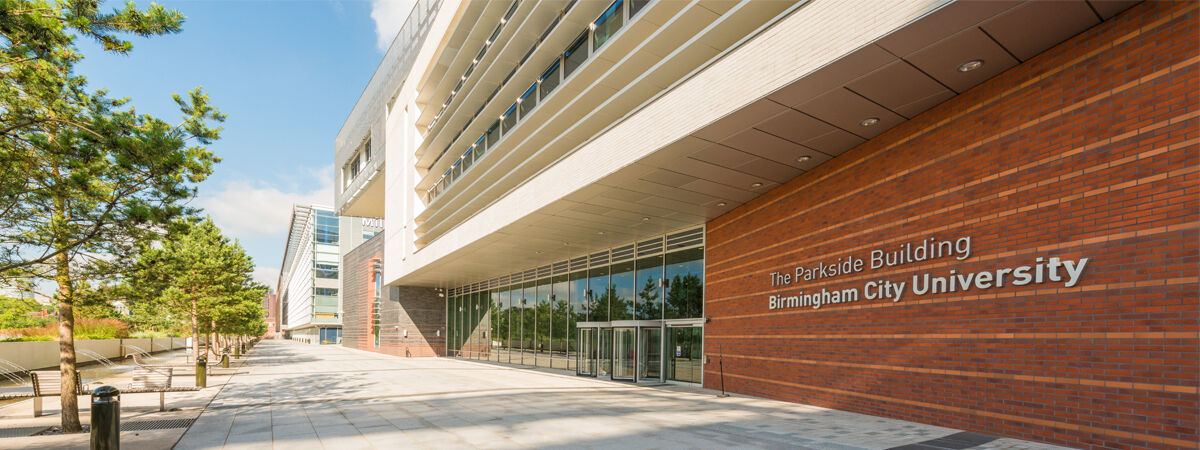
Our Facilities
Fashion and Textiles courses are based at our Parkside Building, which is part of our multi-million pound City Centre Campus development in the heart of Birmingham's Eastside development.


You will be based alongside other creative students and you will have access to photography studios, film studios, fashion workshops, print rooms and 3D printing.
Our staff
Jasmin Loyal
Lecturer in MA Fashion Media
Jasmin has over 15 years experience as a creative working in the menswear sector. Her experience ranges from fashion buying to product and brand development/innovation, and working for international retail brands such as the UK's largest retailer, Next.
More about JasminVictoria Coutts
Course Leader - MA Fashion Communication
Victoria's skills include a diverse range of creative direction, trend forecasting, styling, product design and development, buying and consultancy experience within the fashion, decorative products, baby, kids, and home furnishing sectors. Lifestyle and Interiors Stylist for print media and commercial clients.
More about Victoria