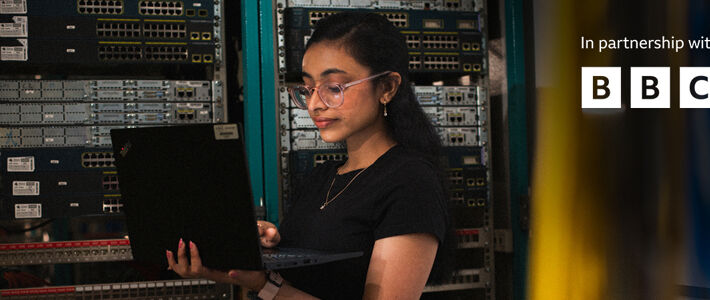
Broadcast Engineering - BSc (Hons) *
Currently viewing course to start in 2027/28 Entry.
Developed and delivered in partnership with the BBC, our BSc (Hons) Broadcast Engineering course combines engineering, computing and media technologies to design, build and maintain the systems that power television, radio and online media services....
- Level Undergraduate
- Study mode Full Time
- Award BSc (Hons)
- Start date September 2027
- Fees View course fees
- Subjects
- Location City Centre
This course is:
Available with Professional Placement year
Open to International Students
Overview
Developed and delivered in partnership with the BBC, our BSc (Hons) Broadcast Engineering course combines engineering, computing and media technologies to design, build and maintain the systems that power television, radio and online media services.
Through a blend of theoretical study and industry-focused practical learning, you will acquire the technical and problem-solving skills needed to work in modern broadcast and media environments.
You will explore the technologies behind television, radio, online streaming services and other digital media platforms, developing knowledge across audio and video, computing, IP networks, electrical and electronic principles, and communication technologies. This combination provides a broad foundation for a career in broadcast and media systems engineering.
You will develop an understanding of the engineering principles that underpin modern broadcast systems and how they are applied in professional broadcast environments. You'll also benefit from opportunities to engage with industry-standard production environments and collaborate across engineering and creative disciplines, reflecting the multidisciplinary nature of modern broadcasting.
Teaching will take place at BCU's City Centre Campus and, subject to final planning approval, at the BBC's new Midlands headquarters at the Tea Factory, located just a short walk away in Birmingham's creative quarter.
What's covered in this course?
The course covers a wide range of relevant technologies, systems and applications, including signal processing, media compression, production and distribution system architectures, broadcast and media workflows, networking and communication technologies, and the computing and electronic systems that underpin modern broadcast services. You will explore how these technologies work together across the broadcast workflow, from content capture and production through to processing, management, and distribution.
The course is structured around five key technical themes: audio and video technologies, computing, communications, IP networking, and electrical and electronic engineering. You'll develop an understanding of how these disciplines work together within modern broadcast environments, while gaining practical experience of industry workflows, system design, testing and troubleshooting. Through industry-focused projects and collaborative activities, you'll explore how engineers support content creation, production, transmission and distribution across today's broadcast and media industries.
You will have opportunities to apply your engineering knowledge through practical projects and industry-focused activities, developing your ability to work with broadcast technologies and interconnected technical systems. Through laboratory work and industry-focused projects, you will gain experience in system integration, testing, troubleshooting and technical problem-solving, building confidence in applying engineering principles within professional environments.
Professional Placement year
This course offers an optional professional placement year. This allows you to spend a whole year with an employer, following successful completion of your second year, and is a great way to find out more about your chosen career. Some students even return to the same employers after completing their studies.
If you choose to pursue a placement year, you will need to find a suitable placement to complement your chosen area of study. You will be able to draw on the University’s extensive network of local, regional, and national employers, and the support of our Careers teams. If you are able to secure a placement, you can request to be transferred to the placement version of the course.
Placement opportunities may be available with a wide range of organisations across the media, creative and communications sectors. As placements are secured through a competitive recruitment process, opportunities with specific employers or organisations cannot be guaranteed.
Please note that fees are payable during your placement year, equivalent to 20% of the total full-time course fee for that year.
Why Choose Us?
- Developed and delivered in partnership with the BBC. You'll learn from BBC staff, experienced academics, technical specialists and industry professionals, benefiting from contemporary industry insight alongside academic expertise.
- Gain technical computing and engineering skills needed by the broadcast industry. You'll work with specialist engineering and computing resources, including test and measurement equipment, networking and communications technologies, embedded computing platforms and server-based environments used in modern media systems.
- Study the technologies behind modern broadcasting. Explore the systems that power television, radio, streaming services and digital media, developing expertise in audio and video technologies, communications, IP networking, computing, and electrical and electronic engineering principles.
- Apply your learning through practical projects and real-world challenges. Develop hands-on experience in system integration, testing, troubleshooting and technical problem-solving, building the confidence to work with complex broadcast and media technologies.
- Prepare for careers across the broadcast and media technology sector. You’ll develop the technical expertise, problem-solving ability and professional skills needed to work across the technologies and infrastructures that support content creation, production, transmission and distribution.
- Collaborate across engineering and creative disciplines. Through a STEAM-focused approach, you'll work alongside media students and apply engineering solutions within professional production environments, gaining experience of how technical and creative teams work together.
Open Day
Join us for our next Open Day where you'll be able to learn about this course in detail, chat to students, explore our campus and tour accommodation.
Next Open Day: 21 November
Course in Depth
First Year
In order to complete this course, you must successfully complete all the following CORE modules (totalling 120 credits):
Applied Maths for Broadcast Engineering
Computer Systems
AV Acquisition and Broadcast Technologies
Electrical and Electronic Principles
Second Year
In order to complete this course, you must successfully complete all the following CORE modules (totalling 120 credits):
Computer Programming
Network Protocols and Switching
AV Processing
Broadcast Workflow and Studio Production
Professional Placement Year (optional)
In order to qualify for the Professional Placement Year, you must successfully complete the following Level 5 module:
This module is designed to provide you with the opportunity to undertake a credit bearing, 40- week Professional Placement as an integral part of your Undergraduate Degree. The purpose of the Professional Placement is to improve your employability skills which will, through the placement experience, allow you to evidence your professional skills, attitudes and behaviours at the point of entry to the postgraduate job market. Furthermore, by completing the Professional Placement, you will be able to develop and enhance your understanding of the professional work environment, relevant to your chosen field of study, and reflect critically on your own professional skills development within the workplace.
Final Year
In order to complete this course, you must successfully complete all the following CORE modules (totalling 120 credits):
Broadcast Communications
Network Services and Routing
Professional Practice
Major Project
Download course specification
Download nowHow you learn
As broadcasting continues to evolve through advances in networking, computing and digital media technologies, there is a growing need for engineers who can understand and work across interconnected technical systems.
This course provides a broad foundation in broadcast engineering, equipping you with the technical knowledge and problem-solving skills needed to contribute to the design, development and operation of next-generation broadcast and digital media systems.
Our teaching approach combines theory-based learning, practical hands-on workshops, training labs and studio-based exercises, to deliver both technical skills and applied learning. Modules are structured to emphasise active engagement with industry standard tools and collaborative project work, mirroring the cross-disciplinary nature of the industry. You will benefit from access to state-of-the-art facilities, including specialised labs, Parkside Studios and high-performance hardware/software, to gain hands-on experience in areas such as, audio and video systems, distribution networks, AI assisted productions, and broadcast workflows.
BCU’s academic specialists in Computing and Media, combined with industry professionals - including BBC staff - will bring their diverse expertise to the course, encouraging you to approach problems from multiple perspectives while building a solid foundation in broadcast engineering.
Entry Requirements
These entry requirements apply for entry in 2027/28.
All required qualifications/grades must have been achieved and evidenced at the earliest opportunity after accepting an offer to help confirm admission and allow for on-time enrolment. This can also include other requirements, like a fee status form and relevant documents. Applicants can track their application and outstanding information requests through their BCU mySRS account.
Essential requirements
112-72 UCAS Tariff points
The offer we make you takes into account your individual circumstances, predicted grades, achieved qualifications and potential to succeed at university.
If you have a qualification that is not listed, please contact us.
Fees & How to Apply
UK students
Annual and modular tuition fees shown are applicable to the first year of study. The University reserves the right to increase fees for subsequent years of study in line with increases in inflation (capped at 5%) or to reflect changes in Government funding policies or changes agreed by Parliament. View fees for continuing students.
Award: BSc (Hons)
Starting: Sep 2027
- Mode
- Duration
- Fees
- Full Time
- 3 years
- £10,050 in 2027/28
- Apply via UCAS
International students
Annual and modular tuition fees shown are applicable to the first year of study. The University reserves the right to increase fees for subsequent years of study in line with increases in inflation (capped at 5%) or to reflect changes in Government funding policies or changes agreed by Parliament. View fees for continuing students.
Award: BSc (Hons)
Starting: Sep 2027
- Mode
- Duration
- Fees
- Full Time
- 3 years
-
TBC
Applications for advanced entry
Please note that this course is not available for advanced entry, and you will need to join the course in year 1.
Guidance for UK students
UK students applying for most undergraduate degree courses in the UK will need to apply through UCAS.
The Universities and Colleges Admissions Service (UCAS) is a UK organisation responsible for managing applications to university and college.
Applying through UCAS
- Register with UCAS
- Login to UCAS and complete your details
- Select your course and write a personal statement
- Get a reference
- Pay your application fee and submit your application
Guidance for International students
There are three ways to apply:
1) Direct to the University
You will need to complete our International Application Form and Equal Opportunities Form, and submit them together with scan copies of your original academic transcripts and certificates.
2) Through a country representative
Our in-country representatives can help you make your application and apply for a visa. They can also offer advice on travel, living in the UK and studying abroad.
3) Through UCAS
If you are applying for an undergraduate degree or a Higher National Diploma (HND), you can apply through the UK’s Universities and Colleges Admissions Service (UCAS).
You can request a printed form from your school or nearest British Council office. You will be charged for applying through UCAS. Birmingham City University’s UCAS code is B25 BCITY.
Personal statement
The personal statement gives you a crucial opportunity to say why you’re applying and why the institution should accept you.
Here are the three areas you’ll need to address:
- Why do you want to study this course or subject?
Here’s where you explain what makes this course exciting to you. Think about your motivations for studying the course and your future plans. If you’re planning to take a year out, don't forget to give your reasons.
- How have your qualifications and studies helped you to prepare for this course or subject?
This is your chance to show what you’ve learned at school or college. You should include the skills and knowledge you’ve gained from education or training and how this will help you succeed in your chosen course.
- What else have you done to prepare outside of education, and why are these experiences useful?
Not everything you’ve learned comes from the classroom. Life experience counts too! You might want to talk about work experience, employment, or volunteering and how they’ve helped you develop the skills needed for your chosen course or future career.
Worried about Personal Statements?
If you've got no idea where to start or just want to check you're on the right track, we’ve got expert advice and real examples from our students to help you nail your personal statement. You can even download our ultimate personal statement guide for free.
Employability
Enhancing employability skills
The broad technical knowledge gained throughout the course prepares graduates for a range of roles across the broadcast and media technology sector.
You will develop knowledge and skills relevant to different stages of the broadcast and media workflow, including content capture, production, processing, transmission and distribution. This broad understanding will prepare you to work across a range of roles within the broadcast and wider media industries.
Graduate jobs
Career opportunities include Broadcast Systems Engineers, Transmission Engineers, Media, Network Architects and other technical roles across the sector.
Links to industry
Build industry connections through guest speakers, professional masterclasses and live production projects.
Facilities & Staff
Through Birmingham City University's partnership with the BBC, you will benefit from access to specialist facilities across both our City Centre Campus and, subject to final planning approval, the BBC Tea Factory, just a short walk from campus.
Subject to final planning approval, the Tea Factory facilities are expected to include radio and television production spaces, audio facilities, and specialist broadcast technology environments.
Alongside this, you'll learn in BCU's purpose-built Media Centre at Parkside, home to industry-standard television, radio and digital production facilities. Three of the TV studios can facilitate live multi-camera production, and all studios (TV and radio) can be interconnected. It’s taken 22km of wire to make that happen!
Together, these facilities provide a dynamic production environment where you can develop practical skills, collaborate on creative projects and gain experience using the technologies found across today's media industries.
Our staff
Dr Yonghao Wang
Associate Professor
Dr. Yonghao (Leo) Wang is an esteemed academic with over 20 years of experience in the fields of Networking and Cybersecurity, with a special focus on blockchain technology and decentralised communication systems.
More about Yonghao