Art and Design Foundation Year - BA (Hons)
Currently viewing course to start in 2026/27 Entry. Switch to 2027/28 Entry
September 2026 — UCAS code W19F
This foundation year course has been specifically designed to support successful progression onto our suite of Art and Design degree courses, by allowing you to strengthen the creative skills you have developed during your previous studies....
Clearing
Got your results?
If you have your results, you can apply online now.
Waiting for results?
If you need more time, find out more about Clearing.
- Level Foundation
- Study mode Full Time
- Award BA (Hons)
- Start date September 2026
- Fees View course fees
- Subject
- Location Margaret Street
This course is:
Open to International Students
Overview
Clearing 2026
Clearing
80 points required
(or equivalent) is the minimum you wil need to be considered for this course in Clearing.
Use the UCAS tariff calculator to work out your points.
Got your results?
If you have your results, you can apply online now.
Waiting for results?
If you need more time, find out more about Clearing.
0:01
[Music]
0:04
so originally when I signed up for the
0:06
course I was looking to do graphic
0:08
design afterwards but throughout the
0:09
course we are encouraged to sort of
0:11
experiment and try different things and
0:14
do things that are out of our comfort
0:15
zone and because of that I actually then
0:18
decided to go into fine art cuz that was
0:20
a kind of for me that was a course that
0:22
I could continue doing that sort of
0:24
experimental nature that was really
0:26
great in the foundation
0:28
in the foundation i was hoping to do a
0:30
bit of digital graphic stuff so I
0:32
thought maybe I'll explore a bit of that
0:35
and see if I like it and so that was my
0:37
main thing I wanted to explore my
0:40
interest is in painting and print making
0:42
that's what I am focusing on and I like
0:46
painting because I feel like just a lot
0:48
of very gestural
0:49
work i really enjoyed studying the
0:52
different modules because they were very
0:54
different so we started off with doing a
0:56
very experimental and broad module and
0:58
then we kind of found our way into doing
1:01
a more self-directed project and during
1:04
foundation year we there were also um
1:07
life drawing workshops held which I
1:09
really enjoyed so I've explored some
1:12
physical media working in the woodwork
1:14
section mostly and also doing some
1:16
sculpting work such as this behind me
1:19
and working with all sorts of different
1:21
technicians from the audio visual to as
1:23
I say woodwork and metal work and even
1:24
some sculpting as well i found exciting
1:27
was when we had different artists come
1:29
in especially um from different areas we
1:32
had fine arts coming graphic designers
1:34
coming and talking about their work and
1:36
we had little workshops on each thing
1:38
and that was quite exciting to get
1:40
insight what would be more like focusing
1:42
on each area one of the bits that I
1:45
thought was really great with the
1:46
foundation course was I think as I
1:48
started going in I may have had like
1:49
sort of a preconceived idea of like what
1:51
an art degree would be like with
1:53
foundation art but what I discovered
1:56
from doing this was that it can be it's
2:00
so broad and it can be sort of anything
2:02
I want it to be and with the course and
2:05
the the broadness of it I could you can
2:07
incorporate all of those things and you
2:09
can incorporate your interests and make
2:13
something out of that which I found
2:14
really exciting so the highlight of the
2:18
year has to be part of the shows where
2:20
I'll be showing off stuff like this but
2:22
also night school where you get to tap
2:24
in to see what other students are doing
2:26
and what workshops they're providing cuz
2:28
sometimes you get to join in and see
2:30
what they're doing and maybe get some
2:31
inspiration for building something
2:32
yourself so I've got a couple of
2:35
highlights and one would be the staff
2:37
staff was really supportive and
2:38
obviously coming into university and
2:40
never having met anyone they were just
2:42
the most welcoming and they made quite a
2:45
huge experience to it the highlight of
2:47
the year was the big show at the end i
2:50
think it from the very start how it all
2:52
came to the end it was mind-blowing and
2:54
I believe it was one of my best works
2:56
that I've did i'm very happy with it and
2:58
that was yeah amazing for me it was a
3:00
really proud moment that I could look
3:02
back at this culmination of all the work
3:05
that I'd done in the year and think
3:06
about to where I was at the beginning of
3:08
the foundation year and everything I'd
3:10
learned and to kind of see it i felt
3:13
like I think it was the first moment I
3:15
went "Yeah I am an artist." Like it's
3:17
all the things that I'd learned
3:20
[Music]
This foundation year course has been specifically designed to support successful progression onto our suite of Art and Design degree courses, by allowing you to strengthen the creative skills you have developed during your previous studies.
It is ideal preparation for those who are returning to formal study or who are progressing from non-arts backgrounds, as well as those who have not met the entry requirements for degree-level study.
Working in a lively and energetic environment, you will be given the freedom to expand your knowledge of practical skills, creative exploration and conceptual development, underpinned by broad critical understanding, academic writing and emerging theoretical principles.
There will be a range of opportunities to work on collaborative projects aimed to develop employability partnerships and to identify the role of developing practitioner. BA teaching staff from across our art and design courses will work with you throughout the year to prepare you for progression.
After successful completion of the foundation year, you will have the opportunity to progress to one of the following courses:
What's covered in this course?
Throughout the year you will be challenged with projects that question your current creative experiences and explore a breadth of experimentation to broaden your technical and critical understanding.
You will be encouraged to analyse methods and materials appropriate for creative development and to question your position in relation to historical, contemporary and future world scenarios. Both practical and written research tasks will be supported by one to one tutorials and small discussion groups to help you constructively build academic and social confidence.
The two first semester modules will form the building blocks for future work and will explore core principles of creative practice focussing on, the development of technical confidence, research, study skills and productivity.
The two final semester modules will give you greater autonomy, encourage positive integration between research and practice, challenging decision making and technical competency. This semester is designed to empower you with independent learning skills appropriate for your future BA studies.
Why Choose Us?
- This Foundation Year offers you the chance to explore the breadth of Art and Design practice, to play and experiment within a unique and safe environment. This course is an opportunity to enhance existing skills and develop new techniques to provide you with flexibility to progress onto one of a number of undergraduate degree programmes.
- BCU prides itself on a long-established national and international reputation. It consists of a range of courses that celebrate innovation and allow you to realise your creative ambitions.
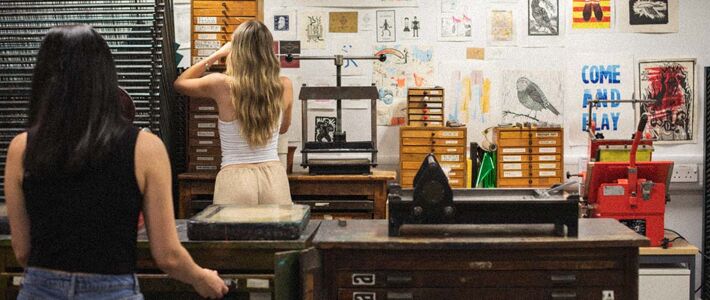
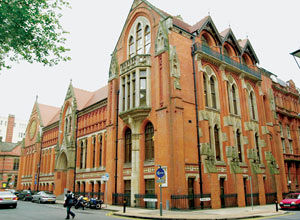
- You’ll be based within a community of artists at Birmingham School of Art, a Grade I-listed building that has been the inspiration for countless artists and practitioners of international reputation over the years. You will benefit from our state-of-the-art facilities for photography, casting, woodwork, metalwork, silk screen, etching, 3D printing, laser cutting, and printed and constructed textiles.
Clearing Open Days
Join us for an Open Day where you'll be able to learn about this course in detail, chat to students, explore our campus and tour accommodation.
Next Open Days: 15, 17 and 18 August
Course in Depth
Foundation Year
In order to complete this course, you must successfully complete all the following CORE modules (totalling 120 credits). On completion of your foundation year, you will progress onto one the following programmes:
- BA (Hons) Art and Design
- BA (Hons) Art and Design with Creative Technologies
- BA (Hons) Digital Animation
- BA (Hons) Entertainment Design
- BA (Hons) Fine Art
- BA (Hons) Graphic Design
- BA (Hons) Illustration
- BA (Hons) Photography
- BA (Hons) Product Design
Module information can be found on each course page.
This module explores the term ‘practice’ as the process of making, developing and recording information. We will work with you to explore the development of your work based on a set project, looking at a number of documentation strategies while experimenting with a broad range of materials. You will have the opportunity to meet artists and practitioners through local gallery visits and in studio activities and will learn to analyse your work through tutorials and small group discussions.
Artists work in a globally influenced, culturally diverse, and technologically advancing world.
Their art is a dynamic combination of materials, methods, concepts, and subjects that challenge traditional boundaries and defy easy definition.
This module will look at experimental approaches to drawing to identify radical new solutions from the perspective of the contemporary world we live in.
During this module you will meet lecturers, researchers and partners from across BCU, the city and further afield to open your understanding of practiced based creative work.
Through lectures and workshops, you will be introduced to the versatility of subject areas in terms of ideas, development, research, materials, techniques and contexts.
Figuring out how the universe works might be a bit more than we need to do each day but paying attention to the future of the world we live in, is worth exploring.
Creative realisation is not just about the practice of producing creative responses, it is about identifying the factors that generate creative thinking and facilitating the process.
For this module you will draw on your own creative strategies to facilitate the development of a project that is appropriate for progression onto your chosen BA (Hons) course.
Download course specification
Download nowWorking in a lively and energetic environment you will be given the freedom to expand your knowledge in conceptual development, practical skills and creative exploration underpinned by broad critical understanding and emerging theoretical principles.
You will work individually and collaboratively to develop a stimulating visual portfolio of work that evidences your enthusiasm for further study within a specific subject area.
BA teaching staff will work with you throughout the course, and you will have full access to all of the University facilities.
Entry Requirements
Clearing
80 points required
(or equivalent) is the minimum you wil need to be considered for this course in Clearing.
Use the UCAS tariff calculator to work out your points.
Got your results?
If you have your results, you can apply online now.
Waiting for results?
If you need more time, find out more about Clearing.
Alternative options
If you do not have 80 points, you may like to look at our other available courses, or explore your options if you don't have enough points for any of our courses.
*Please note: the entry requirements listed below are relevant to main cycle applications and may not be applicable during Clearing.
Essential requirements
80 UCAS Tariff points. Learn more about UCAS Tariff points.
If you have a qualification that is not listed, please contact us.
Fees & How to Apply
UK students
Annual and modular tuition fees shown are applicable to the first year of study. The University reserves the right to increase fees for subsequent years of study in line with increases in inflation (capped at 5%) or to reflect changes in Government funding policies or changes agreed by Parliament. View fees for continuing students.
Award: BA (Hons)
Starting: Sep 2026
- Mode
- Duration
- Fees
- Full Time
- 4 years
- £9,790 in 2026/27
- Apply via Clearing
International students
Annual and modular tuition fees shown are applicable to the first year of study. The University reserves the right to increase fees for subsequent years of study in line with increases in inflation (capped at 5%) or to reflect changes in Government funding policies or changes agreed by Parliament. View fees for continuing students.
Award: BA (Hons)
Starting: Sep 2026
- Mode
- Duration
- Fees
- Full Time
- 4 years
- £18,570 in 2026/27


Clearing
Places available to start in September 2026
If you'd like to start this course full-time in September, you can apply through Clearing.
Got your results?
If you have your results, you can apply online now.
Waiting for results?
If you need more time, find out more about Clearing.
International and part-time students can apply online as normal using the links above.
Want to start in September 2027? You can apply via UCAS from September 2026.
You are not required to submit a portfolio for this course.
Employability
This Foundation Year will prepare you for success on one of a number of degree courses, all of which have employability embedded into the curriculum to ensure that you are well-placed to progress into your chosen role or industry.
Opportunities include live briefs, placements, and links with industry, to ensure that you have a range of skills and experience.
For more information, see:
- BA (Hons) Art and Design – employability
- BA (Hons) Art and Design with Creative Technologies – employability
- BA (Hons) Digital Animation – employability
- BA (Hons) Entertainment Design - employability
- BA (Hons) Fine Art – employability
- BA (Hons) Graphic Design – employability
- BA (Hons) Illustration – employability
- BA (Hons) Photography – employability
- BA (Hons) Product Design – employability
Facilities & Staff
Art and Design facilities
Take a look around the facilities available to you as an Art and Design student at BCU.
Our staff
Ally Standing
Senior Lecturer in Contextual Studies
Ally Standing is a Birmingham-based visual artist and Senior Lecturer whose multidisciplinary practice is rooted in photography and explores themes of urban aesthetics, the built environment, and psychogeography. Focusing on architectural details, overlooked spaces, textures, and colour, her work seeks to capture and convey the atmosphere of place....
More about AllyHollie Wright
Senior Lecturer in Scenography
Hollie Wright is a creative educator and designer with a passion for performance, live events, and the spaces in between. With years of hands-on experience across music festivals, production design and management, she brings energy, imagination, and real-world insight to her teaching.
More about HolliePaul Barrett
Course Director for BA (Hons) Entertainment Design, Senior Lecturer in Scenography
Paul is the Course Director for BA (Hons) Entertainment Design, a role he has held since the course's earlier iteration as BA (Hons) Design for Performance: Theatre, Film and Live Events. He has been instrumental in shaping the course’s evolution since 2001, ensuring its continued relevance and ambition in a fast-moving industry.
More about PaulJaskirt Boora
Lecturer in Photography
Jaskirt is an award-winning multi-disciplinary artist whose work focuses on a socially engaged practice, working with local communities. She is interested in celebrating untold stories while exploring visual representations of gender, ethnicity and place.
More about Jaskirt