Broadcast Engineering - MSc *
Currently viewing course to start in 2027/28 Entry.
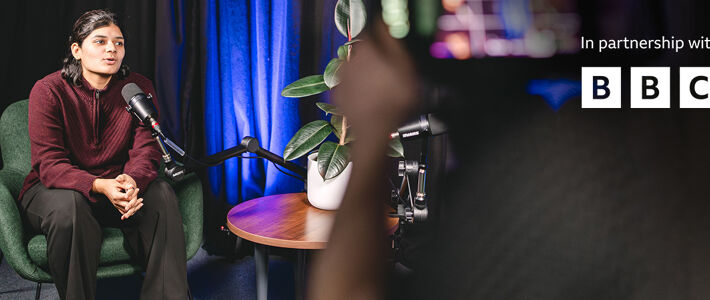
Developed and delivered in partnership with the BBC, our MSc Broadcast Engineering is designed to meet the growing demand for technically proficient, creative problem-solvers who can contribute to the constantly evolving broadcast industry....
- Level Postgraduate Taught
- Study mode Full Time
- Award MSc
- Start date September 2027
- Subjects
- Location City Centre
This course is:
Available with Professional Placement option
Open to International Students
Overview
Developed and delivered in partnership with the BBC, our MSc Broadcast Engineering is designed to meet the growing demand for technically proficient, creative problem-solvers who can contribute to the constantly evolving broadcast industry.
Whether you are looking to advance your career or build specialist expertise, the course is designed to elevate your skills and prepare you for the challenges of a rapidly changing sector.
Broadcast technologies are continually evolving, integrating with systems such as IP-based media delivery, games, virtual environments, and artificial intelligence (AI), to transform how media is created, managed, and delivered. The UK has long been at the forefront of this evolution, with a high calibre of recognition in the TV production and technology industries. The course is underpinned by this UK expertise. This unique collaboration will provide you with the opportunity to engage with industry professionals and develop practical skills using industry-standard broadcast facilities and technologies.
This course is shaped by close engagement with industry, drawing on live case studies, current industry standards, and the expertise of teaching staff with ongoing involvement in broadcast engineering, research and practice. You will engage with industry-standard systems and real-world production challenges throughout the course, ensuring your learning reflects the rapidly evolving demands of the broadcast and media technology sector.
You will develop advanced technical knowledge and hands-on expertise across the theories, technologies, and practices that underpin modern broadcast engineering. This course embodies a STEAM-based approach, combining rigorous engineering and technical foundations, from broadcast systems and networking to AI and data-driven technologies, with the creative and production disciplines central to modern media-making. Through project modules grounded in industry practice and standards, you will develop the technical depth expected of an engineer alongside the creative, collaborative, and problem-solving skills needed to deliver real-world solutions to current industry challenges.
If you're technically minded and enjoy solving complex problems in a fast-paced environment, broadcast engineering offers a rewarding route into the dynamic and ever-evolving media technology industry.
Teaching will take place at BCU's City Centre Campus and, subject to final planning approval, at the BBC's new Midlands headquarters at the Tea Factory, located just a short walk away in Birmingham's creative quarter.
What's covered in this course?
You will apply advanced analytical and problem-solving skills to evaluate interconnected systems, make informed technical decisions under pressure, and develop solutions aligned with technical and operational requirements.
You will develop professional competence through effective communication, collaborative working within multidisciplinary broadcast environments, applying attention to detail, safety awareness, and professional standards when managing complex technical operations.
You will gain comprehensive technical knowledge of broadcast systems, including regulatory, transmission, media and platform standards, alongside an understanding of the protocols and technologies that enable reliable audio and video workflows.
You will independently manage your professional development, critically evaluating emerging technologies and responding to ongoing industry and technological change.
You will develop a critical awareness of the environmental, ethical and societal implications of broadcast engineering technologies, including their impact on energy consumption, resource use and sustainable production practices.
Professional Placement option
This course offers an optional professional placement. This allows you to spend 20 weeks with an employer, following completion of your taught modules, and is a great way to enhance your employability.
The experience you gain through your placement will allow you to evidence your professional skills, attitudes and behaviours at the point of entry to the postgraduate job market.
If you choose the placement option, you will be responsible for finding and securing a suitable placement to complement your chosen area of study. You will be able to draw on the University’s extensive network of local, regional and national employers, and the support of our Careers teams. If you do not secure a suitable placement, you will automatically be transferred back to the standard, non-placement version of the course.
Please note: Placement opportunities may be available with a wide range of organisations across the media, creative and communications sectors. Placements will only be confirmed following a competitive, employer-led selection process. As such, opportunities with specific employers or organisations cannot be guaranteed.
Why Choose Us?
- Developed and delivered in partnership with the BBC. You'll learn from BBC staff, experienced academics, technical specialists and industry professionals, benefiting from contemporary industry insight alongside academic expertise.
- Advance your expertise in broadcast engineering. Designed for technically minded graduates and professionals, this Master's course develops advanced knowledge of the technologies, standards and workflows that underpin modern broadcast and media systems.
- Explore the future of media technology. Investigate emerging areas including cloud-based media infrastructure, artificial intelligence, networked production and next-generation broadcast systems, preparing you to respond to technological change across the sector.
- Apply your skills to real-world industry challenges. Through project-based learning, live case studies and practical activities, you'll develop the analytical, problem-solving and decision-making skills required in complex broadcast environments.
- Combine technical expertise with creative innovation. Taking a STEAM-based approach, you'll work across engineering, technology and media disciplines, developing solutions that support contemporary content creation, management and distribution.
- Develop as an independent industry professional. You'll strengthen your research, project management and professional practice skills through an individual Master's project, preparing you to take on specialist technical challenges and contribute to the future of broadcast and media technology.
Open Day
Join us for an Open Day where you'll be able to learn about this course in detail, chat to students, explore our campus and tour accommodation.
Next Event: 21 November 2026
Course in Depth
Module
In order to complete this course a student must successfully complete all the following CORE modules (totalling 180 credits):
Broadcast Workflows and Media Distribution Systems 30 credits
Cloud & Networked Media Infrastructure 30 credits
Studio, Production & Live Broadcast Technologies 30 credits
AI for Broadcast Engineering and Responsible Innovation 30 credits
Research Methods 30 credits
Individual Project 30 credits
Download course specification
Download nowHow you learn
Our teaching approach combines theory-based learning, practical hands-on workshops, training labs and studio-based exercises, to deliver both technical skills and applied learning.
Modules are structured to emphasise active engagement with industry standard tools and collaborative project work, mirroring the cross-disciplinary nature of the industry.
You will have access to state-of-the-art facilities, including specialised labs, Parkside Studios and high-performance hardware/software, to gain hands-on experience in areas such as, audio and video systems, distribution networks, AI assisted productions, and broadcast workflows.
As you progress through the programme, greater emphasis is placed on integration, critical evaluation, innovation and independent enquiry in order to build your skills and confidence. Through MSc Individual Project module, you will synthesise the knowledge and skills developed across the course through substantial independent work, informed by contemporary industry practice or technical challenges.
Entry Requirements
Essential requirements
Applicants are normally expected to have a minimum of a 2:2 honours degree, or equivalent, in a technically relevant discipline, or three years of professional work experience in a relevant industry role.
We welcome non-traditional applications, particularly from applicants with substantial professional or production experience.
Applying with international qualifications
See below for further information on applying as an international student.
If you have a qualification that is not listed, please contact us.
Fees & How to Apply
UK students
Annual and modular tuition fees shown are applicable to the first year of study. The University reserves the right to increase fees for subsequent years of study in line with increases in inflation (capped at 5%) or to reflect changes in Government funding policies or changes agreed by Parliament. View fees for continuing students.
Award: MSc
Starting: Sep 2027
- Mode
- Duration
- Fees
- Full Time
- 1 year
-
TBC
- Full Time
- 18 months (including Professional Placement)
-
TBC
International students
Annual and modular tuition fees shown are applicable to the first year of study. The University reserves the right to increase fees for subsequent years of study in line with increases in inflation (capped at 5%) or to reflect changes in Government funding policies or changes agreed by Parliament. View fees for continuing students.
Award: MSc
Starting: Sep 2027
- Mode
- Duration
- Fees
- Full Time
- 1 year
-
TBC
- Full Time
- 18 months (including Professional Placement)
-
TBC
Personal statement
You’ll need to submit a personal statement as part of your application for this course. This will need to highlight your passion for postgraduate study – and your chosen course – as well as your personal skills and experience, academic success, and any other factors that will support your application for further study.
If you are applying for a stand alone module, please include the title of the module you want to study in your Personal Statement.
Not sure what to include? We’re here to help – take a look at our top tips for writing personal statements and download our free postgraduate personal statement guide for further advice and examples from real students.
Employability
Enhancing employability skills
The course offers a range of opportunities to learn from industry professionals and engage with contemporary broadcasting and audio production practices, with industry engagement including guest speakers, workshops, masterclasses and networking opportunities.
The course focuses on project-based learning which will provide structured opportunities to explore engineering careers, professional development, project management, commercial awareness, professional responsibility and professional identity.
Staff teaching on the course have established connections with other broadcast, communications and technology organisations to enrich the student experience and diversify industry engagement.
You will develop professional and technical portfolios as part of your studies, so that you can demonstrate technical competence, engineering achievement and reflective practice.
Industry projects, collaborative activities, practical engineering work and independent project work help you develop the professional behaviours, technical skills, problem-solving capability and confidence required for employment in contemporary broadcast engineering and related technology sectors.
Graduate jobs
On completing the course, graduates could go on to a range of exciting and varied roles in broadcasting. Broadcast engineers are responsible for maintaining the quality of service across all aspects of broadcasting, whether ensuring a transmitter stays operational, or making sure that audio and visual feeds and general equipment are working and that computer systems are effective.
Links to industry
This course is part of a suite of courses developed in collaboration with the BBC. The partnership with the BBC means that the courses have been designed to help students develop the skills that the media and creative industries need.
This partnership gives our students a unique opportunity to learn from professionals currently working in the media and creativity industries, and start to build a network of industry contacts during their studies.
Facilities & Staff
Through Birmingham City University's partnership with the BBC, you will benefit from access to specialist facilities across both our City Centre Campus and, subject to final planning approval, the BBC Tea Factory, just a short walk from campus.
Subject to final planning approval, the Tea Factory facilities are expected to include radio and television production spaces, audio facilities, and specialist broadcast technology environments.
Alongside this, you'll learn in BCU's purpose-built Media Centre at Parkside, home to industry-standard television, radio and digital production facilities. Three of the TV studios can facilitate live multi-camera production, and all studios (TV and radio) can be interconnected. It’s taken 22km of wire to make that happen!
Together, these facilities provide a dynamic production environment where you can develop practical skills, collaborate on creative projects and gain experience using the technologies found across today's media industries.
Our staff
Dr Yonghao Wang
Associate Professor
Dr. Yonghao (Leo) Wang is an esteemed academic with over 20 years of experience in the fields of Networking and Cybersecurity, with a special focus on blockchain technology and decentralised communication systems.
More about Yonghao