Former Computer Science student, Alex Chavez Gamarra, shares how the Henderson Innovation Seed Fund helped him develop a tracking and safety app (CombiLive) for transportation in his home city of Lima.
What course were you studying?
I completed my BSc (Hons) Computer Science with Professional Placement Year, graduating with First-Class.
Tell us briefly about the project, product or business idea you received funding for.
CombiLive is a real-time tracking and safety app for Lima’s combis, the privately run minibuses most of the city relies on every day. Drivers share their live location from their phones, passengers can see where their bus is and get an ETA and drivers can press an emergency button that sends their exact location to an admin dashboard. It needs no extra hardware, which keeps it low-cost for a semi-formal transport network.
What inspired you to develop this idea?
I grew up in Lima and used combis every day before moving to the UK at 17. I experienced the problems first-hand and heard countless stories from family and friends, especially women, about harassment, robberies and having no way to get help quickly. Passengers also rely on memory and word of mouth to know which combi to take or when it will arrive. When I could choose my own final year project, I knew this was the problem I wanted to work on.
What stage was your idea at when you applied for the Innovation Seed Fund?
It was at an early stage. I had the concept, the research behind the problem and an initial design for the system, but no working prototype or way to test it in Lima.
How have you used, or how do you plan to use, the funding?
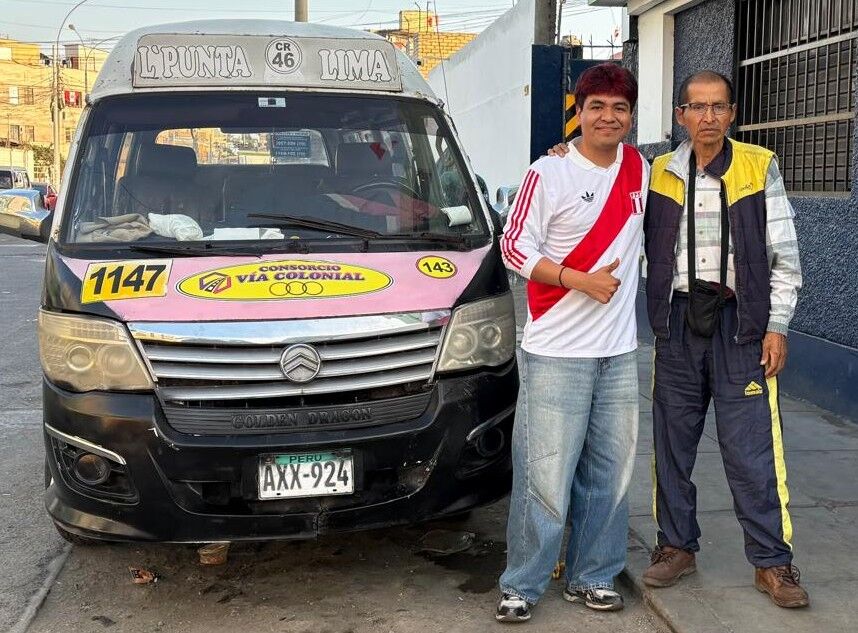
I used the funding for Android phones for drivers and testing, equipment to develop and document the project, and initial remote usability testing in Lima. The second part funded a trip back to Lima to test CombiLive in person with a real combi driver on his daily route.
What has the funding enabled you to do that you might not otherwise have been able to do?
Without the funding, CombiLive would have stayed a university prototype tested only in Birmingham. It let me take it to the place it was built for and see it work on a real route with a real driver and get their insights, which no amount of testing on campus could replace.
Can you give us an example of something tangible you have achieved or developed as a result of the funding?
I developed a working system with a driver app, a passenger app and an admin dashboard, and tested it on the streets of Lima. I also filmed the field test and an interview with José, a combi driver with 35 years on the La Colonial route, which became a video about the pilot. The project won first place for the Computing Final Year Project poster at Innovation Festival 2026.
Henderson Bursaries and Scholarships
Find out more about our Henderson Bursaries and Scholarships
What have you learnt through developing your idea?
That the technology is often the easier part. Speaking to José showed me that getting something like this adopted depends on vehicle owners, transport companies and the government, not just on whether the app works. I also learnt how different real-world conditions are from testing, from traffic and signal to how people use their phones.
Have you developed any new skills or confidence as a result of working on your project? If so, tell us about them.
Yes. Technically, I built a full Android system with Kotlin, Firebase and Google Maps, including real-time tracking and traffic-aware ETAs. Beyond that, I gained confidence managing a budget, planning fieldwork abroad, interviewing users and presenting my work to judges and the public. That experience helped me secure my current role as a KTP Associate working on digital transformation and AI integration.
Has receiving the Innovation Seed Fund changed how you think about innovation, entrepreneurship or your future career?
It made me want to keep working on technology that solves real problems, which is what I’m now doing in industry and hopefully in the near future I’ll be able to start my own business.
What stage is your project or business idea at now?
CombiLive is a working prototype that has been tested in the field in Lima. It successfully tracked a combi live on a real route and showed passengers where their bus was in real time.
What are your next steps for the idea?
The project has reached a natural close as my final year project, as I’ve now started a full-time role and getting settled in but still looking forward to keep working on this project during my free time. I’m open to conversations with anyone interested in taking it further, especially around transport partners and authorities in Peru.
What would success look like for your project or business in the future?
Success would be CombiLive running on many combis across Lima. Passengers waiting at stops knowing exactly when their bus is coming and drivers able to call for help with one button that alerts the nearest authorities.
What would you say to another student who has an idea but isn't sure whether to take it further?
You’ll learn more from one conversation with a real user than from weeks of building on your own. Funding like this exists to help you take that step, so apply even if your idea doesn’t feel finished.
In a few sentences, what difference has receiving the Innovation Seed Fund made to you and your idea?
The Innovation Seed Fund turned CombiLive from a university project into something tested on the streets of Lima. It gave me the chance to work on a problem I care about personally. It also gave me experience and confidence that have shaped the start of my career.