
BCU Postgraduate Researcher Shameela Yoosuf Ali and fellow PGR representatives Awais Javed and Virina Gabriel were funded by the Doctoral Research College to attend the UK Council for Graduate Education Annual Conference in Liverpool in July 2026. This is Shameela's reflections of her trip:
Some days do not begin kindly.
My first day at the UKCGE Annual Conference 2026 began with a stranded train, delay after delay, and the helpless feeling of watching time run ahead while you are still stuck somewhere along the way.
I travelled with Virina, while Awais joined us at the conference. That made the chaos feel less lonely.
Day 1 was the PGR Careers Day at the University of Liverpool, and I had to present my lightning talk that afternoon. For a while, I honestly did not know whether I would make it.
By the time we reached Liverpool, it was around 1.30 pm. Late. Tired. Hungry. A little breathless. They had saved us some lunch. I was still carrying the panic of the journey in my body.
So I cannot say I fully experienced the whole day. I missed much of the morning programme. But maybe that became part of the story, too. I arrived in the middle of the day, gathered myself as best as I could, walked into the room, and presented.
My lightning talk was titled Finding Voice in Doctoral Spaces: Storytelling, Belonging, and Being a Global Majority PGR. Maybe it was fitting that the day was not smooth. I was speaking about the hidden labour behind doctoral life, the things people do not always see behind confidence, outputs, presentations, and polished academic biographies. I began with my poem When I Return, Will My Home Know Me? It is something we carry in our bodies, histories, languages, and journeys. I spoke about the PhD we are taught to perform and the PhD we actually live. It is the one shaped by doubt, translation, in-betweenness, and care work. Afterwards, a PGR came to me with tears in her eyes. That remained with me for a very long time.
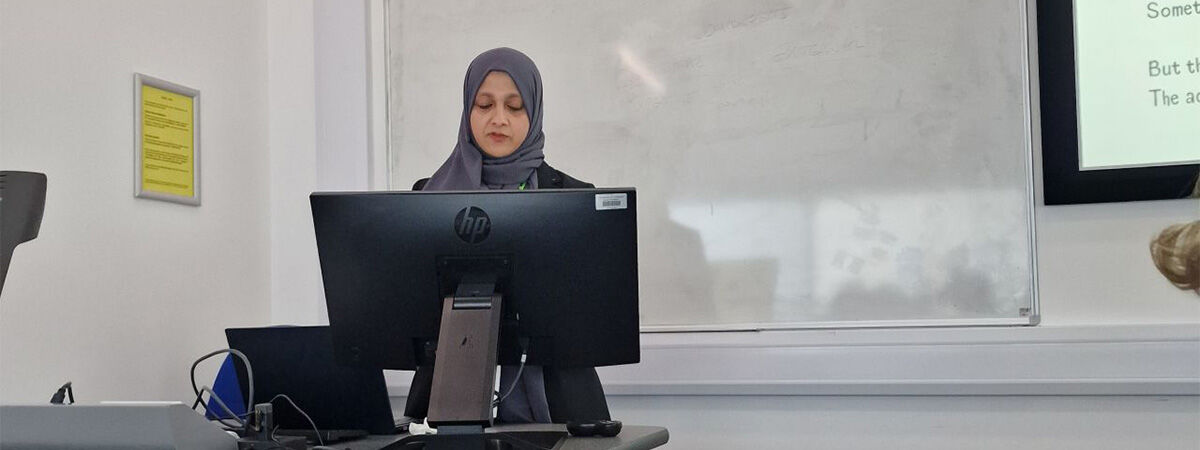 Shameela during her lightning talk
Later that evening, after all the rush and nerves, we watched England win from the hotel lobby with Virina, Francis, and Awais. I am not much into football, but Humaidh - my seven year old, is. It was such an ordinary, lovely ending to a very unordinary day.
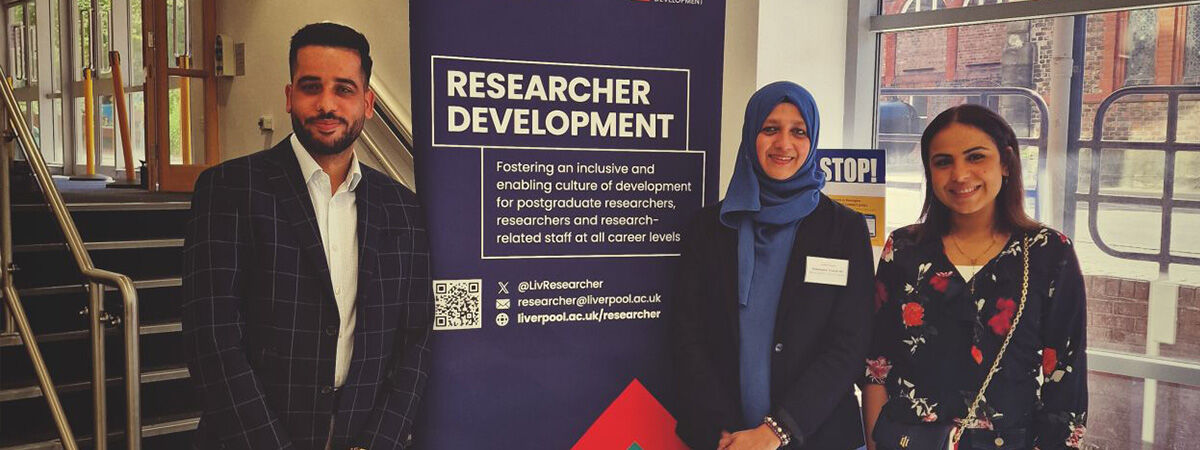 Awais, Shameela and Virina at the Conference
Day 2 felt different.
I woke up still tired, but with a little more space in my head. No rushing into a room with my heart still racing. I could finally arrive properly, not just physically, but mentally, too.
Day 2 gave me the chance to listen.
And sometimes, listening at a conference is as important as presenting. I listened to conversations about postgraduate cultures, doctoral futures, research environments, supervision, community, collaboration, and the different kinds of support PGRs need to keep going. What I kept thinking was that a PhD is never only an individual journey. We often talk about doctoral success as if it belongs to one person, their discipline, their writing, their resilience, their plan, their career. But actually, so much of the PhD depends on the spaces around us. The supervisor who listens carefully. The colleague who checks in. The room where you feel comfortable asking a question.
As a PGR rep, I found myself listening not only for myself but also for other PGRs. I kept thinking about the concerns I have heard in meetings, WhatsApp groups, corridor conversations, and quick messages: funding, isolation, supervision, confidence, space, belonging, and what comes after the PhD.
You do not enter these rooms only as yourself. Sometimes you carry other people’s questions with you. And then, in the middle of everything, I suddenly heard Tamil. I met Lenny Vasanthan Thinagaran and Ganapathy M from the University of Liverpool organising team. I think they were more surprised than I was to hear me speak Tamil. That little moment, speaking Tamil, hearing its familiar rhythm, not having to translate myself for a few minutes, felt big to me. I also met Varun Padikal, whose first language is Malayalam. That is one thing I like about conferences. Sometimes small conversations over coffee can stay with you longer than a whole formal session.
It was also lovely to spend time with the BCU Doctoral Research College team - Francis Hine-Hughes, Beccy Boydell, and Noel Alonso - outside the usual email-and-meeting universe. It is always nice to discover that behind formal signatures and calendar invites are real humans, good humour, tired feet, and possibly inboxes even more chaotic than ours. The day ended with the conference dinner at Beatles Bar at Albert Dock. We bonded over food, laughter, research stories, and life stories.
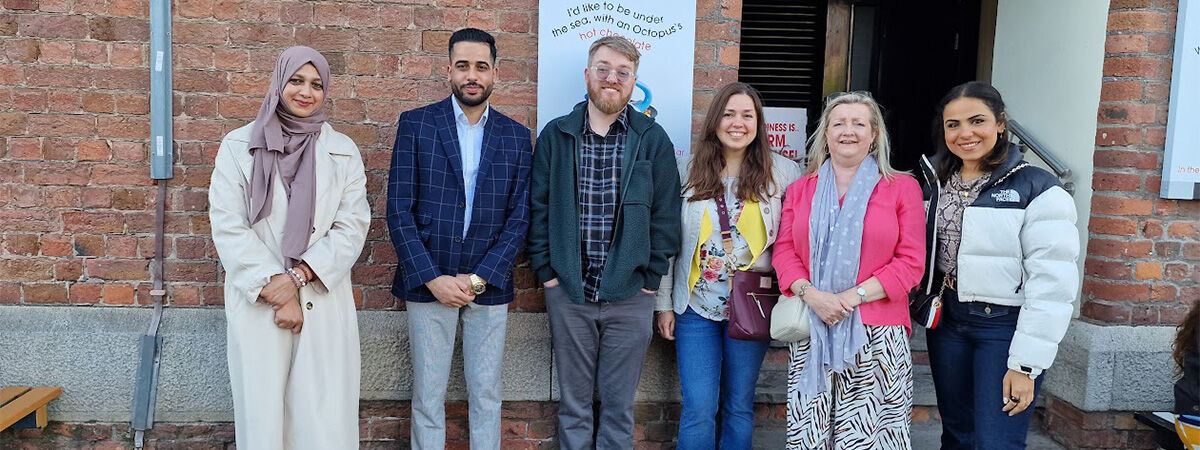 Shameela, Awais, Francis Hine-Hughes (DRC), Noel Alonso (DRC), Beccy Boydell (DRC), and Virina
By Day 3, I felt that unique kind of conference tiredness. My body was tired, and my mind was still processing everything. The last day did not feel like a clear ending. It felt more like a set of unfinished questions.
Doctoral futures are not made only by personal ambition or strength. They are enhanced by the cultures around us. By supervision, funding, support, and recognition. And also by who opens a door, who remembers to check in, and who makes a room feel welcoming.
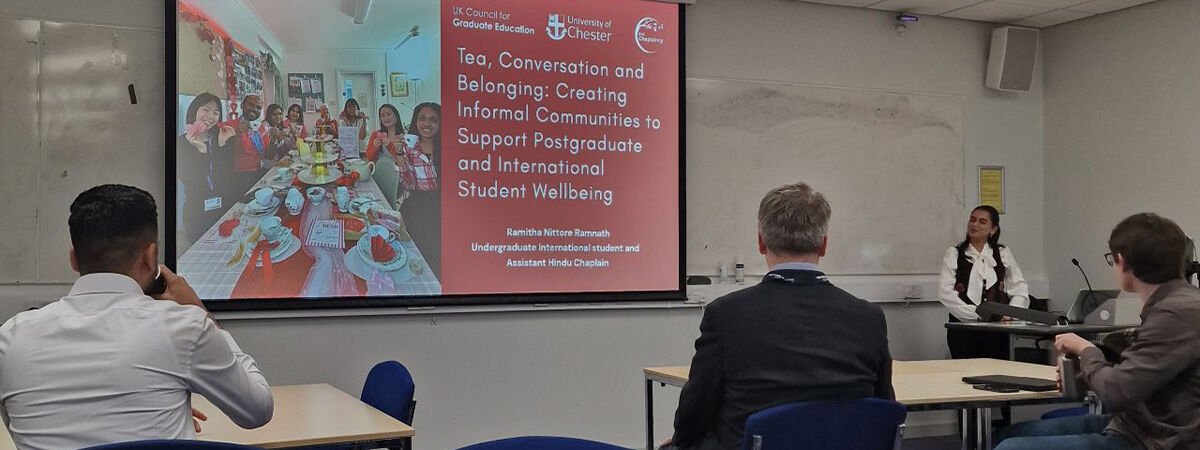
Nur Izham’s presentation on internationalisation, language hierarchy, and research culture in Malaysian universities made me think about how language, institutional expectations, and academic culture shape who feels confident, recognised, or silenced. Ramitha Nittore Ramnath’s presentation on the value of informal spaces in postgraduate life also made me think about the work we have been doing at Birmingham City University, creating more layered and creative spaces through objects, storytelling, mapping, reflection, and shared activities.
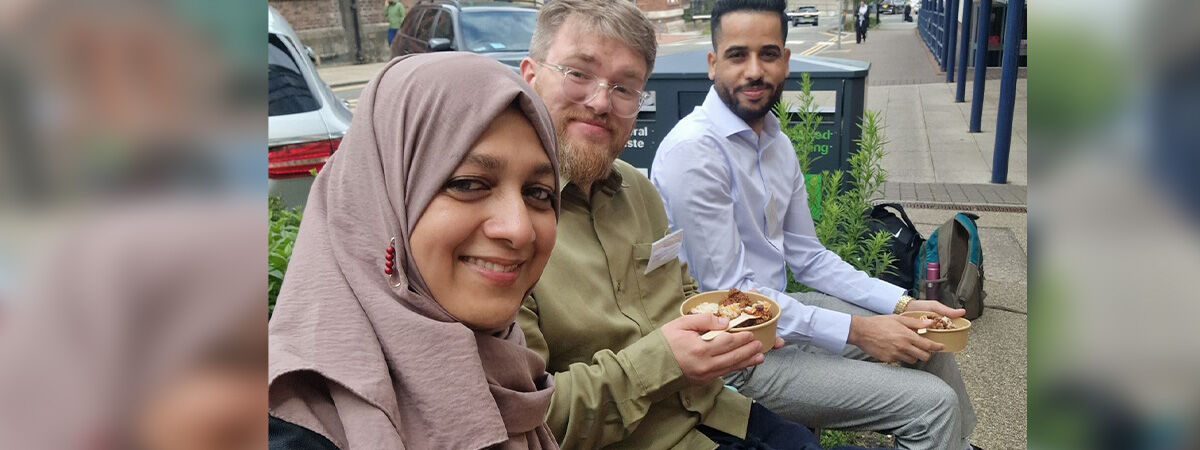
I also loved the workshop Making Sense of Perspectives in Doctoral Progression: A Participatory Workshop using Conceptual Mapping by Ole Pahl and Julie Robert. I am always drawn to spaces where people are not just sitting and receiving knowledge, but thinking together, mapping, moving ideas around, and making sense of things collectively.
As a PGR rep, I took mental notes.
What helps PGRs feel appreciated? What encourages them to ask for help early? How can supervision build honesty? What places support trying, failing, and learning? How can we prepare PGRs for the unknown without causing more worry?
On the way back, I travelled with Francis. We talked about the conference, doctoral life, research culture, and the everyday topics that come up when people are tired after three long days.
I had too many thoughts in my head.
I came home from Liverpool tired, but with questions about futures, care, and listening, about what kind of doctoral culture we are all responsible for making.
After three full days, seeing my son and husband again felt like my body finally exhaling.


