Research News Last updated 23 March
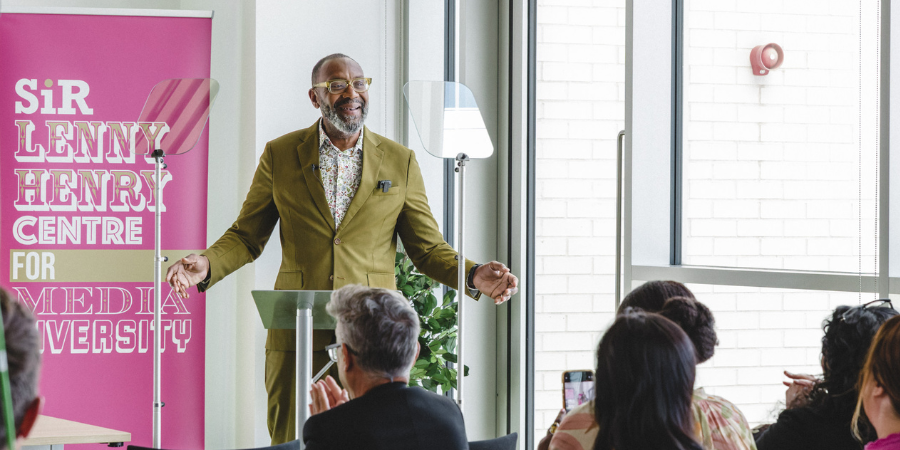
The Sir Lenny Henry Centre for Media Diversity (LHC) is leading a major UK-wide initiative to bring student voices into the national debate on BBC Charter Renewal - at a critical moment for the broadcaster’s future and its relationship with young audiences.
In partnership with the Media Reform Coalition (MRC) and supported by the National Union of Students (NUS), the Centre is launching a nationwide series of student-led discussions to ensure 16–25-year-olds help shape how the BBC is governed, funded and run.
The first event will take place on 25 March at Birmingham City University (BCU), marking the start of a wider campaign to engage students across universities and FE colleges.
The event is organised jointly with BCU’s Students’ Union (BCUSU) and will be livestreamed. Contributions to the debate will be shared under the hashtag #myBBCmysay.
At a time when the BBC faces an ongoing challenge to engage younger audiences, who increasingly consume content via social media, streaming platforms and short-form video, the LHC and MRC say it is essential that young people are active participants in shaping its future.
Wednesday’s launch at BCU will feature a message from Sir Lenny Henry, whose Centre has been at the forefront of advancing inclusion and representation across the UK media industry.
Sir Lenny Henry (pictured) said: “Young people should be heard in the debate about BBC Charter Renewal. Their concerns need to be addressed. We need diversity of thought and representation at the BBC moving forward, and students must be part of that debate. I urge all universities and FE colleges to do all they can to make it happen.”
The initiative is part of the Alternative Green Paper on the BBC’s Future, developed by the MRC, setting out proposals for a more democratic, accountable and representative BBC.
With the Government’s White Paper on Charter Renewal expected shortly before the summer recess - and the formal consultation process now closed - organisers say this initiative creates a vital space for public engagement, particularly among younger audiences.
Professor Lee Edwards, Chair of the MRC, said: “Charter review is an historic opportunity to debate and decide what kind of BBC we want, and young people need to be at the centre of this.
“Students and young people are a critical audience for the BBC, and they deserve a role in shaping its future. This series of events is a crucial first step in giving them a voice.
“We hope the Government and the BBC will take on board the creative ideas and inspiration that will surely come from their discussions.”
Young audiences are not abandoning the BBC, but they feel little institutional attachment to it. They are less likely to watch linear broadcasts and more likely to encounter BBC content via platforms such as YouTube, TikTok and Instagram.
At the same time, access to trusted information, authentic representation and opportunities to be heard are increasingly important to younger generations navigating issues such as the cost of living, job insecurity and the impact of artificial intelligence.
Amira Campbell, President of the NUS, said: “At a time when finding the facts isn’t as easy as it should be, it is essential that young people are engaging with the future of the BBC.
“Many of us have grown up watching CBeebies, then CBBC, and still tune in for the shows that capture the nation. But the BBC is bigger than this. It is the local radio show covering our local library closure. It is the World Service reporting on a disaster abroad affecting our family.
“The future of the BBC will be changing, and it is vital that young people put forward their views on what it should look like.”
Students at BCU’s launch event will take part in a live panel exploring the BBC’s relevance, the importance of representation, and what they would change if they were in charge.
Shoukat Mehsud, President of BCUSU, said: “As a student representative, I believe it is vital that young voices are heard in shaping the future of the BBC. It must remain independent, inclusive, and truly accountable to the public it serves."
The LHC has created a toolkit for the MRC to enable other universities and FE colleges across the UK to run their own student-led discussions, with practical guidance ranging from workshops and assemblies to panel discussions.
Institutions interested in hosting their own student event are encouraged to contact LHC Director Jaldeep Katwala.