University News Last updated 04 March
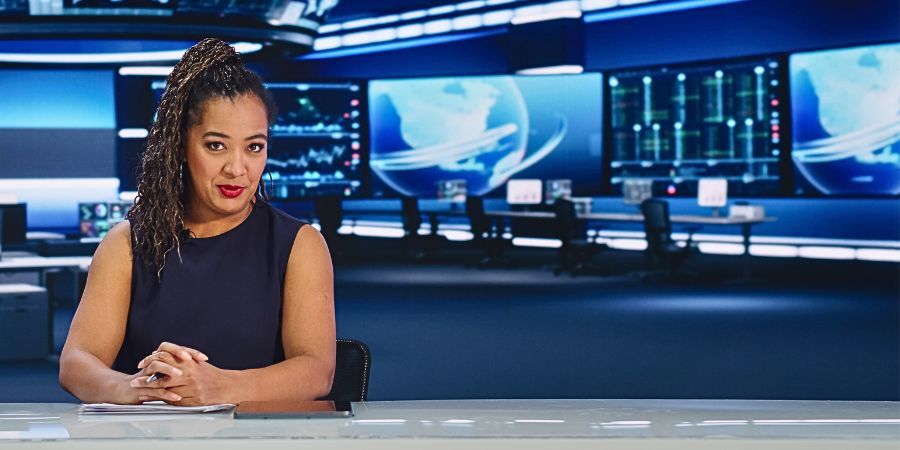
In 2020, in the wake of the murder of George Floyd and Black Lives Matter protests, television news organisations in the UK - including BBC, ITN and Sky - committed to ensuring their content and workforce reflected the diversity of the regions and nations they serve.
Five years on, a new report from the Sir Lenny Henry Centre for Media Diversity finds that, while diversity initiatives have opened doors for some, many television journalists from racially minoritised backgrounds say meaningful change has stalled, particularly in areas that shape editorial power, newsroom culture and career progression.
Compiled by Rohit Kachroo, ITN’s Global Security Editor, and Dr Ellie Tomsett, Senior Lecturer in Media at Birmingham City University, the report - ‘Breaking’ - draws on anonymous testimony from 80 on- and off-screen journalists working in UK television news.
It examines how diversity initiatives have affected their working lives and asks what more is needed to ensure newsrooms become genuinely inclusive workplaces for racially minoritised staff.
Of the 80 newsroom professionals who participated in the research, 63% said they had experienced racism in their workplace, while 70% said there were insufficient opportunities for career progression.
Some of the interviewees were in their first national newsroom job after being recruited through a diversity initiative.
While several acknowledged that these programmes created access, others said they felt such schemes had sometimes been implemented in ways that left them exposed to stigma.
One of the respondents insisted they have not benefited from any such diversity scheme:
“The opposite if anything. People assume you’re a diversity hire when you’re there on hard work and merit. It’s a double-edged sword.”
Another described what it felt like for them to work in a national newsroom:
“It's like an apartheid newsroom. You look left and there's disproportionately too many people [of colour] because everyone's on the lower rung. And you look on the other side, it's like, everyone's almost White. And then everyone obviously on the lower incomes and the lower rungs of the ladder, which is where most of my ethnic minority colleagues are, are doing the kind of slog [...] they're not given being given the same opportunities.”
A senior journalist reflected on retention challenges:
“I work for one of the biggest news broadcasters in the UK. I’ve seen a succession of young, diverse talent leave in recent years with no attempts made by management to keep them. Not only is young, diverse talent leaving, there is a glaring lack of diversity and range in the editorial output.”
For those who remained, several described structural barriers to progression:
“Black and Brown journalists must work harder to tell stories. We are still paid less. We can’t become editor, or political editor, or even Middle East editor. The system is still skewed for us to aspire only to the second tier of roles.”
The report also documents what respondents describe as a growing backlash against diversity initiatives. Some said diversity efforts had been poorly communicated or inconsistently managed, fuelling resentment and misunderstanding within teams:
“White middle-aged men publicly mock diversity initiatives in my newsroom every single week. The narrative has been set that 'people were being progressed because of the colour of their skin' or 'White men were being held back'.”
The report stresses that diversity initiatives themselves are not the problem, however, without structural reform, transparency and consistent leadership, such programmes risk becoming symbolic rather than transformative
The report makes seven recommendations to news organisations. These include:
- Involving journalists of colour in assessing whether diversity initiatives over the past five years have been effective
- Emphasising that awareness and commitment from White staff are essential to achieving meaningful inclusion
- Taking stronger action to protect minoritised journalists
- Establishing clear, protected mechanisms for raising concerns about racial bias in coverage.
The authors conclude that the credibility of diversity commitments made in 2020 now depends on whether organisations are willing to move beyond recruitment targets and address decision-making power, progression and newsroom culture.
Jaldeep Katwala, the Director of the Sir Lenny Henry Centre for Media Diversity, said: “The findings of this report are uncomfortable, but we hope its recommendations will result in changes to the way diversity schemes are implemented in UK TV newsrooms.
"Journalists of colour must feel that they belong and are supported as they move through their careers on- and off-screen. We call on senior editors to make sure it happens. Continuing to deliver Diversity without change is not good enough.”
To view the full report, click here.