Research News Last updated 20 January
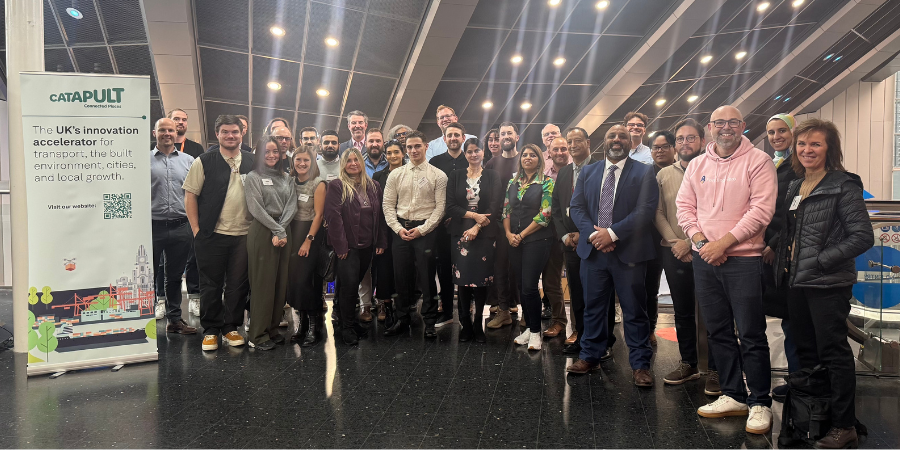
Birmingham City University (BCU) is joining forces with small businesses across the West Midlands to help tackle some of the region’s biggest environmental challenges - from cleaner air to greener energy and better housing.
Eight innovative small and medium-sized companies (SMEs) have been selected to take part in a new programme, with six receiving £16,500 each to turn their ideas into real-world solutions and create new jobs locally.
The businesses will test digital tools designed to improve how cities are planned and run, focusing on key areas in Birmingham and Wolverhampton, including the Birmingham Knowledge Quarter and Wolverhampton’s Green Innovation Corridor.
The project is part of BCU’s DIATOMIC Digital Accelerator, which helps businesses trial new technologies using expert support from university researchers.
“Our role is not only to support these companies with technical expertise, but also to accelerate the real-world deployment of sustainable solutions for communities across the West Midlands,” said Professor Abdel-Rahman Tawil, principal investigator of the project.
“We aim for the DIATOMIC platform to become the core digital twin platform for the City of Birmingham, enabling data-driven planning, better decision-making, and more sustainable urban services.”
Companies on the programme will work closely with BCU academics, gaining access to specialist knowledge, research facilities and real-world testing opportunities.
“It’s great to see the continued impact of research at BCU reach beyond our labs and into industry,” said Dr Sara Hassan, Senior Lecturer in Computer and Data Science and BCU’s DIATOMIC Project Manager.
“This year-long partnership with West Midlands SMEs is a great opportunity to continue creating impactful research.
“We’re excited to see BCU Computer Science as a key contributor to innovation in the West Midlands.”
The businesses were selected by Connected Places Catapult, the UK’s innovation accelerator for transport, the built environment, cities and local growth.
One of the companies, Birmingham-based Geospatial Insight, is developing tools to help planners and investors better understand renewable energy opportunities.
“We value the opportunity to partner with Connected Places Catapult, BCU and other cohort members in the Diatomic Digital Twin project,” said Dave Fox, Chairman of Geospatial Insight.
“Digital Twins have become an essential tool of any planning team, but they are heavily reliant on having qualified sources of data to populate them.
“Diatomic demonstrates to industry leaders the power of geospatial data, especially when provided to a digital twin in an automated and interoperable format.
“This means that potential risks can be managed when deploying renewable energy projects as well as managing climate risk to its users."
The other seven successful companies include:
- AI Gizmo
- BetaStreets and partner TTC
- Grid Edge
- Purple Transform
- Underheat, in partnership with Grid Stability
- Denville Energy Consulting
- Velorim Collections
“The West Midlands has an incredible wealth of talent when it comes to realising the benefits of new digital technologies,” said Iain Mansell, Head of Regional Engagement for the West Midlands at Connected Places Catapult.
“By working alongside Birmingham City University and other partners in the region, Connected Places Catapult is supporting home grown innovators to develop their solutions and grow their businesses.”
The DIATOMIC programme is part of the wider West Midlands Innovation Accelerator delivered in partnership with the Department for Science, Innovation and Technology, Innovate UK, Mayor of the West Midlands Richard Parker, and the West Midlands Combined Authority.
Find out more about BCU’s DIATOMIC project.
Photo: Diatomic Digital Accelerator cohort (credit Connected Places Catapult).