University News Last updated 22 December 2025
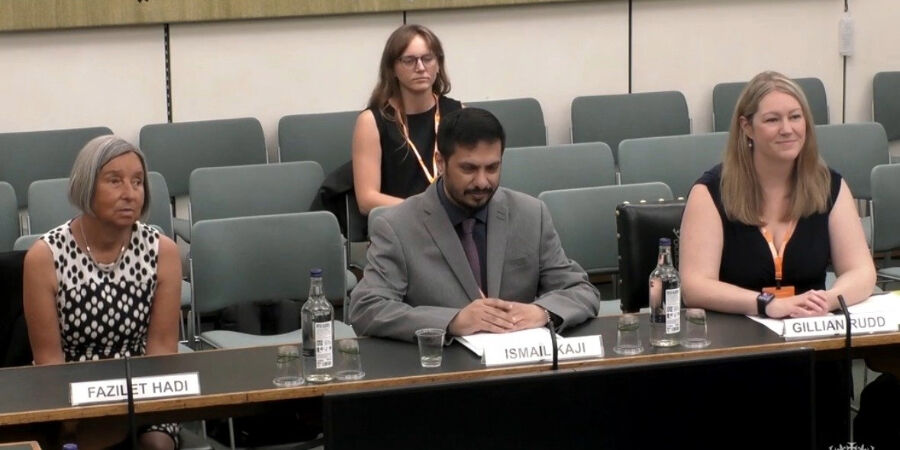
Accessibility in the Houses of Parliament have become a ‘strategic priority’ rather than an ‘add-on’, following a landmark report from the cross-party Modernisation Committee, according to Birmingham City University (BCU) Speech and Language Therapy (SLT) senior lecturer Gillian Rudd.
“This is a significant move because it shows that the voices of people with communication disabilities, differences and difficulties are being heard at the heart of Parliament,” said Gillian.
In June, she gave evidence to the Committee on behalf of the Inclusive Parliament Coalition, providing both written and oral testimony alongside partners from disability and advocacy organisations.
The Modernisation Committee made a wide range of recommendations aimed at improving accessibility in the House of Commons.
These include establishing External Accessibility Advisory Groups to represent sign language users and people with communication needs, introducing mandatory accessibility training for staff, improving physical access through measures such as better signage, and expanding accessible formats including Easy Read, British Sign Language (BSL) and large print.
“That recognition underscores the fact that accessibility isn’t just about physical access, but also about how people communicate, understand and engage with the institution,” Gillian added.
“It hasn’t been easy as it’s involved working collaboratively across a coalition of more than 30 organisations, sharing detailed proposals and challenging long-standing norms. But seeing those contributions reflected in a major report – even though there is still more to do – is a testament to that collective effort and the persistence of so many voices.”
Gillian began this work at the end of 2024, submitting a joint statement and written evidence in response to the Modernisation Committee’s inquiry, which launched in March 2025.
“To see the lived experiences of people with communication and access needs reflected in an official parliamentary report feels like real progress,” Gillian added.
“I hope this marks a shift towards Parliament becoming a place that is not only physically accessible, but truly inclusive in how it operates, communicates and welcomes people.”