Research News Last updated 24 February
A new book is inviting readers to take a fresh look at one of the most influential and controversial figures in modern music: Miles Davis.
100 years after his birth, the American icon remains a towering presence in jazz and popular culture, but his legacy has never been simple.
Rethinking Miles Davis, co-created by academics involved in Birmingham City University’s (BCU) Jazz Research Cluster and published by Oxford University Press, brings together leading scholars to explore how Davis, who died in 1991, reshaped not only jazz, but the wider cultural landscape around it.
The book argues that Davis should be viewed as more than a jazz innovator. He was a cultural lightning rod whose work intersected with race, politics, celebrity and the music industry itself.
Edited by Tim Wall, Professor of Radio and Popular Music Studies at BCU, along with Roger Fagge at the University of Warwick and Nic Pillai at University College Dublin, the project is a significant and original reconsideration of Miles Davis’s place in cultural history.
Professor Wall describes the project as “a significant and original reconsideration of Miles Davis’s place in cultural history”.
Professor Wall, along with Dr Pedro Cravinho, Dr Bobbie-Jane Gardner, Professor Nick Gebhardt and Professor Tony Whyton, have written chapters that provide important new insights into Davis’ cultural contribution.
The strength of contributions from academics at Royal Birmingham Conservatoire (RBC) and BCU, Professor Wall adds, underlines Birmingham’s growing reputation as a centre for jazz research.
The authors challenge the orthodoxy of jazz criticism, investigating the ways Davis pushed jazz into new genre forms, re-envisioned jazz standards, and collaborated musically.
The book also examines his role in the record companies that released his music, the persona he developed in video, film, and fashion, and how his masculinity manifested both professionally and personally.
One of the book’s striking stories focuses on the jazz trumpeter’s turbulent relationship with audiences in Portugal.
Covering Davis’ first visit when he shocked audiences with his electric, genre-blurring sound when the country was still under a right-wing dictatorship, through to his sleek, synthesiser-driven style of the 1980s after Portugal had become a democracy.
Dr Pedro Cravinho, Senior Research Fellow in Jazz Studies and Ethnomusicology at RBC says Davis’ music “stunned thousands in the audience, particularly jazz purists, then later he was welcomed like a global pop star.
“Yet controversy was never far behind. In Portugal, Davis’s appearances were always headline-grabbing events.”
The book was launched at RBC’s Eastside Festival on 12 February, with the Conservatoire’s Jazz Orchestra performing Davis’s landmark collaboration of Porgy and Bess with arranger Gil Evans.
Supported by the National Jazz Archive, the event highlighted what the book ultimately suggests, that Miles Davis’s story is far from settled.
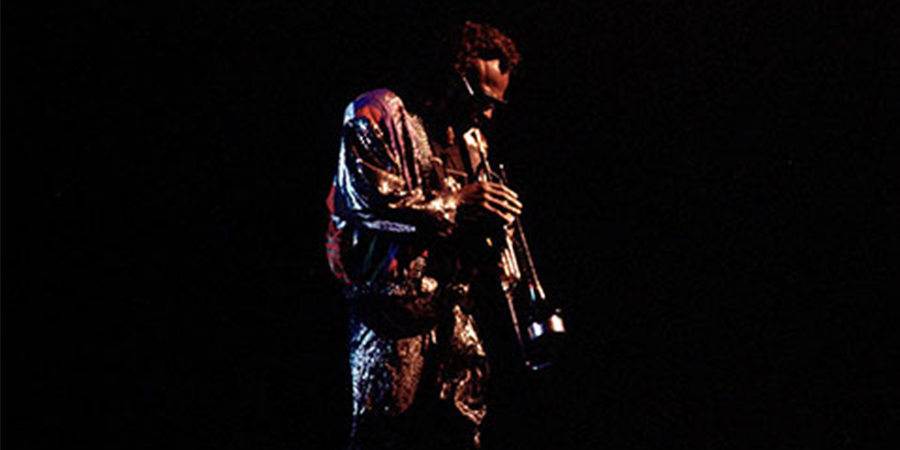
Photo: Miles Davis, Apollo, Manchester, 1989 by William Ellis