University News Last updated 25 November
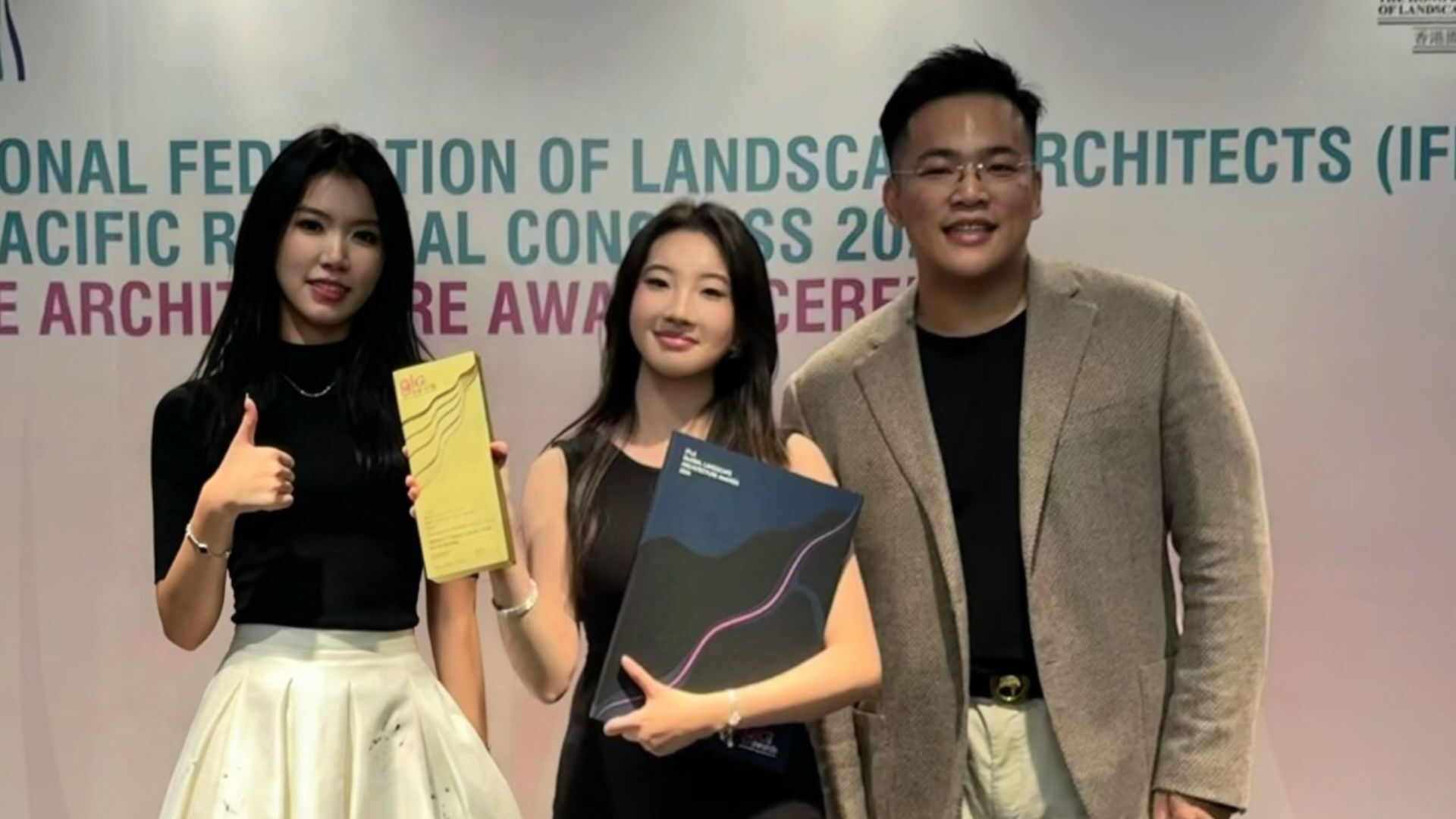
A project exploring how landscape architecture can help restore habitats for the endangered Yangtze finless porpoise has won international recognition for students from Birmingham City University (BCU).
The project was awarded first place in the Nature Conservation and Biodiversity category at the 2026 IFLA Global Landscape Architecture Awards.
Based on the Wuhan section of the Yangtze River in China, the project explores how ecological restoration and landscape design can improve habitats for the finless porpoise, while addressing wider environmental pressures and the needs of communities along the river.
The project was developed by four Landscape Architecture students – Yueshan Yu, Jiaxue Luo, Wenqing Peng and Le Shu – studying through the Birmingham Institute of Fashion and Creative Art (BIFCA), under the joint supervision of tutors Han Jia, Qi Shu and Zeqi Yu.
What began as a coursework assignment for BIFCA's Designed Ecologies module developed into an ambitious design proposal informed by extensive fieldwork along the Yangtze River.
The students made repeated visits to their study sites to observe ecological conditions and investigate the relationship between environmental factors, human activity and porpoise habitats.
Wenqing Peng said: "Spending extended periods in the field helped us move beyond what could be understood from maps or secondary data.
“It taught us that meaningful ecological design requires patience, close observation and a genuine understanding of a place before proposing solutions."
The team investigated four different habitat settings along the Wuhan section of the river.
Team leader Yueshan Yu said bringing the individual investigations together into a coordinated vision was both demanding and rewarding.
"It showed us that addressing complex ecological challenges requires not only independent research and critical thinking, but also the ability to collaborate and connect different design approaches into a coherent whole," Yueshan said.
Rather than focusing solely on the protection of a single species, the project takes a broader approach to river ecosystem restoration.
The proposed strategies address four distinct habitat settings, bringing together sandbar conservation, fish passage connectivity, flexible navigation management and wetland filtration.
Collectively, these interventions aim to strengthen ecological resilience while recognising the importance of river transport and the communities that depend on the Yangtze.
Tutor Han Jia highlighted the importance of this integrated approach.
"Protecting the Yangtze finless porpoise requires more than safeguarding isolated habitats; it calls for attention to the wider ecological processes and human activities that shape the river environment," Han said.
"The students developed a differentiated design strategy for four habitat settings. Their work demonstrates how landscape architecture can contribute to balancing biodiversity conservation, river transport and the needs of communities along the river, while exploring a more resilient relationship between people and nature."
The project also reflects BIFCA's emphasis on research-led and evidence-based design education.
Developed through its Designed Ecologies module, the proposal required students to investigate ecological challenges through fieldwork, critical analysis and detailed research before translating their findings into practical design responses.
Eccles Ng, BCU BA Landscape Architecture Course Director and BIFCA Link Tutor, said the award was a significant achievement for the students and demonstrated the value of international collaboration in higher education.
"This is a remarkable achievement for our BIFCA students and a wonderful example of the opportunities created through transnational education,” he said.
“Our BIFCA partnership between Birmingham City University and Wuhan Textile University brings together international perspectives and dedicated local teaching expertise, encouraging students to think beyond the classroom and tackle real-world challenges.
"I am particularly proud to see our students translating their creativity, research and collaborative skills into an internationally recognised project.
“Their success demonstrates the potential of the next generation of landscape architects to make a meaningful difference to people, nature and the built environment."
BIFCA (Birmingham Institute of Fashion and Creative Art) is a partnership between Birmingham City University and Wuhan Textile University (WTU), based in Wuhan, China.
It combines the expertise of a British university established in 1843 with that of a leading Chinese university, offering a range of creative arts degree programmes.