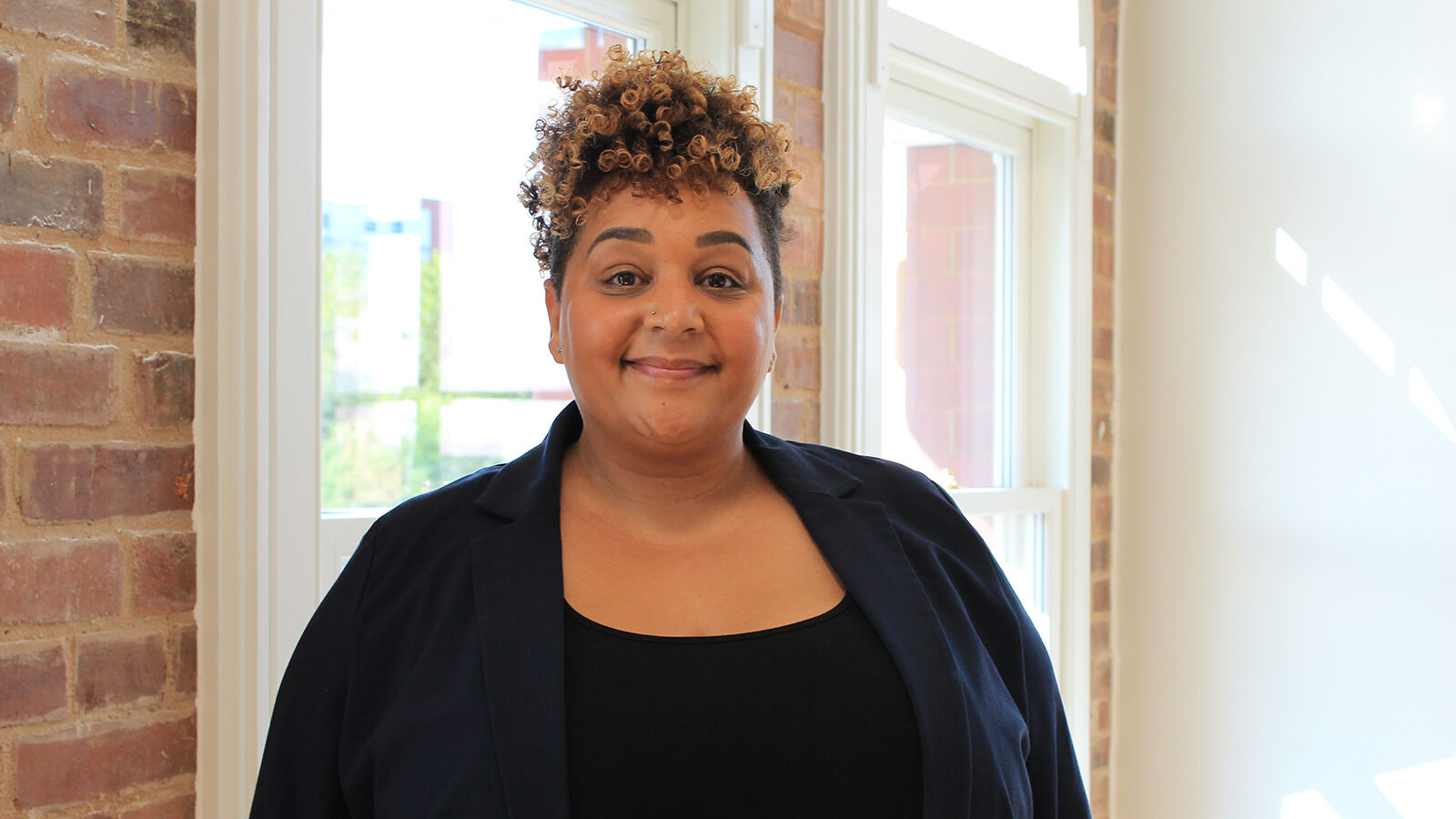
Dezita Taylor
Associate Professor, School of Nursing and Midwifery
Tell us about your career journey
My career journey has been anything but traditional. I began as an Operating Department Practitioner, working in perioperative care across a range of surgical specialities. During my clinical career, I developed a strong interest in innovation, leadership and service improvement, leading award-winning teams and contributing to developments in robotic surgery that gained national and international recognition.
As my career progressed, I became increasingly interested in education and workforce development. This led me into Higher Education (HE), where I have worked across teaching, leadership, partnership development and strategic workforce initiatives. I am now an Associate Professor and Academic Lead for Partnerships and Apprenticeships in Nursing and Midwifery, leading one of the country's largest nursing apprenticeship portfolios and working closely with healthcare organisations to address workforce challenges.
Today, my work is driven by a commitment to widening participation, social mobility and creating accessible pathways into leadership and academia for people from all backgrounds.
What areas of research are you particularly interested in?
My research is centred on equity, social justice and opportunity. I am particularly interested in health inequalities, workforce development, nursing education and widening participation, exploring how education can drive social mobility and transformational change.
A key focus of my work is identity, representation and leadership within HE. I am passionate about amplifying perspectives that are often absent from academic and leadership narratives, particularly those whose experiences do not fit neatly within traditional discussions of race, identity and inclusion. I explore how lived experience, institutional culture and access to opportunity shape career progression and leadership aspirations.
Alongside this, I research workforce development and nursing apprenticeships, examining how universities and healthcare organisations can collaborate to remove barriers and create more inclusive routes into professional careers.
What challenges have you faced in academia?
One of the most significant challenges I have faced has been building a career in environments where people with similar lived experiences remain underrepresented, particularly in senior academic and leadership roles. Throughout my journey, I have often been one of the few people in the room whose experiences reflected my own.
As someone of mixed heritage, I have experienced the complexities of occupying a space between categories, where identity can be questioned, misunderstood or overlooked. Discussions around race and representation do not always acknowledge the nuanced experiences of mixed-race individuals, creating an additional layer of invisibility. Learning to define my own identity, rather than allowing others to define it for me, has been an important part of my professional growth.
I have also experienced imposter syndrome, not because I doubted my abilities, but because there were few visible examples of people like me in senior leadership positions. Over time, I have recognised that my presence in these spaces is not something that needs to be justified; it has been earned through hard work, expertise and commitment.
These experiences have strengthened my determination and reinforced my belief that diversity must extend beyond representation and be reflected in leadership, decision-making and institutional culture.
What are your hopes and aspirations for completing the programme?
I see this programme as an opportunity to further develop my leadership, broaden my influence and strengthen my ability to drive meaningful change within HE and healthcare. I am eager to learn alongside a network of exceptional leaders whose experiences will challenge and inspire me.
My aspiration is not only to progress personally, but to use the knowledge, insights and networks gained through the programme to influence policy, shape organisational culture and advance more inclusive approaches to leadership, education and workforce development.
I also want to inspire future generations of students, academics and leaders from underrepresented backgrounds to believe they belong in the spaces where decisions are made, knowledge is created and change is driven. For me, success is not simply reaching the table; it is ensuring there is space for others to join it.