School of Arts
About the School
The School of Arts encompasses a leading provider of media training and one of the UK’s largest regional centres for art and design education, in addition to Europe’s largest jewellery school.
The School of Arts is home to three academic Departments:
- Department of Art and Design
- Department of English and Media
- Department of Fashion and Jewellery
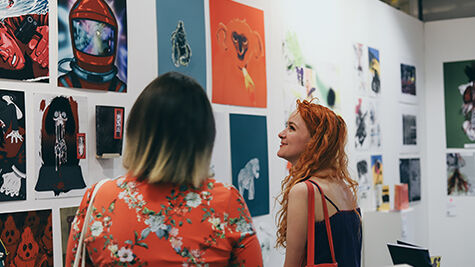
Open Days
The best way to truly experience our School is to attend one of our open days, where you can explore our campus, meet current staff and students, and get a feel for the vibrant community that makes up our university.

Inspired Festival
Inspired Festival is a showcase of work from students from the School of Arts. Work is exhibited across Birmingham city centre at a range of venues as well as on digital and static billboards and across our own University sites.
Subject areas in this School
University awarded Queen's anniversary prize
Birmingham City University has been named the winner of a prestigious Queen’s Anniversary Prize in recognition of its School of Jewellery’s proud history of innovation spanning 130 years.
ADM Archive
The Arts, Design and Media Archive holds 40 different collections covering the fields of art and design, photography, education, music, media, jewellery and fashion, and are free inspirational resources for students and staff.