
Sound Engineering and Production - BSc (Hons)
Currently viewing course to start in 2024/25 Entry.
Our BSc (Hons) Sound Engineering and Production degree course will provide you with the creative skills and versatility you need to succeed in a constantly evolving, challenging industry. You’ll have access to world-class facilities so that you can experiment with music production, sound engineering, audio electronics and much more....
- Level Undergraduate
- Study mode Full Time
- Location City Centre
- Award BSc (Hons)
- Start date September 2024
- School School of Computing and Digital Technology
- Faculty Faculty of Computing, Engineering and The Built Environment
This course is:
Available with Professional Placement year
Open to International Students
Overview
I'm a third year Music Technology student. When I was looking for Music Technology courses, Birmingham City University really stood out to me. I was keen on attending a Bachelor of Science and the course really focussed on the science aspects as well as maintaining the artistic elements of music and sound production. The support of the tutors has been fantastic. The professional standard and the facilities on campus are great due to their accessibility around the clock. The easy access to studios has been extremely helpful in completing my work and keeping on top of deadlines. At BCU, there's been a heavy focus on employability and what I could do with all aspects of my degree. The university has organised the industrial mentor forum, a space where students can communicate with alumni and people within the industry. The Acoustics Special Interest Group also consisted of more bespoke talks from people within the acoustics industry about different aspects of the work and how individual companies run. This is how I developed contact with an acoustic consultancy to complete my placement year. I act as an Acoustic Technician at Dragonfly Consulting. It went so well that I'm returning upon my graduation to continue working with them. The university has given me opportunities I don't think I would have received anywhere else.
I'm a second year computer science student studying at Birmingham City University. As a Computing student, there are plenty of computer labs available. There's entire rooms filled with Cisco networking equipment, as well as laptops that can be rented out to complete your work. Several of the facilities have now moved over to STEAMhouse, which is a £70 million build that is now the new home for Computing and Digital Technology students. One of the main things for me was getting employment at the end of my university degree. And Birmingham City University offers a wealth support for moving into the work environment. The course is a very important focus and a very industry focussed as well. I've been offered roles as a student demonstrator for Python programming. I found that the best way to show that you've understood something is to be able to teach somebody else.
I'm studying Computer Networks and Security. So far, I've really enjoyed my time at BCU. I felt really included within the student community. For the past two years, I've been involved in Innovation Fest. This is an annual event that showcases student work from the faculty. A lot of employers visit this festival, which allows us to widen our professional network. Throughout my time at BCU, I've had some time to
develop a relationship with the Careers+ team and go through tailoring my CV and my cover letters with them. Because of this, I have been presented with many opportunities which they have tailored to me and my needs. Through this, I was encouraged to apply for the women in tech competition.
So it was a one week program and I was working with the team from Cyferd. It's a software company,
and I successfully won and have taken up the placement year with them as a Junior Development Lead.
I look forward to coming back and applying the skills I've learnt throughout my placement and applied them within my studies.
Our BSc (Hons) Sound Engineering and Production degree course will provide you with the creative skills and versatility you need to succeed in a constantly evolving, challenging industry.
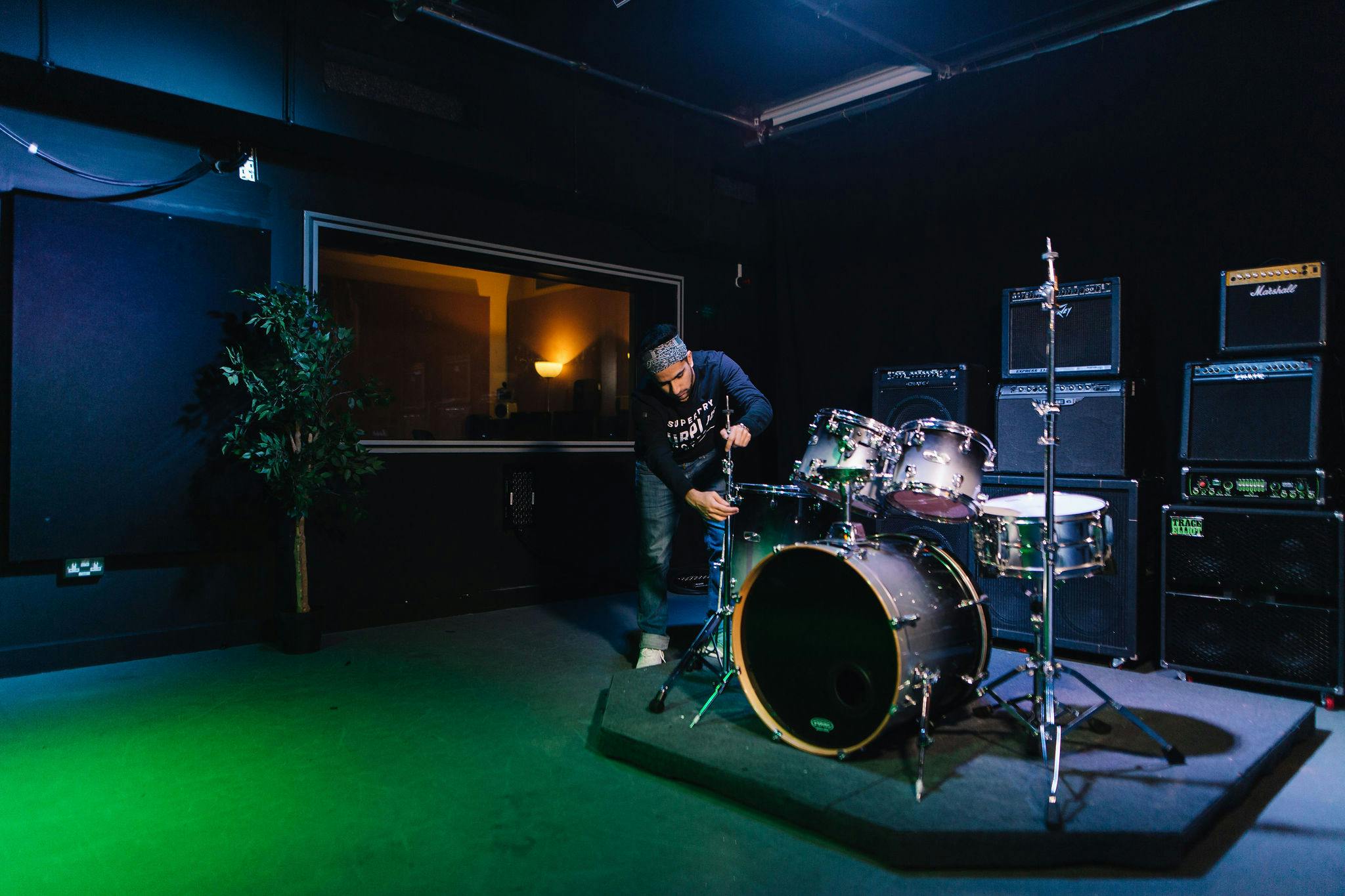
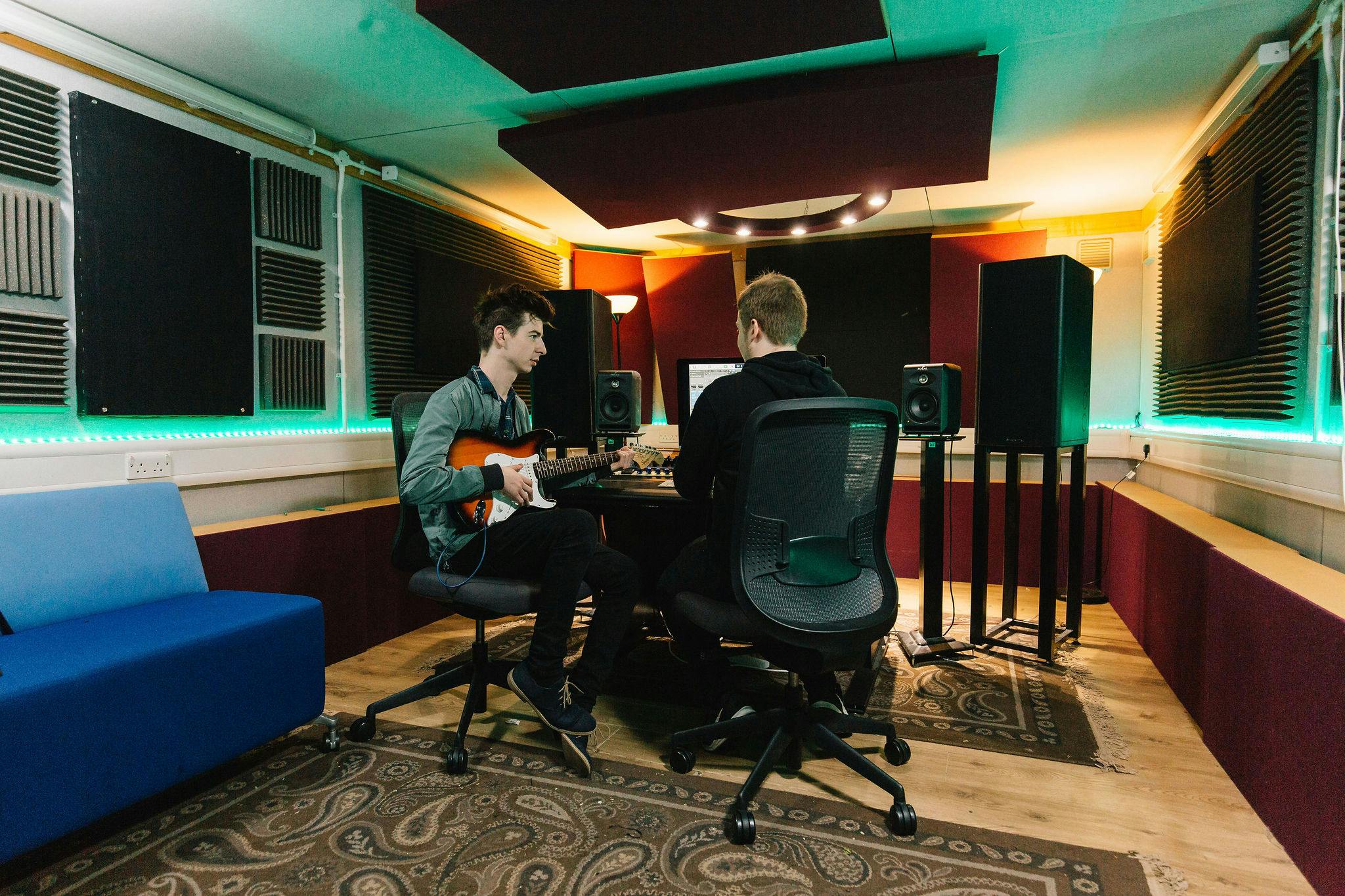
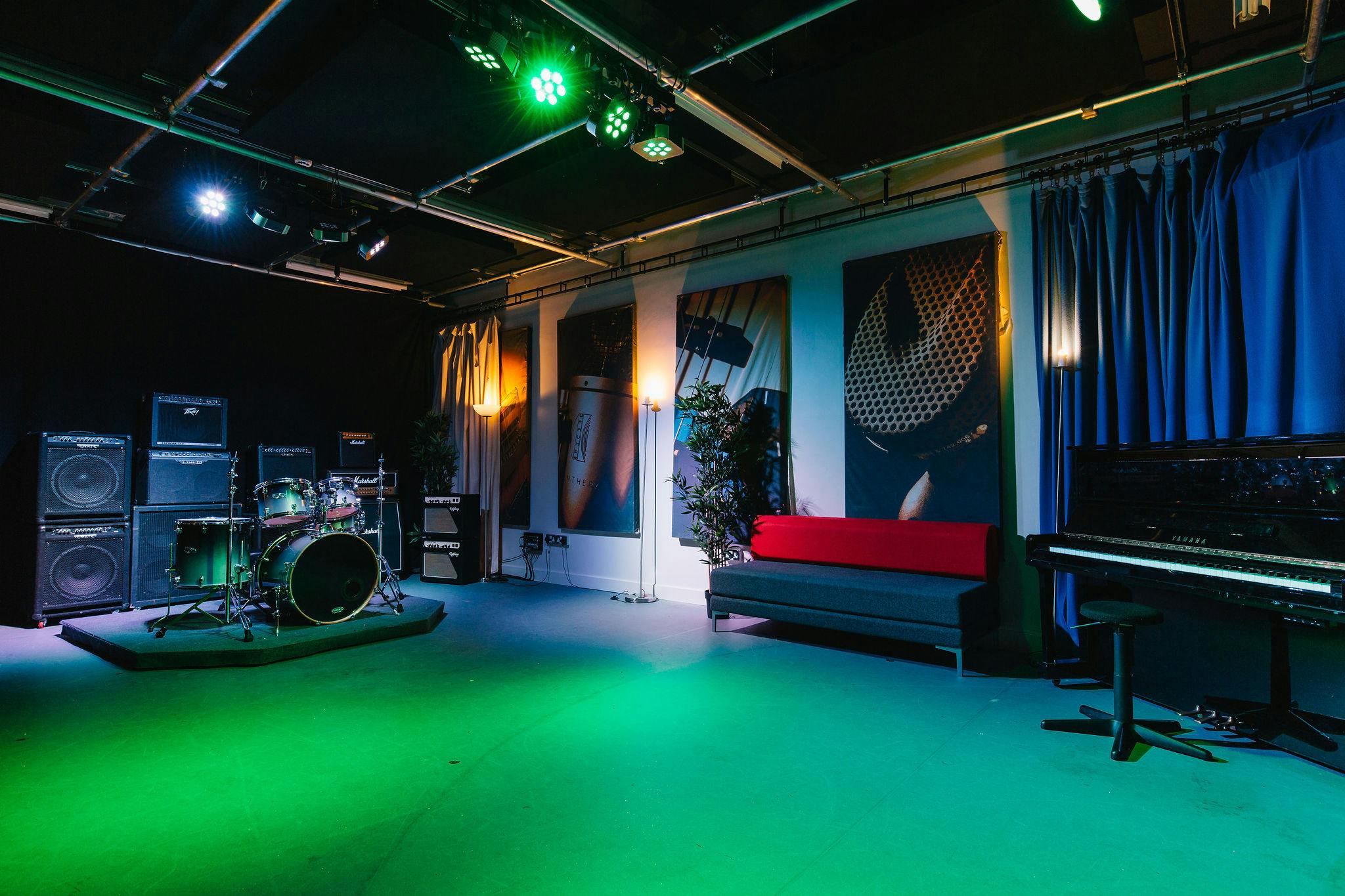
You’ll have access to world-class facilities so that you can experiment with music production, sound engineering, audio electronics and much more.
Available in the UK to home and international students, the course enables you to study a diverse programme, ensuring students are incredibly well equipped for employment within the industry once completing their degree.
Our students come from around the world and our Sound Engineering and Production course reflects this diversity.






Introducing STEAMhouse
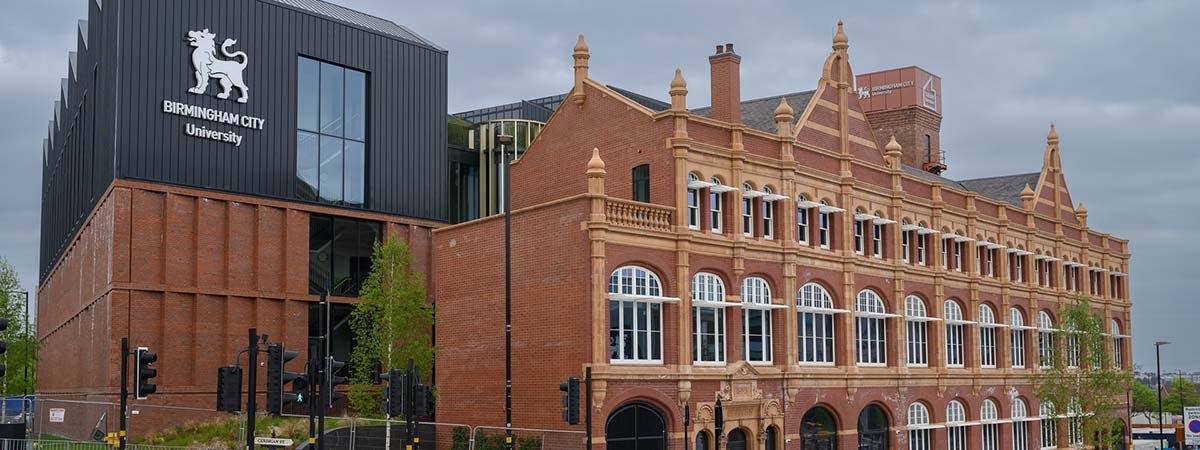
STEAMhouse is a centre for technology, innovation, creative thinking, prototyping and business development. Our brand new £70 million pound building is the new home for the School of Computing and Digital Technology.
What's covered in this course?
This course has been designed to meet the requirements found within the audio industry, providing a dynamic study programme that focuses on live and studio sound engineering, audio electronics, audio software engineering, acoustics and business principles. This combination of subjects ensures you’ll be employable in a range of career paths.
You’ll be able to use technology to assist in the capture and manipulation of sound. Our course combines practical, hands-on training with theoretical and academic understanding, giving you a holistic conception of sound technology.
Audio engineering is a highly dynamic sector, driven by rapid technological advancement. We will ensure that you have the skills to develop and maintain the next generation of models for production, performance and measurement.
You will develop key transferrable skills, such as teamwork, reflection and self-awareness. You’ll also gain analytical skills through coursework tasks, as well as enhancing your problem solving using a range of systems and technologies.
Throughout the duration of your course you will be presented with several chances to gain hands-on industry experience, through musical festivals, events and much more. As a Sound Engineering and Production student you will receive the opportunity to undertake trips through the Live Sound Society.
Professional Placement Year
This course offers an optional professional placement year. This allows you to spend a whole year with an employer, following successful completion of your second year, and is a great way to find out more about your chosen career. Some students even return to the same employers after completing their studies.
If you choose to pursue a placement year, you will need to find a suitable placement to complement your chosen area of study. You will be able to draw on the University’s extensive network of local, regional, and national employers, and the support of our Careers teams. If you are able to secure a placement, you can request to be transferred to the placement version of the course.
Please note that fees are payable during your placement year, equivalent to 20% of the total full-time course fee for that year.
Accredited By
This course is accredited by:

One of the best things about the course was how wide ranging it was. It enabled me to take a holistic look at the audio industry in general.
I really appreciated the technical elements of the course because whilst I really enjoyed all the studio recording and live sound modules, the fact that the course really opened my eyes to the world of programming and that sort of engineering really enabled me to get a strong technical background which is what got me the job at Spotify. Support and Surveillance Specialist at Spotify, New York City.
I was very happy with the course. The biggest thing for me was the breadth. I know people from my year of the course who have gone on into research, live sound, low level engineering, film, composition, all sorts of different areas of the music industry. The great thing about the course is that it doesn’t consign you into one area, it gives you the tools that you need to develop your understanding of which ever area you choose to rather than directing you into one area in particular. Ashley Eastwood, Engineer, Product Engineering at Music Group
Harvey Graham
Harvey didn’t want his ADHD to become an obstacle in pursing his passion for sound engineering. The variety of opportunities on his course keep him engaged and busy, allowing him to achieve his full potential and connect with others in the music industry.
Read in fullWhy Choose Us?
- Range of industry opportunities - Graduates of this course have successfully entered the audio industry, working in live sound, software development, production, sound design and audio post, through to product development, acoustic consultancy and education.
- Preparation for employment - This course will prepare you for the range of technology-orientated career paths in the highly dynamic audio technology environment. Our students have gone to work with companies such as Eurotec International and BBC.
- Get real life work experience - This course has the option of a sandwich year which you can take between your second and final year.
- Members of WISE - Inspiring female talent in physics and computing.
- State-of-the-art campus and facilities - You’ll be taught across our three City Centre Campuses that include; Millennium Point, which has recently had a £6.5 million investment in facilities; the £57 million Royal Birmingham Conservatoire; and £62 million Parkside Campus. Find out more about our campuses.
Open Days
Join us for an on-campus Open Day where you'll be able to meet us in person. Booking for the next event isn’t open yet. Register your interest below and we’ll email you as soon as booking goes live.
Next Open Day: 29 June 2024
Entry Requirements
These entry requirements apply for entry in 2024/25.
All required qualifications/grades must have been achieved and evidenced at the earliest opportunity after accepting an offer to help confirm admission and allow for on-time enrolment. This can also include other requirements, like a fee status form and relevant documents. Applicants can track their application and outstanding information requests through their BCU mySRS account.
120 UCAS tariff points
Please note: If you qualify for our BCU Accelerate scheme, you could receive an offer that is two grades below our normal entry requirements. Find out more about BCU Accelerate.
If you have a qualification that is not listed, please contact us.
Fees & How to Apply
UK students
Annual and modular tuition fees shown are applicable to the first year of study. The University reserves the right to increase fees for subsequent years of study in line with increases in inflation (capped at 5%) or to reflect changes in Government funding policies or changes agreed by Parliament. View fees for continuing students.
International students
Annual and modular tuition fees shown are applicable to the first year of study. The University reserves the right to increase fees for subsequent years of study in line with increases in inflation (capped at 5%) or to reflect changes in Government funding policies or changes agreed by Parliament. View fees for continuing students.
Award: BSc (Hons)
Starting: Sep 2024
- Mode
- Duration
- Fees
- Full Time
- 3 years
-
TBC


Guidance for UK students
UK students applying for most undergraduate degree courses in the UK will need to apply through UCAS.
The Universities and Colleges Admissions Service (UCAS) is a UK organisation responsible for managing applications to university and college.
Applying through UCAS
- Register with UCAS
- Login to UCAS and complete your details
- Select your course and write a personal statement
- Get a reference
- Pay your application fee and submit your application
Guidance for International students
There are three ways to apply:
1) Direct to the University
You will need to complete our International Application Form and Equal Opportunities Form, and submit them together with scan copies of your original academic transcripts and certificates.
2) Through a country representative
Our in-country representatives can help you make your application and apply for a visa. They can also offer advice on travel, living in the UK and studying abroad.
3) Through UCAS
If you are applying for an undergraduate degree or a Higher National Diploma (HND), you can apply through the UK’s Universities and Colleges Admissions Service (UCAS).
You can request a printed form from your school or nearest British Council office. You will be charged for applying through UCAS. Birmingham City University’s UCAS code is B25 BCITY.
Personal statement
UK / EU students are required to submit a personal statement as part of their application for this course.*
The personal statement gives you a crucial opportunity to say why you’re applying and why the institution should accept you.
Here are the key areas you’ll need to address:
- Course choice - Why does this course appeal? What areas are of particular interest?
- Career plans - If you have a specific career in mind, say how your chosen course will help you pursue this goal.
- Work experience - Mention any work that is relevant to your subject, highlighting the skills and experience gained.
- School or college experience - Highlight skills gained at school/college, eg summer schools or mentoring activities.
- Non-accredited skills or achievement - eg Duke of Edinburgh Award, Young Enterprise scheme.
You should also mention your future plans – if you’re planning to take a year out, don't forget to give your reasons. Talk about any subjects you’re studying that don’t have a formal assessment and any sponsorships or placements you’ve applied for. And don't be scared to add in details about your social, sports or leisure interests.
Worried about Personal Statements?
If you've got no idea where to start or just want to check you're on the right track, we’ve got expert advice and real examples from our students to help you nail your personal statement. You can even download our ultimate personal statement guide for free.
*Non-EU students are not required to submit a personal statement when applying for this course.
Course in Depth
Year One
In order to complete this course a student must successfully complete all the following CORE modules (totalling 120 credits):
This module will develop students’ understanding of acoustic fundamentals and will also develop a methodology for testing a range of musical instruments, using a range of applicable techniques to extract and analyse data.
This module provides a base for you to develop key skills in recording and mixing, imperative for all fields of music technology and sound engineering. You will become familiar with the hybrid analogue mixing/digital recording studio environment and explore recording techniques and processes applicable to a wide range of acoustic and electric instruments. You will study analogue-based audio systems and processes, and microphone technology. You will apply this knowledge through a series of studio based recordings.
This module will introduce the nature of digital signals, presenting the international standards for digital audio data and the common processes involved in the capture and processing of digital signals. Later the module will allow you to develop strong skills in the standards for compression and distribution of digital audio signals and via a cross discipline approach, the module will illustrate common methods form computing and how valid these are for digital signal distribution.
This module will give you a broad understanding of sound reinforcement for a range of scenarios of up to 250 audience capacity. As well as the practical skills of connecting and troubleshooting a range of equipment from analogue to digital, the module will also focus on the need for good theoretical skills, including room modelling and system prediction as well as understanding of electrical safety and safe operating practice.
In this module, you will explore everything from compilers, instruction sets and hardware architectures up to programming concepts such as iterators and functions. The module finishes by introducing simple digital signal processing technologies and object oriented design. The module provides the knowledge base to excel in the technical modules in years 2 and 3.
This module provides a foundation for you to grow into audio hardware design related final year projects, employment and work placements. The module outlines an essential part of being a good studio or live sound engineer and also relates to high-end audio reproduction systems found in A/V theatre and hi-fi listening rooms.
Year Two
In order to complete this course a student must successfully complete all the following CORE modules (totalling 120 credits):
This module introduces you to recording sound for television and radio, sound effects, dialogue replacement (ADR), and mastering audio levels for broadcast using a project based approach. You will increase your employability through exposure to the skills used in the broadcast industry and working with actors and television crews in interdisciplinary activities involving students across different faculties.
This module enables you to develop an individual recording portfolio based on your personal areas of interest whilst acquiring core techniques and skills in key applications. It provides the opportunity to explore editing, mixing and a range of recording techniques to lay a foundation for more advanced recording and production work at Level 6.
Digital technology is widely used throughout all the stages of the digital media processing, production, transmission, distribution and broadcasting activities. This module provides application based fundamental digital signal processing (DSP) knowledge and skills.
This module will develop key understanding of audio systems, embedded systems and electronics. This module will encourage you to develop your passion for the equipment found in the studios, how they sound and why, and what makes them important during the recording, mixing and mastering process.
This module will allow you to gain an in-depth understanding of global music and audio industries and how organisations have sought to adapt to technological change. This module enhances employability through the development of your understanding of employer requirements and approaches to recruitment.
This module will provide a practical insight into acoustic consultancy by assessing through theory and practice. It will cover building, interior and environmental acoustics in a way that aids employability by utilising methods that are typical of industrial practice.
Professional Placement Year (Optional)
In order to qualify for the award of BSc (Hons) Sound Engineering And Production with Professional Placement Year a student must successfully complete the following module.
This module is designed to provide you with the opportunity to undertake a credit bearing, 40- week Professional Placement as an integral part of your Undergraduate Degree.
The purpose of the Professional Placement is to improve your employability skills which will, through the placement experience, allow you to evidence your professional skills, attitudes and behaviours at the point of entry to the postgraduate job market. Furthermore, by completing the Professional Placement, you will be able to develop and enhance your understanding of the professional work environment, relevant to your chosen field of study, and reflect critically on your own professional skills development within the workplace.
Year Three
In order to complete this course a student must successfully complete all the following CORE modules (totalling 120 credits):
The purpose of the module is to enable you to undertake a sustained, in-depth and research informed project exploring an area that is of personal interest to you. In agreement with your supervisor, you will decide upon your topic which will take the form of a practical outcome (artefact) with accompanying contextual material. The main consideration when choosing your topic is that it must be aligned to the programme you are studying, and you should consider the relevance of this topic to your future academic or professional development.
At this level, you will be expected to work independently but you will receive additional one-to-one support from your supervisor, who will be familiar with your chosen topic area. As you progress on the module, extra support will be available and this may take the form of group seminars, workshops and online materials that will help to develop your project.
The module allows a deeper understanding of measuring and tuning PA systems, the operations and mathematics involved in rigging, and other show control systems such as DMX for lighting.
This module will cover the wide range of research areas within music information retrieval (MIR). The field of MIR emerged at the intersection of other areas in music research including audio signal processing, machine learning, music history, musicology, and music psychology. Current research in MIR consists of topics related to these fields, including music recommendation, automatic music transcription, optical music recognition, source separation, semantic audio applications.
The module will cover linear and nonlinear systems, time and frequency domain processing algorithms and will explore future generations of methods in the field such as adaptive, cross-adaptive and intelligent music production systems.
The Game industry has overtaken the film industry in terms of revenue and audio is an integral part of developing high impact titles. In this module, you will explore the fundamentals of sound design for interactive environments, including sound effects, Foley sound, soundscapes and dialogue. The module will cover the integration of audio into game engines like Unity and middleware such as FMOD, and mixing techniques particular to the gaming industry.
Download course specification
Download nowHow you learn
You will be assessed both formatively and summatively by a number of methods. Formative assessment occurs throughout the programme and involves feedback from peers, tutors and individual reflection.
A range of summative assessment methods are employed involving both individual and group assignments, written coursework assignments and practical project work, laboratory experimentation, tests and examinations (seen and unseen, open-and closed-book). Assessment methods for each module are identified in a module guide and, for coursework, assessment details and criteria are specified in each assignment brief.
In accordance with the University Regulations you will be permitted two attempts at assessments. After your first sit, if you are unsuccessful in any of your assessments, there will be a final resit opportunity for which your mark, provided that you pass the assessment, will be capped at 40 per cent.
Attendance requirements
For more information on attendance requirements, course contact time and suggested self-study hours, download the course specification.
International opportunities
The Centre has a partnership arrangement with the highly esteemed University of Rochester in New York State, USA. This exchange programme offers the opportunity for students to apply to study abroad for a semester in the second year. More generally, this arrangement feeds into the internationalisation of the course with students from the USA joining the cohort at BCU, opportunities for joint research projects and short academic exchanges.
Trips and Visits
Birmingham City University is located at the heart of the West Midlands, with a rich, vibrant music scene. With live venues from intimate jazz bars to rock venues, from festivals such as Moseley Folk Festival to world renowned Symphony Hall there are plenty of chances for you to gain hands-on experience! As a student within the school you will be able to enjoy professional-quality resources and access to highly accomplished musicians from genres including classical, folk, jazz, rock and electro.
Throughout the duration of your course you will be presented with several chances to gain hands-on industry experience, through musical festivals, events and much more. As a Sound Engineering and Production student you will receive the opportunity to undertake trips through the Live Sound Society.

Athena Swan Bronze Award
We have successfully secured the Athena SWAN Departmental Bronze Award recognising a commitment to gender equality.
The Athena Swan Charter is a framework which is used across the globe to support and transform gender equality within higher education (HE) and research.
Employability
Enhancing Employability Skills
Your experience at Birmingham City University will ensure you’ll graduate as a creative problem solver, with significant experience of professional industry-standard hardware, software systems. You will leave with a global outlook, primed to engage with the technical and aesthetic issues that will challenge the music and audio industries in the and technologically mediated world ahead.
The Module Industrial Mentors scheme supports the enhancement of graduate employability through on-going engagement with industry specialists throughout the course. This initiative is based on facilitating interactions between students and individuals working across the music technology and audio sector via module-based forums. This innovative approach allows you to explore specific subject areas with experienced professionals working in the field.
You have the option undertake an assessed sandwich year between your second and final year, which will provide you with valuable work experience and give you the real-life skills you need.
The first year Music and Audio Industries and second-year Employability, Projects and Management modules have been designed to give you a deeper understanding of aspects of this dynamic sector and offer insight that will help with your career development.
Lewis Planter
BSc (Hons) Sound Engineering and Production
 After completing his degree in Sound Engineering and Production, Lewis Planter developed a career as a freelance music producer and songwriter.
He has worked with artists including Danielle DI, with whom he released the single ‘Nothing on Me’. He also collaborated with a Jamaican radio personality and disc jockey on the ‘Ragga Riddim Compilation’ which features dancehall acts including Beenie Man, Assassin, Bugle others. This was released earlier this year under the Elektra Music Group label in conjunction with Zojak distributions.
He has also worked with Protoje, producing the track ‘Answer to your Name’, which was the third single from Protoje’s chart-topping reggae album ‘Ancient Future’. This single was featured on Soccer AM in 2015, as well as being used on FOX’s ‘Lethal Weapon’ TV series which aired in the US in October 2017, and will be shown in the UK on ITV in 2018.
Placements
The Sound Engineering and Production course offers you the chance to take a ‘sandwich’ year, in which you can undertake an industrial placement. This takes place after the second year of study and extends the course duration to four years.
There are a wide range of potential placements that you may pursue such as working in recording studios, record companies, in professional audio and theatres. Previously students have undertaken placements with companies such as SSE, Midas/Klark Teknik (The Music Group) and Dolby.
In the past our students have undertaken year long placements gaining crucial contemporary industry experience. One example is Christopher Savva who undertook a placement at the International Federation of Phonographic Industry. Christopher’s role included anti-piracy work, where he worked hand-in-hand with the major record labels on content protection and the pre-release protection of singles and albums. His work led to him being offered the chance to undertake some work at EMI as well as a week-long assisting role within Sony RCA Records’ marketing department.
Placement Profiles
 Christopher Savva
Course : BSc (Hons) Sound Engineering and Production
Placement : International Federation of Phonographic Industry, London
Duration : 1 Year
International

Our students come from around the world and our Sound Engineering and Production course reflects this diversity.
Birmingham City University is a vibrant and multicultural university in the heart of a modern and diverse city. We welcome many international students every year – there are currently students from more than 80 countries among our student community.
The University is conveniently placed, with Birmingham International Airport nearby and first-rate transport connections to London and the rest of the UK.
Our international pages contain a wealth of information for international students who are considering applying to study here, including:
- Explore some of the good reasons why you should study here.
- Find out how to improve your language skills before starting your studies.
- Find all the information relevant to applicants from your country.
- Learn where to find financial support for your studies.
Here at Birmingham City University we welcome students from all across the globe. Our BSc (Hons) Sound Engineering and Production undergraduate degree is open to international applicants who wish to study the field of music production and technology.
As an international student you will benefit from studying alongside a diverse range of students, all with different backgrounds and experience. In addition to this the course is led by tutors with international experience. You will have the chance to draw upon the diverse cultures and wealth of experience from your fellow students, learning new skills and sharing your own knowledge.
As an international student you will benefit from studying in close proximity to the UK’s diverse and continuously changing creative industries, you are encouraged to engage and regularly network with these industries. Through practice-based teaching you will develop an in-depth understanding of music production practices within the UK and further afield. You will have the chance to complement these skills through undertaking a work placement.
As a Sound Engineering and Production student you have the chance to earn while you learn, taking on various roles through the University’s in-house employment scheme. You will also be able to access personal and academic support services, as well as help and advice tailored specifically for you. Through an international orientation and welcome week you will be able to adjust to life within the UK, preparing you for your studies!
Facilities & Staff



Our Facilities
As a student in the School of Computing and Digital Technology, you will have access to our labs, software, professional sound studios, computer games labs and industry-standard facilities to develop your practical skills in audio, video and multimedia application development, content creation and more.
We are currently undertaking a £400 million investment programme in our facilities, including a major expansion of our City Centre Campus. This includes our brand new £70 million development, STEAMhouse, which will be the new home to Computing and Digital Technology students. This state-of-the-art centre will give you access to outstanding facilities and equipment, as well as opportunities to collaborate with businesses across multiple sectors and work on real industry-based projects.
Our facilities in Millennium Point have undergone a £6.5million investment with a new maker area, engineering labs/equipment and IT equipment.
Thanks to our partnerships with Cisco, Microsoft, Oracle, Juniper, SAS and LPI you will have access to the latest technology and facilities that reflect advanced professional practice. Our students also have access to software such as the Adobe Suite including Photoshop, InDesign and Illustrator.
Our staff
Dr Roy Priest
Associate Professor of Computing
Roy is Academic Lead in the Centre for Digital Media Technology and Director of Learning, Teaching and Employability within the School of Computing and Digital Technology. Prior to working in higher education, Roy was involved in various aspects of the music industry, as a professional musician and also working in artist management and legal and...
More about RoyDr Islah Ali-MacLachlan
Senior Lecturer
With a background working as a product designer in the hi-fi industry and as a working musician over many years, Izzy specialises in the areas of live sound and acoustics. He is an in-demand live engineer and production manager, working with a number of festivals and events each year. He was instrumental in setting up the student-led Live Sound...
More about Dr IslahDr Simon Hall
Head of Music Technology
Simon's musical interests are wide-ranging, which is reflected in his variety of work. He is an active composer, producer, recording engineer and bass trombone player as well as educator. He has worked across a range of genres in a range of capacities, with artists as diverse as Karlheinz Stockhausen, Pierre Boulez, Louis Andriessen and Heiner...
More about SimonBen Markland
Ben is widely known and much admired, not only for his playing, but for his writing and arranging. He gained an MA in Composition from Birmingham University before embarking on a freelance career. Ben is also active in education, regularly running composition and improvisation workshops. He lectures in music technology, though his fine bass playing...
More about BenDr Yonghao Wang
Associate Professor
Dr. Yonghao (Leo) Wang is an esteemed academic with over 20 years of experience in the fields of Networking and Cybersecurity, with a special focus on blockchain technology and decentralised communication systems.
More about YonghaoDr David Gibson
Associate Professor
In 1997 David joined BCU as a lecturer. He contributed to the Electronics programme and soon became Assistant Centre Manager and then Centre Manager for the Centre of Electronics and Software having been a Course Director for multiple courses. In 2009 he became Deputy Head of School for Computing, Telecommunications and Networks until 2015. His...
More about David