
Psychology - BSc (Hons)
Currently viewing course to start in 2024/25 Entry.
Looking for Birmingham psychology courses? Our BSc (Hons) Psychology degree is accredited by the British Psychological Society and allows you to take a year-long industry placement....
- Level Undergraduate
- Study mode Full Time/Part Time
- Location City Centre
- Award BSc (Hons)
- Start date September 2024
- Fees View course fees
- School School of Social Sciences
- Faculty Faculty of Business, Law and Social Sciences
This course is:
Available with Professional Placement year
Open to International Students
Overview
[00:00:09] Luke The fact the Birmingham City University psychology courses are accredited by the British Psychological Society is really important to me because not only does that mean that I know the course has a very high standard of quality, but it also means I know that if I ever want to look for a psychology related jobs after my degree, I can do so due to the accreditation of the course has.
[00:00:30] Rachael One of the things that stood out about a psychology course here was the modules. They modules such as health psychology, which was beneficial for my career, but there were interesting modules such as parapsychology, which I didn't see other universities doing so it was something that stood out to me.
[00:00:46] Luke Birmingham City University's facilities for psychology are absolutely amazing, you know, from software packages like SPSS and AR that allow me to do my data analysis to the best of my ability, to hardware like eye tracking facilities that allow me to do experiments that other universities may not allow me to do. It gives me the opportunity to do my research and do absolutely everything that I'm doing here at my university to the best of my ability.
Looking for Birmingham psychology courses? Our BSc (Hons) Psychology degree is accredited by the British Psychological Society and allows you to take a year-long industry placement.
Make sense of the real world through gaining a deep understanding of how the core and specialised areas in psychology contribute to our understanding of contemporary issues, as well as looking at the role of brain function across multiple psychological perspectives.
You’ll apply scientific reasoning and evaluate patterns of behaviour, gaining key transferable skills in communication, teamwork and problem-solving. This versatile course provides the opportunity for you to embark on a Psychology career or bring those skills to wide variety of other career paths.
What's covered in this course?
You will explore scientific approaches to understanding the mind, brain and behaviour. Demonstrate knowledge and understanding of the scientific underpinnings of the discipline of Psychology and how these underpinnings change across the core curriculum topic areas.
Explore how the six core areas in Psychology can explain factors that influence the mind, brain, behaviour and experience, and of the complex interactions between these. You will develop knowledge and understanding of Quantitative and Qualitative Research Methods. During your degree you will be given a range of optional modules to choose from allowing you to tailor your degree to your interests.
We use a blended learning approach, where we teach the core topics and theories in lectures; to explore the topics further we have interactive and activity-based seminars and then to enhance your learning we provide you with online activities and resources. The staff teaching on the course are experts in the areas and topics they teach on, which further enhances your learning experience, as they bring with them their practice or research-based knowledge.
We use a variety of assessment methods, this includes essay and report writing, presentations, using real life examples such as analysing case studies, online based quizzes linked to lecture materials and exams. Our focus on contemporary and innovative learning practices will help you gain key employability skills, such as communication, teamwork and problem-solving, as well as key skills in two innovative, intriguing disciplines.
Professional Placement Year
This course offers an optional professional placement year. This allows you to spend a whole year with an employer, following successful completion of your second year, and is a great way to find out more about your chosen career. Some students even return to the same employers after completing their studies.
If you choose to pursue a placement year, you will need to find a suitable placement to complement your chosen area of study. You will be able to draw on the University’s extensive network of local, regional, and national employers, and the support of our Careers teams. If you are able to secure a placement, you can request to be transferred to the placement version of the course.
Please note that fees are payable during your placement year, equivalent to 20% of the total full-time course fee for that year.
Accredited By
This course is accredited by:
Why Choose Us?
- We have a strong focus on employability and through placement opportunities and our links with local businesses, we aim to ensure you graduate not only with your degree but also with the skills and knowledge needed to embark on your chosen career.
- We aim to infuse learning with exposure to real-world experiences. Through participation in the Social Impact Hub, we give students the chance to work on real-life projects. These offer a unique opportunity for students to gain this invaluable experience while they study.
- This course is accredited by the British Psychological Society (BPS) and gives you Graduate Basis for Chartered Membership (GBC) when you pass the course.
- Our staff are research active, allowing research-informed teaching and learning activities. You will be given the opportunity to learn and participate in a number of research projects throughout the year and we hold regular academic research seminars, which are recorded for our online students.
- We are dedicated to fostering curiosity, critical thinking, and scientific inquiry in the realm of psychology, and our state-of-the-art facilities reflect this.
Open Days
Join us for an on-campus Open Day where you'll be able to meet us in person. Booking for the next event isn’t open yet. Register your interest below and we’ll email you as soon as booking goes live.
Next Open Day: 29 June 2024
Entry Requirements
These entry requirements apply for entry in 2024/25.
All required qualifications/grades must have been achieved and evidenced at the earliest opportunity after accepting an offer to help confirm admission and allow for on-time enrolment. This can also include other requirements, like a fee status form and relevant documents. Applicants can track their application and outstanding information requests through their BCU mySRS account.
Essential requirements
112 UCAS tariff points
Please note: If you qualify for our BCU Accelerate scheme, you could receive an offer that is two grades below our normal entry requirements. Find out more about BCU Accelerate.
If you have a qualification that is not listed, please contact us.
Fees & How to Apply
UK students
Annual and modular tuition fees shown are applicable to the first year of study. The University reserves the right to increase fees for subsequent years of study in line with increases in inflation (capped at 5%) or to reflect changes in Government funding policies or changes agreed by Parliament. View fees for continuing students.
Award: BSc (Hons)
Starting: Sep 2024
- Mode
- Duration
- Fees
- Full Time
- 3 Years
- £9,250 in 2024/25
- Apply via UCAS
- Part Time
- 5 Years
- Show fees
- £1542 per 20 credits
- Year 1 - 80 credits
- Year 2 - 80 credits
- Year 3 - 80 credits
- Year 4 - 80 credits
- Year 5 - 40 credits
Fees for Part-time students
This course can be studied on a Part-time study basis. The cost per year of study is based on credit requirements for that year.
International students
Annual and modular tuition fees shown are applicable to the first year of study. The University reserves the right to increase fees for subsequent years of study in line with increases in inflation (capped at 5%) or to reflect changes in Government funding policies or changes agreed by Parliament. View fees for continuing students.
Award: BSc (Hons)
Starting: Sep 2024
- Mode
- Duration
- Fees
- Full Time
- 3 Years
- £16,085 in 2024/25


Guidance for UK students
UK students applying for most undergraduate degree courses in the UK will need to apply through UCAS.
The Universities and Colleges Admissions Service (UCAS) is a UK organisation responsible for managing applications to university and college.
Applying through UCAS
- Register with UCAS
- Login to UCAS and complete your details
- Select your course and write a personal statement
- Get a reference
- Pay your application fee and submit your application
Guidance for International students
There are three ways to apply:
1) Direct to the University
You will need to complete our International Application Form and Equal Opportunities Form, and submit them together with scan copies of your original academic transcripts and certificates.
2) Through a country representative
Our in-country representatives can help you make your application and apply for a visa. They can also offer advice on travel, living in the UK and studying abroad.
3) Through UCAS
If you are applying for an undergraduate degree or a Higher National Diploma (HND), you can apply through the UK’s Universities and Colleges Admissions Service (UCAS).
You can request a printed form from your school or nearest British Council office. You will be charged for applying through UCAS. Birmingham City University’s UCAS code is B25 BCITY.
Personal statement
UK / EU students are required to submit a personal statement as part of their application for this course.*
The personal statement gives you a crucial opportunity to say why you’re applying and why the institution should accept you.
Here are the key areas you’ll need to address:
- Course choice - Why does this course appeal? What areas are of particular interest?
- Career plans - If you have a specific career in mind, say how your chosen course will help you pursue this goal.
- Work experience - Mention any work that is relevant to your subject, highlighting the skills and experience gained.
- School or college experience - Highlight skills gained at school/college, eg summer schools or mentoring activities.
- Non-accredited skills or achievement - eg Duke of Edinburgh Award, Young Enterprise scheme.
You should also mention your future plans – if you’re planning to take a year out, don't forget to give your reasons. Talk about any subjects you’re studying that don’t have a formal assessment and any sponsorships or placements you’ve applied for. And don't be scared to add in details about your social, sports or leisure interests.
Worried about Personal Statements?
If you've got no idea where to start or just want to check you're on the right track, we’ve got expert advice and real examples from our students to help you nail your personal statement. You can even download our ultimate personal statement guide for free.
*Non-EU students are not required to submit a personal statement when applying for this course.
Course in Depth
First Year
In order to complete this course, you must successfully complete all the following CORE modules (totalling 100 credits):
This module explores the origins, developments and refinements in the study of modern-day Psychology, dating back to early philosophy. The module will ensure students will see how modern-day Psychology has evolved, not just in terms of the “big-names” but also by viewing the scientific, cultural and social movements and influences that were happening alongside the development of this new discipline.
This module focuses on current and historical understanding of personality and individual differences. We review the main theories of personality and use contemporary empirical evidence to explore the complex relationship between personality and behaviour. In-depth examples of the complexity of individual differences will be provided, and some lectures will focus of personality disorders and problems assessing and classifying such disorders.
The academic component of this module provides you with an experiential learning process that will further develop your understanding of the complex theoretical and conceptual issues involved in the measurement and assessment of personality and individual differences. In particular, the seminar component will provide you with the opportunity to experience projective and objective personality tests and to further explore the problems associated with diagnosing personality disorders.
The module aims to identify contemporary issues in our society where psychological insights and perspectives can potentially deepen and broaden our understanding of the human condition and social affairs. It will aim to enable you to view the relationship between Psychology and other social sciences) in order to achieve a more holistic and eclectic understanding of Psychology and its relation to the contemporary age. The intention is to demonstrate the ways in which approaches in Psychology can contribute directly to our understanding of national and international contemporary events, and how Psychology can potentially deepen our understanding and insights of social processes.
Introduction to Psychopathology, will introduce you to psychological disorders such as depression, schizophrenia, addiction etc. and how these psychological disorders have an effect on daily thinking, functioning and behaviour. The assessment and diagnosis process of a psychological disorder will play a central role in this module and this will be done by using the Diagnostic and Statistical Manual of Mental Disorders, Fifth Edition (DSM-5; 2013). The DSM-5 (2013) is used by clinicians worldwide to assess and diagnose individuals with a psychological disorder. In this module the DSM-5 (2013) will be used to describe the key symptoms of psychological disorders which will help to enhance your understanding of key symptoms and criteria used by clinicians to diagnose a psychological disorder.
This module introduces you to the process of conducting research, analysing data and evaluating the findings. The module will provide a conceptual understanding of reporting research, the core statistical principals and tests used. The module provides hands-on experience of conducting an experiment, using statistical software for carrying out analyses and writing up the experiment in practical workshops. This module will equip you with the necessary knowledge and skills required to prepare you for future work, training or careers in an applied area of Psychology or research. This module will also identify how the skills and knowledge gained during this module are relevant to future modules that cover GBC competencies and training which are relevant to future work and studies in the area of Psychology.
In order to complete this course, you must successfully complete at least 20 credits from the following list of OPTIONAL modules:
This module explores the roots and informing principles of positive psychology, focussing on research and current developments internationally. Beginning with the seminal work of Martin Seligman, the module focusses equally on theory and practice, identifying the informing philosophy, the research base for the study area, and some practical strategies which aim to increase a sense of subjective well-being and positive mental health. The clinical value of the approach is explored via an integration of research, practical strategies and personal reflection.
The parapsychology module focuses on exploring how Psychology is placed in the wider domain of “science” and through debates about the meaning and function of parapsychological belief, parapsychological research, and the social/historical relevance of parapsychology. Throughout the module you will be presented with a number of parapsychological topics (e.g., Alien abduction; Telepathy; Clairvoyance; Demonic possession) which will be underpinned by two broad perspectives: (i) believer and (ii) sceptic. You will be introduced to the methodological, theoretical and psychological problems in examining paranormal belief and experience in order to provide opportunities for the development of semantic learning and critical thinking skills.
All core modules are guaranteed to run. Optional modules will vary from year to year and the published list is indicative only.
Second Year
In order to complete this course, you must successfully complete all the following CORE modules (totalling 60 credits):
This module provides you with an overview of the purpose, design, and conduct of qualitative research in psychology. This module builds upon and complements research methods modules delivered in level 4 by providing students with grounding in the use of qualitative research methods and analysis techniques commonly used in psychology. All sessions are structured to facilitate both conceptual learning and the development of applied research skills. More specifically, this module aims to help you develop skills in research and inquiry and develop academic attributes such as being able to think critically about different methodologies and knowledge claims.
This module will continue to develop key transferable skills from level 4 such as group discussion and debate, critical evaluation and evidence-based reasoning. There will be research-led teaching which will explore key debates and methodologies used in neuropsychology and cognitive Psychology. The GBC area of biological Psychology and cognitive Psychology will be supplemented through this module.
This module builds on the Research Methods and Psychology literacy module (Level 4), by providing you with the skills to master the process of designing and executing research using quantitative research methods, and analysing and evaluating the findings with quantitative data analysis techniques. The module provides hands-on experience of using computer software to build experiments and statistical software for carrying out analyses in the practical workshops. The module will enhance your skills in critically evaluating the strengths and limitations of published research papers and equip you with an advanced understanding of ethics in psychological research.
In order to complete this course, you must successfully complete at least 60 credits from the following list of OPTIONAL modules:
This module aims to introduce you to the area of health psychology and demonstrate how psychological principles may be applied to understand and alleviate problems of illness, ill health and health-related behaviours which are significant real world problems (pursing excellence). Key models and theories that aim to predict risk behaviour and at promoting health and self-care will be discussed, compared and contrasted. Interventions to promote behaviour change will also be covered. Behaviour change techniques and adherence will be debated with practical examples given. After considering the role of psychology in the field of health the module will focus on factors such as stress and its effects on health and illness. Coping styles and strategies as well as social support will be discussed as moderators of the relation between stress and illness.
Work and Organisational Psychology will cover the importance of how the workplace can impact upon people’s health (in both negative and positive ways) and how the workplace can also be used to improve well-being. Work and Organisational Psychology aims to improving the quality of work life and to protecting and promoting the safety, health and well-being of workers’ (The National Institute for Occupational Safety and Health; NIOSH).
This module aims to equip you with the relevant skills and knowledge, which are required for the role of the educational psychologist. The module will provide you with an understanding of the general principles and concepts underlying the British educational system and the relevance of psychology to that system. This module examines the role of the educational psychologist and explores the relationship between theory and practice within different educational contexts. The module will familiarise you with different methods of investigation (psychometric testing, observational techniques, interviewing and projective techniques) and intervention methods (behaviour modification, task analysis, conflict mediation and counselling). The module will also help you appreciate the integration and inter-relationships of different perspectives in psychology which contribute to this specialised applied area in psychology which transcend into applied and specialised areas of work within the Educational sector.
This optional Level 5 module is designed to introduce you to the field of forensic psychology. Forensic psychology is one of the key psychological domains recognised by the British Psychological Society and covers a broad range of topics highly relevant to the real world context. A key aim of the module is to teach you about a range of criminal justice settings within which psychology can be applied to assist the work of practitioners and the police.
At this level of study you will be encouraged to think about areas of study or work that you would like to pursue upon completion of this course. You will be firstly introduced to the different areas of psychology that you can specialise in. This will involve looking at the roles that psychologists perform within each of the branch areas as well as what is entailed to become specialised and charted within each particular branch. Workshops will be carried out within the following which will be supported by psychologists both within and external to the university.
This module will explore how culture influences human thought, feelings, cognitive processes and behaviour in an applied context. The relations between culture and psychology are both complex and profound. We will be considering a number of difficult questions including: What is human nature? What happens when different cultures collide? How do various ways of thinking differ across cultures? How does culture influence how we view ourselves? How can we study culture in psychology? How do cultures change or persist over time? The goals of the module are to introduce you to the field of cultural psychology, stimulate critical thinking and analytic skills generally, and help you to think about your own values from a cultural perspective.
The practical approach to this module will see you applying psychological theories to the real world via your experiences from work-based placements. This will allow you the opportunity to learn from your own experiences, but also experiences of your colleagues. This module will continue to develop key transferable skills such as group-work, critical evaluation and evidence-based reasoning contributing to the graduate attributes. This module has a strong link with professional development and will allow you to reflect on work placement experiences and the application of psychological theory. There is a strong integration of psychological theory and real world experiences across different domains, thus strongly supporting your continuing personal and professional development.
This module builds on the clinical and health-based modules on the programme by providing you with an in-depth and critical understanding of stress, which is one of the main risk factors for both psychological (e.g., anxiety, depression) and physical health outcomes (e.g., heart disease, cancer). In this module, you will learn about the biological, psychological and environmental influences on stress and disease, as well as the interaction between them. Key literature on stress-related illness across a wide-range of disciplines will be critically appraised.
The module will be supported by face-to-face learning through lectures and seminars, as well as online Moodle (VLE) activities. Lectures will provide the core material related to the topic, whereas seminars will allow you to apply this knowledge through task participation and group work. The VLE activities associated with this module will employ interactive online teaching methods, which will help you further develop your knowledge and skills outside the classroom. The seminars and VLE activities will relate to the content delivered in the lecture the week before.
Infancy will examine the social, emotional, cognitive and neural changes that occur during the first two years of life. Starting with pre-natal development and the formation of the brain the module will go on to investigate how infants start to explore the world, recognise faces, learn language and form attachments with those around them. The module will explore the complex relationship between genetics and the environment and how they shape our thinking, behaviour and personality.
All core modules are guaranteed to run. Optional modules will vary from year to year and the published list is indicative only.
Professional Placement (Optional)
In order to qualify for the award of BSc (Hons) Psychology with Professional Placement Year you must successfully complete the following module.
This module is designed to provide you with the opportunity to undertake a credit bearing, 40- week Professional Placement as an integral part of your Undergraduate Degree. The purpose of the Professional Placement is to improve your employability skills which will, through the placement experience, allow you to evidence your professional skills, attitudes and behaviours at the point of entry to the postgraduate job market. Furthermore, by completing the Professional Placement, you will be able to develop and enhance your understanding of the professional work environment, relevant to your chosen field of study, and reflect critically on your own professional skills development within the workplace.
Final Year
In order to complete this course, you must successfully complete all the following CORE modules (totalling 80 credits):
The applied social psychology module focuses on exploring how social psychological theory and research can be applied to real life. Throughout the module you will be presented with a number of contemporary social issues and will explore relevant theoretical models and examples to illustrate the impact that social psychological constructs, theories and research has had on informing applied interventions. Theoretical perspectives might include cross cultural psychology, individual differences, and critical social psychology. Contemporary social issues might include encouraging cooperation with authorities, understanding responses to terrorism, reducing prejudice, and promoting employee production.
Understanding research issues is an essential skill for psychologists operating in an evidence-based paradigm. The ability to produce an in-depth dissertation and present a logical argument using such research is a crucial skill for a successful psychology graduate.
This module builds upon learning at level 4 and level 5 in previous Psychological Research Methods modules. This module will encourage you to plan, execute and write up a research project which adheres to principles of the Psychology Ethics Committee. You should seek out research sources to produce an in-depth dissertation that answers your own identified research question or knowledge gap, making a contribution to the existing literature within your chosen topic area. This will be facilitated through critical evaluation of the sources you have selected and used. You will also be facilitated in using statistical and other specialist software, testing equipment and materials, as well as the use of the Psychology laboratories.
This module aims to investigate human development throughout the lifespan focusing on changes to biological, cognitive, social and emotional elements of psychological functioning. The module will provide you with an understanding of the general principles and concepts, different theoretical perspectives, research methodologies, contemporary debates and areas of application of Lifespan Development. This module will enable you to develop skills in critical reading and analysis of theoretical and empirical issues related to Lifespan Development. In the context of contemporary societies and globalisation, the role of social and cultural context of development is explored.
This module will develop key transferable skills, continued from level 4 and 5 modules such as Neuropsychology, including group discussion and debate, critical evaluation and evidence-based reasoning. Research-led teaching will explore key debates, theories and methodologies used in neuropsychology and ageing, as well as challenges. The GBC areas of biological psychology, developmental psychology and cognitive psychology will be supplemented through this module.
This module contributes to knowledge and understanding in neuropsychology from a lifespan development perspective. It takes a holistic approach to understand the cognitive and neural theories and evidence across a range of areas, including language, attention and memory, and the effects ageing has on these processes.
This module will continue to develop key transferable skills from level 4 and 5 such as group discussion and debate, critical evaluation and evidence-based reasoning. There will be research-led teaching which will explore key debates and methodologies used in language and communication research. The GBC areas of biological psychology, cognitive psychology and developmental psychology will be supplemented through this module.
This module explores the origins, developments and refinements in counselling psychology, in both theory and practice, as well as the necessary communication processes and skills employed in clinical practise across a range of settings in the human services. You will be introduced to key theoretical approaches to counselling psychology, core conditions underpinning successful counselling relationships and essential skills employed in counselling practice.
This module equips you with the relevant skills, knowledge and training which are required for understanding the psychology of gender and sexualities. In undertaking this module, you will gain the relevant knowledge of psychological perspectives of gender and sexualities, including their conceptualisation and organisation in relation to cultural and historical circumstances. You will evaluate psychological theory and apply theoretical concepts and knowledge to develop arguments relating to gender and sexuality. Additionally, you will be encouraged to examine the relationship between theory and practice in psychology in order to identify the links between psychological knowledge and its application. As part of your learning, you will analyse the construction of sexuality and gender in society and will be encouraged to develop awareness around how such conceptualisations impact on various social groups and psychological practice.
This module covers fundamental areas and phenomena of intellectual and developmental disabilities, exploring competing perspectives, contemporary debates and important areas of application such as education and mental health. The module looks at intellectual disabilities and developmental disorders pre-natal, post-natal and across the life-span.
The module will explore types of research methods, theoretical perspectives and questions of value, culture and context. The role of brain functioning and links between the different disabilities and disorders and mental health will be considered throughout this module. This module will also identify how the skills and knowledge gained during this module are relevant to GBC competencies and training which are relevant to future work and studies in the area of Psychology. This module will be of particular interest if you would like to explore a career as an educational or clinical psychologist.
The aim of this optional Level 6 module is to provide an overview of how psychology can be applied to policing and the wider criminal justice system. This is often referred to as legal psychology, an important branch of forensic psychology. Legal psychology focuses on the application of psychological theory and practice to, for example, legal proceedings, the criminal investigation process, and prosecution of offences.
All core modules are guaranteed to run. Optional modules will vary from year to year and the published list is indicative only.
Download course specification
Download nowHow you learn
At the start of your learning journey, we will manage your transition into university by introducing you to core psychological knowledge and promoting the development of intellectual, research, employability and independent learning skills.
In your second year, you will refine these skills and develop critical thinking. The final stages of your degree involve application of these skills in research, real-world and employability contexts, ensuring that you are a well-rounded, employable graduate that can easily adapt to the continuing societal changes presented in the 21st century.
Over the course of your degree, there will be increased emphasis on practical and transferrable skills. You will collect, comprehend and examine data effectively, becoming increasingly computer literate in a number of statistical packages and experimental equipment. As you progress, you will also learn more advanced areas of qualitative and quantitative psychology. You will then be able to apply these skills in your final year as part of your Integrative Psychology Project, in which you will address a novel problem in a research area of your choice.
Examples of formative activities include essays, research proposals, semi-formal debates, individual group presentations, multiple choice questionnaires, quizzes, online forums and mock exams. We also offer scheduled one-to-one meetings and office hours for more detailed feedback if required. The formative activities will help you complete your summative assessments with a clear focus and confidently.
Trips and Visits
Previous trips have included visiting the Science Museum in London, getting to see some of the museum’s acclaimed science exhibitions, and learning first-hand key processes and information.
Student stories

Kimberly Stuart
Having previously worked with people with disabilities, Kimberley Stuart was keen to gain more background understanding of why people act the way they do. She arrived from the USA to study at Birmingham City University and now has plans to continue her education at Master's level.

Mandip Kaur Narewal
I chose to study Psychology at Birmingham City University mainly because the course had been accredited by the BPS. Not only that, the university received accreditation after its first inspection, and is the only post-1992 university to have done this. It had also received great reviews from the previous year which really influenced me. Even better, since I lived locally, all this was offered on my doorstep.
This course is accredited by:
The British Psychological Society
The Society and its members develop, promote and apply psychology for the public good. They enhance the efficiency and usefulness of psychologists by setting high standards of professional education and knowledge, and cover all areas of psychological research and practice.
Find out more about British Psychological Society accreditation.
Employability
Enhancing your employability skills
Our graduates will not only gain a degree with some of the most diverse career options, but also the transferrable skills to support this.
Importantly, all content is underpinned by active learning - degree content and assessment not only meet the criteria for our accrediting body, but allow flexibility of the learning process, which can be tailored to career goals. Specific modules dedicated to employability skills and creation of impact within the local community will further support this.
International
Birmingham City University is a vibrant and multicultural university in the heart of a modern and diverse city. We welcome many international students every year – there are currently students from more than 80 countries among our student community.
The University is conveniently placed, with Birmingham International Airport nearby and first-rate transport connections to London and the rest of the UK.
Our international pages contain a wealth of information for international students who are considering applying to study here, including:
- Explore some of the good reasons why you should study here.
- Find out how to improve your language skills before starting your studies.
- Find all the information relevant to applicants from your country.
- Learn where to find financial support for your studies.
Facilities & Staff
Our Facilities
We are constantly investing in our estate and have spent over £400 million on new learning facilities.
Psychology Labs
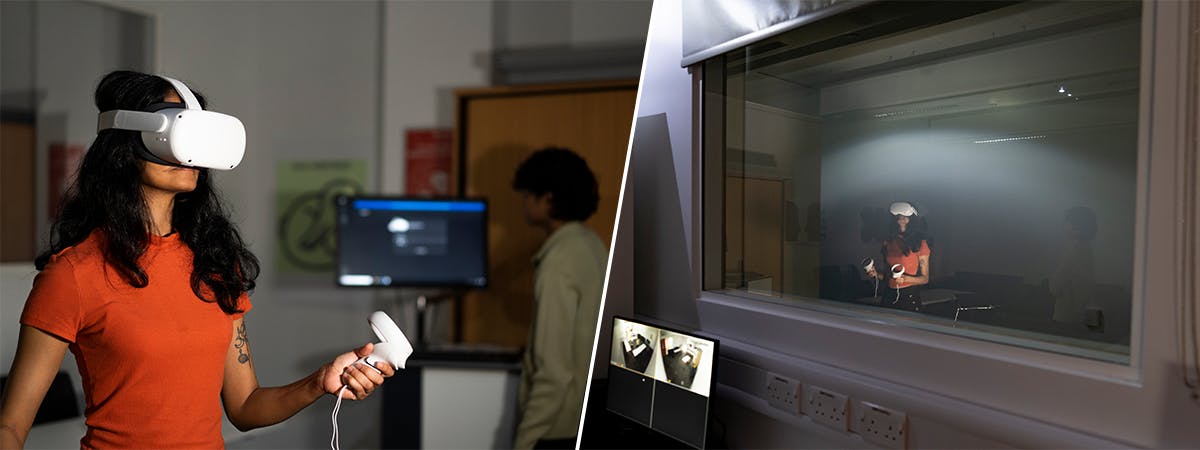
Explore the cutting-edge psychology labs, their resources and spaces that support our quest to unravel the complexities of the human mind and behaviour.
Learn about the Psychology Labs

The Curzon Building
This course is based at our City Centre Campus – and specifically The Curzon Building, alongside other social sciences, law and business students.
The £63m building offers students a unique social learning space, including a dedicated student hub incorporating student support services, in the heart of Birmingham’s Eastside development.
Realistic, simulated environments include two mock court rooms, a Magistrates' and Crown Court, and an interviewing suite. We’re also exploring the use of virtual environments as a way to develop case study analysis.
For those studying on the BA (Hons) Professional Policing or BA (Hons) Criminology, Policing and Investigation degrees, you’ll experience simulations of police interviewing environments for both suspects and witnesses, with access to tape recording and video playback analysis.
Crime investigation files are prepared using computer-based technology, and the crime data analysis requirements of the degree are supported by appropriate statistical and analytical software.
Psychology students can look forward to using state-of-the-art equipment as well, including the latest in eye-tracking software, and our new EEG machine, all geared towards giving you true hands-on experience with tools you’ll be using in your later career. You will also benefit from facilities across the wider campus including the Parkside and Millennium Point buildings.
The Curzon Building also features:
- An impressive library with access to over 65 million full text items and stunning views of Eastside City Park
- Your Students’ Union which is located in a beautifully restored 19th century pub, The Eagle and Ball
- A modern 300-seat food court with space to study and socialise
- Accessible IT facilities with full Office365 for all students for free
- Shared facilities with the wider campus including the Parkside Building and Millennium Point
Our staff
Dr Athfar Akhtar
Associate Professor in Applied Psychology
Prior to coming to BCU, Athfah Akhtar was a researcher working alongside clinicians in primary and secondary mental health services for 7 years. Her PhD was on an area within occupational psychology, specifically well-being in Trainee Teachers.
More about AthfarDr Deborah Earnshaw
Senior Lecturer in Psychology, Course Lead for BSc (Hons) Psychology
Dr Deborah Earnshaw has been a lecturer in Psychology with BCU since December 2017, and taught at the University of Derby both on-campus and online during her postgraduate degrees.
More about DeborahDr Keeley Abbott
Associate Professor
Keeley's career to date has been characterised by an interest and awareness around issues related to equality, diversity and inclusivity. This is based on her research focus related to sexualities, sexual health and sex education, specifically relating to themes of inequalities, social exclusion and social justice.
More about KeeleyDr Aaisha Connor
Senior Lecturer in Psychology
Dr Aaisha Connor (nee Farooqi) is a Senior Lecturer in Psychology, with an interest in mental health and well-being. She completed her industrial-based PhD at the University of Nottingham, and now enjoys working in academia. She is currently the Deputy Course Lead for the Psychology with Foundation Year course.
More about AaishaDr Nazli Akay
Lecturer in Psychology
Dr Akay is a developmental psychologist with a background in clinical psychology. She is mainly interested in parenting, family dynamics and child well-being/psychopathology. Dr Akay currently serves as a Student and Early Career Council member and International Affairs Committee member at the Society for Research in Child Development. She is an...
More about Nazli