
Music Business - BA (Hons)
Currently viewing course to start in 2024/25 Entry.
If you are interested in a career promoting and managing live music events, creating music media content and want to understand the wider creative and cultural industry of music, then our BA (Hons) in Music Business is the ideal course for you....
- Level Undergraduate
- Study mode Full Time
- Location City Centre
- Award BA (Hons)
- Start date September 2024
- Fees View course fees
- School Birmingham School of Media
- Faculty Faculty of Arts, Design and Media
This course is:
Available with Professional Placement year
Open to International Students
Overview
[00:00:07] Speaker 1 It's a really exciting time to study Media in Birmingham. Firstly, the BBC is coming to Birmingham in 2026 and here we have a multi-million pound campus right in the heart of this city. As a media student, you'll have access to all of these amazing facilities and your tutors will be able to teach you how to use them in line with industry best practices.
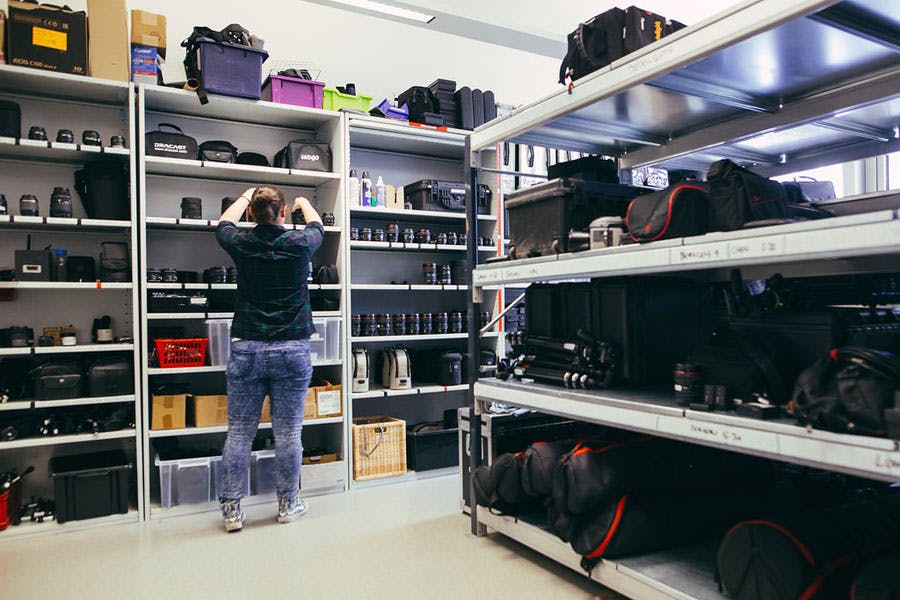
[00:00:31] Speaker 2 My favourite facility personally is Hires and Loans because I can just hire equipment, whatever camera I need, whatever lights I need. Literally everything that relates to media is there.
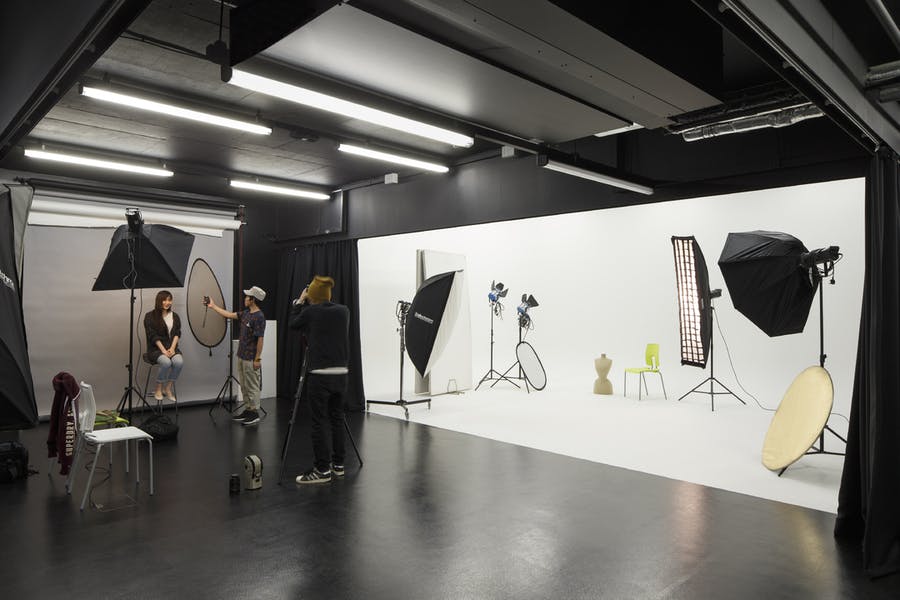
[00:00:43] Speaker 3 We have four professional studios campus. Spaces like these normally cost thousands of pounds a day to rent. So it's perfect that we have them right on our doorstep.
[00:00:52] Speaker 1 The campus is located right in the heart of Birmingham's Creative Quarter, which means that there are lots of opportunities for students to take up work in creative sectors after graduation.
[00:01:04] Speaker 3 You should definitely study Media because it offers you so much new opportunities to learn new skills. It's been perfect to have lecturers with industry experience as they give us the confidence and the knowledge we need to go into our careers. BCU gave me so much confidence, which I didn't have before.
[00:01:22] Speaker 2 I was a presenter. I also worked as a camera operator just to feel how it feels to be in that specific role. And what kind of responsibilities do you have on you.
[00:01:34] Speaker 1 Studying media at BCU is a really exciting prospect because you will be joining a really diverse and creative community with a support network of staff who are totally committed to ensuring that your learning needs are met at university.
If you are interested in a career promoting and managing live music events, creating music media content and want to understand the wider creative and cultural industry of music, then our BA (Hons) in Music Business is the ideal course for you. We will support you in developing innovative and creative entrepreneurial skills and approaches needed not just to work in, but to shape the exciting and dynamic, multi-platform music industries.
Studying in our industry-standard media centre in the heart of Birmingham, you will be taught in a friendly, supportive learning community by academics with industry experience to use state-of the-art facilities and software. You will benefit from cutting-edge knowledge and research from our active popular music and music industries research community, who not only produce internationally recognised research and publications, but also contribute their expertise to the course.
What's covered in this course?
The ways in which we consume, conceptualise, and interact with music is being constantly redefined in the face of rapid technological change. Driving this transformation is the demand for music media content, as evolving services and features that allow fans and audiences to interact and play with music rather than just play music. On this course, you will develop music business and music media content production skills through a combination of hands-on learning, supported by critical investigation into the national and international music industries, creative music cultures and their practices, and music business issues.
Using Birmingham’s vibrant and dynamic music scenes and cultures as our learning ‘laboratory’, you will have the opportunity to apply these skills and knowledge by designing and developing your own projects that speak to your interests, strengths, and future career aspirations in the music industries. The course provides opportunities to collaborate with local and national music businesses and stakeholders, alongside work placements with key organisations within the UK music industries.
We are part of the Music Academic Partnership (MAP), a cutting-edge collaboration between an exclusive group of educational institutions and UK Music, whose aim is to prepare students for successful careers in the music industries. Being a MAP member will give you access to research data and reports, industry networks, careers advice and work experience opportunities with a variety of organisations, including the British Phonographic Industry (BPI), the Association of Independent Music (AIM), the Music Managers Forum (MMF), and PRS for Music. You could be nominated for the annual UK Music Outstanding Music Graduate award.
You could also be nominated for one of our two Music Industries awards, sponsored by two of the musical icons of the West Midlands - Ozzy Osbourne of Black Sabbath and Brian Travers of UB40.
Professional Placement Year
This course offers an optional professional placement year. This allows you to spend a whole year with an employer, following successful completion of your second year, and is a great way to find out more about your chosen career. Some students even return to the same employers after completing their studies.
If you choose to pursue a placement year, you will need to find a suitable placement to complement your chosen area of study. You will be able to draw on the University’s extensive network of local, regional, and national employers, and the support of our Careers teams. If you are able to secure a placement, you can request to be transferred to the placement version of the course.
Please note that fees are payable during your placement year, equivalent to 20% of the total full-time course fee for that year.
The lecturers provided opportunities to meet those in the industry, gave support in and outside of the lecture theatre, and helped me build a professional portfolio.
Tanyel Gumushan
Why Choose Us?
- As a BA (Hons) Music Business student you will benefit from our membership of UK Music’s Music Academic Partnership.
- Top 15 for Communication and Media Studies graduate prospects (Complete University Guide 2024).
- You will be taught by staff with extensive experience of both industry and education. You will also have access to a well-established research culture based around music industries and popular music. The Popular Music Studies research group within the School of Media promotes new and innovative approaches to the study of popular music that are relevant to academics and practitioners, as well as anyone interested in popular music.
- We provide specialised, sophisticated equipment for every area in our £62 million home, The Parkside Building, including six radio studios, four TV studios, one of the largest free-standing green screens in Europe, editing suites, music production studios, a new media suite, a newsroom and photography studios (including a half and a full infinity cove).
- You will have the opportunity to expand your professional network through a range of relevant field trips and industry conferences. In recent years our students have attended We Are Robots in London, Liverpool Sound City, and Off the Record Manchester.
- You will have the opportunity to gain real-world experience and develop industry contacts and experience through work placements and collaborative projects with our industry partners in Birmingham’s expanding music sector.
- The BA (Hons) Music Industries course is really proud to be a signatory of Keychange, an international gender equality movement advocating for equal representation in the music industries. Our course is committed to 50% women and gender minorities in our student cohort, guest speakers, industry mentors and course content.
Open Days
Join us for an on-campus Open Day where you'll be able to meet us in person. Booking for the next event isn’t open yet. Register your interest below and we’ll email you as soon as booking goes live.
Next Open Day: 29 June 2024
Entry Requirements
These entry requirements apply for entry in 2024/25.
All required qualifications/grades must have been achieved and evidenced at the earliest opportunity after accepting an offer to help confirm admission and allow for on-time enrolment. This can also include other requirements, like a fee status form and relevant documents. Applicants can track their application and outstanding information requests through their BCU mySRS account.
Essential requirements
112 UCAS tariff points
Please note: If you qualify for our BCU Accelerate scheme, you could receive an offer that is two grades below our normal entry requirements. Find out more about BCU Accelerate.
If you have a qualification that is not listed, please contact us.
Fees & How to Apply
UK students
Annual and modular tuition fees shown are applicable to the first year of study. The University reserves the right to increase fees for subsequent years of study in line with increases in inflation (capped at 5%) or to reflect changes in Government funding policies or changes agreed by Parliament. View fees for continuing students.
Award: BA (Hons)
Starting: Sep 2024
- Mode
- Duration
- Fees
- Full Time
- 3 years
- £9,250 in 2024/25
- Apply via UCAS
International students
Annual and modular tuition fees shown are applicable to the first year of study. The University reserves the right to increase fees for subsequent years of study in line with increases in inflation (capped at 5%) or to reflect changes in Government funding policies or changes agreed by Parliament. View fees for continuing students.
Award: BA (Hons)
Starting: Sep 2024
- Mode
- Duration
- Fees
- Full Time
- 3 years
- £16,085 in 2024/25


Guidance for UK students
UK students applying for most undergraduate degree courses in the UK will need to apply through UCAS.
The Universities and Colleges Admissions Service (UCAS) is a UK organisation responsible for managing applications to university and college.
Applying through UCAS
- Register with UCAS
- Login to UCAS and complete your details
- Select your course and write a personal statement
- Get a reference
- Pay your application fee and submit your application
Guidance for International students
There are three ways to apply:
1) Direct to the University
You will need to complete our International Application Form and Equal Opportunities Form, and submit them together with scan copies of your original academic transcripts and certificates.
2) Through a country representative
Our in-country representatives can help you make your application and apply for a visa. They can also offer advice on travel, living in the UK and studying abroad.
3) Through UCAS
If you are applying for an undergraduate degree or a Higher National Diploma (HND), you can apply through the UK’s Universities and Colleges Admissions Service (UCAS).
You can request a printed form from your school or nearest British Council office. You will be charged for applying through UCAS. Birmingham City University’s UCAS code is B25 BCITY.
Personal statement
UK / EU students are required to submit a personal statement as part of their application for this course.*
The personal statement gives you a crucial opportunity to say why you’re applying and why the institution should accept you.
Here are the key areas you’ll need to address:
- Course choice - Why does this course appeal? What areas are of particular interest?
- Career plans - If you have a specific career in mind, say how your chosen course will help you pursue this goal.
- Work experience - Mention any work that is relevant to your subject, highlighting the skills and experience gained.
- School or college experience - Highlight skills gained at school/college, eg summer schools or mentoring activities.
- Non-accredited skills or achievement - eg Duke of Edinburgh Award, Young Enterprise scheme.
You should also mention your future plans – if you’re planning to take a year out, don't forget to give your reasons. Talk about any subjects you’re studying that don’t have a formal assessment and any sponsorships or placements you’ve applied for. And don't be scared to add in details about your social, sports or leisure interests.
Worried about Personal Statements?
If you've got no idea where to start or just want to check you're on the right track, we’ve got expert advice and real examples from our students to help you nail your personal statement. You can even download our ultimate personal statement guide for free.
*Non-EU students are not required to submit a personal statement when applying for this course.
Course in Depth
First Year
In order to complete this course you must successfully complete all the following CORE modules (totalling 120 credits):
This Level 4 module offers you the opportunity to begin to develop a range of practical skills relating to the creation of music-based media content. This module will consist of practical skills-based workshops with an approach is practice-led, with theoretical knowledge applied.
This Level 4 module is designed to introduce you to key concepts and approaches to understanding media texts, industries and audiences. Production, distribution and reception/consumption is at the core of the creative, media and interrelated industries. Through a combination of lectures and workshops you will learn about the relationship between texts, the industries that create and distribute them, and the audiences and consumers that interact with them. You will also consider how these relationships are linked to changes in wider creative and cultural contexts, whilst exploring what implications these relationships have on your own engagement as a consumer, producer and aspiring professional.
Building on the Semester 1 module Understanding Media Texts, Industries and Audiences, this module will introduce you to key approaches and methods to researching and analysing media texts, industries and audiences. Through a combination of lectures and workshops you will develop the knowledge and methods required to investigate an aspect of media texts, industries or audiences of your choosing. You will learn how to analyse research data through a combination of analytical approaches and draw conclusions from your evidence which you will express in an appropriate format.
This module is designed to get you thinking about two fundamental aspects of music business: commerce and culture, and how the two are inextricably linked. Through a combination of lectures, workshops, and seminars, you will investigate the role of revenue streams and legal underpinnings in music, and how music business companies generate income from the artist’s repertoire and associated outputs. You will research the rapidly changing commercial and cultural value of music. In doing so consider changes in wider cultural and personal values, whilst exploring what implications these changes have for your own relationship with music as both a consumer, and as an aspiring music business professional.
This module will enable your transition into studying at university and to form connections with and participate in your new learning community. In workshops you will draw upon your own interests to understand music business through discussion and collective creative activities. This module will introduce you to many of the music sectors associated with music business and situate them within the locality of Birmingham and the wider West Midlands region.
In this module you will work collaboratively with other students on a real-world project that is related to your production area and that is connected to a specific community. The module will explore a range of methods for group working, supporting you and your team to collaborate effectively to produce a media artefact (or series of artefacts) and to present the results to a general audience. You will identify a community who would benefit from your project – this benefit might be felt as audiences for your artefact, or as contributors or co-creators. Participation, with your fellow students and with an identified community, are at the heart of the module. The module will enhance your employability through ensuring you respond to the challenge of collaboration in a professional manner, respecting both your peers and those external to the University that you may be working with.
Second Year
In order to complete this course, you must successfully complete all the following CORE modules (totalling 60 credits):
The ways in which we consume, conceptualise, and interact with music is being constantly redefined in the face of rapid technological change. This Level 5 module invites you to engage with a range of contemporary concepts, arguments and challenges relating to the digitalisation of music as a media form, and to consider the implications that these arguments and challenges bring to bear on the ways in which the music business, you, and others, understand and engage with music.
Over the course of this module, you will learn about the inter-related nature of the music business, and how it forms part of a wider 'ecosystem' of creative and cultural industries. Ecologies of music have always been important and can comprise a range of stakeholders such as artists and bands, agents, music managers, venue owners, even bar staff. By considering and understanding how these stakeholders inter-relate, we can examine the impact of change and how they are each affected by such change. The module draws on a range of contemporary case studies, and you will be tasked with carrying out your own market and industry research into a sector of the music industries or a specific organisation.
Building upon on a number of media production skills established at Level 4, Music Business Promotional Practices will introduce you to concepts, principles, and practices related to the promotion of music, and musical acts. In this module you will explore and develop promotion and PR techniques and gain insight into how music business workers build successful working relationships with musicians, music, and other interrelated media.
In order to complete this course, you must successfully complete at least 20 credits from the following indicative list of CORE Faculty modules.
The purpose of this module is to enable you to develop professional attributes and subject skills through experience in the work place, and to critically reflect upon your learning in that context. You will normally be expected to arrange your own placement, with support from academic staff and ADM Careers+.
This module provides an opportunity for you to apply your knowledge and skills to an external, professional brief. The brief will be set by or in discussion with an external client/agency/community and could be a ‘real life’ problem to be solved, or a simulation. It is an opportunity for you to engage in a responsive, imaginative and professional manner with an aspect of your subject area, which contributes to the development of employability skills within the supportive infrastructure of the University.
The module is an opportunity to learn and critically reflect on the skills of collaboration by enabling you to create an interdisciplinary project with students from complementary disciplines, or with academic staff. Collaboration is a vital employability skill within the Creative Industries and this module allows you to develop these skills, making use of University facilities and with the support of academic staff. Within this module framework, several kinds of collaborative opportunities are available. For example, with the approval of your supervisor, you can determine a project based on your own interests; your supervisor may set you a predetermined project to enable you to work with other students in a way that is appropriate to your subject area; or there may be opportunities for you to collaborate with staff on research projects. In all cases, you must apply your subject skills to an interdisciplinary project which will be agreed in advance with your supervisor.
In order to complete this course, you must successfully complete at least 40 credits from the following indicative list of OPTIONAL modules.
Studying the Bi-Media Drama module will enable you to develop specialist, and integrated skills in radio and television drama production. You will undertake a series of practical workshops, including developing ideas for drama, structuring dramas, directing fiction for radio and television, producing actors, foley work, audio mixing, camera movement.
You will build on your previous studies by developing skills in connecting research and practice. Through set readings, class discussions, e-learning and directed study tasks, we will identify and explore key debates, theoretical perspectives and concepts in humour and comedy studies so that you can develop your familiarity with these theoretical fields. You will then test theoretical perspectives and key concepts through your own innovative comedy production. In this work, you will offer research- based, critical reflection on your own practice and on political, moral and ethical issues that emerge from the relationships between humour, comedy and power, on both a national and an international scale.
This module offers an introduction to some of the ongoing academic debates on media fandoms and subcultures. Through readings, lectures, seminars and independent research, you will engage with key theoretical perspectives, methodological approaches and case studies in these academic fields. This module is intended to develop the knowledge and skills that you established in your first year, to develop your critical thinking and research skills and to enable you to gather, organise and use secondary and primary sources to express arguments coherently and effectively.
This module is for students wishing to further their photographic abilities, exploring the professional working practices and the visual language specific to photojournalism with due consideration to the context in which photojournalists and documentary photographers, music photographers and sports photographers operate within the media industries. You will continue to develop camera, lighting and post-processing techniques to a more advanced and appropriate professional level as a complementary skillset to your media interests.
Studying the Television Studio module will enable you to develop technical, editorial and integrated skills in television studio production. You will undertake a series of practical workshops, including developing ideas for studio-based TV show formats (e.g. magazine, chat, news, game show), the commissioning process, production team structures and roles, research and editorial skills, scriptwriting, and the technical framework and processes for studio production. You will be encouraged to experiment, developing original ideas for studio productions, and take creative risks within a recognised professional context. You will identify your target audience and broadcast platform/s for your chosen programme genre.
The ability to create compelling content is an essential communication skill and the key to employability in a range of media careers, not least in Public Relations. As well as being engaging and accessible, effective communication almost always involves the ability to produce professional content across a range of platforms and channels. This module concentrates on developing the writing and crafting skills that are highly valued by media employers.
Digital Storytelling techniques have evolved to include everything from film techniques, still images, immersive-audio, environmental storytelling, and more. In this module we will consider the different ways in which these techniques can be effectively utilised to allow creative citizens to share their stories and to create engaging and meaningful stories through digital platforms.
This module will encourage you to develop original ideas for innovative radio documentaries and podcasts, within a recognised professional industry context. You will identify a clear target audience for your work. You will produce an individual, self-contained radio documentary or a pilot episode of an original podcast with an accompanying reflective written report. A live presentation will showcase your documentary / podcast concept and its audience / station in a mock ‘commissioning’ style pitch.
This module is for students wishing to further their photographic abilities, you will continue to develop camera, lighting and post-processing techniques to a more advanced and appropriate level whilst working towards distinct areas of photographic practice within defined professional contexts. The module encourages you to explore and evaluate a range of styles, approaches and working practices of commercial photographers enabling you to engage in creative photographic production utilizing appropriate techniques relevant to contemporary professional photography practice.
It’s easy to be dismissive of emotion, and often phrases such as “you’re being over-emotional” are used pejoratively. However, cultural theorists and sociologists are increasingly discovering that emotion underpins what it means to be human and that even decisions and positions we take that we assume to be based on rational thought are informed by emotion. These emotions can be constructed by the people, law-making and media texts that we encounter. This module invites you to explore the links between emotion, media and culture. You will examine how media texts are constructed to provoke emotional responses, how audiences respond and the cultural discourses which frame production and reception.
This module introduces students to key issues and debates around the media and environmental sustainability. Students will engage in critical analysis of media representations of climate change, environmental activism and the environment more generally (as well as the larger questions these raise about what sort of future economy and society we want). The module explores ideas and theoretical concepts drawn from Media and Cultural Studies and the Humanities more generally for thinking about our relationship to the planet, how the effects of the climate emergency are experienced unequally across race, class, gender, sexuality, and in the global North/global South This includes (but is not limited to) the Anthropocene, ecofeminism, queer ecologies, post-humanism, and perspectives on legacies of colonialism and environmentalism racism.
This module will explore the historical, cultural, social, and political context of both television and emerging screen practices. The approach to screen media in this module will enhance students’ knowledge of production, consumption, and industry context, and will build on the critical and analytical skills learnt in year one.
Graphic design is an important element in media communication that is used across all mediums in a variety of formats, from print to screen. How designers and communicators use imagery and form to transmit messages evolves as new technology and practices emerge. Whether this is in advertisements, promotional material, entertainment, or raising awareness of societal and environmental issues, design can draw attention and change the perceptions of the intended audience and casual viewers alike.
PR Campaign Planning explores the many and varied creative solutions the PR industry employs to attract the attention of the public and the media to a particular cause, subject or activity. The module considers how PR campaigns can be developed to serve different purposes, including brand building, commercial gain and social change. It draws on a range of examples from across sectors and around the world to inform your understanding and inspire your own creative communications solutions.
In this module you’ll explore alternative news media formats and examine the way they are challenging the traditional platforms of journalism. You will get the chance to engage with tools which are increasingly being used in everyday journalism practice, such as Tiktok, Whatsapp, Twitter and email newsletters. This will help you understand how traditional journalism is being influenced and reshaped by digital platforms, whilst preparing you for the workplace, where adaptability to new technologies and platforms is increasingly expected. You will engage in independent secondary research of industry, instructional, case study and scholarly materials, to inform your experimental and exploratory approach to creating your own portfolio of work.
Public Relations is all around us. Brands, businesses, celebrities, charities, politicians, and everyone in between use PR as a means to spread messages, inform understanding and influence the way we behave. In practice, PR involves a range of different communications techniques and activities, including media relations, social media, and influencer engagement.
As revenue streams for recorded music are put under increasing pressure, live music remains one of the important financial strands of a professional musician's career. This Level 5 module introduces you to the various elements and roles of the live music sector. The organisation, planning and delivery of live music events speaks to its interconnectedness across the wider music business and creative industries, including media production, PR and promotional strategising, communication, journalism, photography, marketing and social media management.
On this module you will develop specialist practical skills in live radio production. You will learn about the critical role of the Producer in generating ideas for programme content and in directing members of a production team. You’ll apply editorial judgement in selecting items suitable for the target audience, producing short features, programme trails and handling studio and remote guests. You will develop a critical understanding of social media marketing in radio and consider how it can be used to enhance audience engagement.
Core modules are guaranteed to run. Optional modules will vary from year to year and the published list is indicative only.
Professional Placement Year (optional)
In order to qualify for the Professional Placement Year, you must successfully complete the following Level 5 module:
This module is designed to provide you with the opportunity to undertake a credit bearing, 40- week Professional Placement as an integral part of your Undergraduate Degree. The purpose of the Professional Placement is to improve your employability skills which will, through the placement experience, allow you to evidence your professional skills, attitudes and behaviours at the point of entry to the postgraduate job market. Furthermore, by completing the Professional Placement, you will be able to develop and enhance your understanding of the professional work environment, relevant to your chosen field of study, and reflect critically on your own professional skills development within the workplace.
Final Year
In order to complete this course, you must successfully complete all the following CORE modules (totalling 40 credits):
This module centres on key principles of innovation, creativity, enterprise, and entrepreneurship within the music industries and associated creative and cultural industries. Dumbreck and McPherson (2016) argue that music businesses hinge on entrepreneurship, and that to a greater or lesser extent, everyone who works in the music business is an entrepreneur, whether they own their own business or operate within a larger music or media organisation. This module will build upon both practical and critical skills that you have developed across the course, encouraging you to develop innovative and creative ideas and entrepreneurial skills relevant to the music business, while actively considering how they reflect BCU’s STEAM agenda. Additionally, you will reflect upon how these skills fit into a wider landscape of creative and cultural industries.
In this module you will develop a plan for the delivery of your Major Project. You will build further on project management skills, techniques and processes introduced elsewhere on your course, enabling you to bring together a project plan that can be successfully realised. You will synthesise your existing knowledge of your subject specialism and formulate your own approach to addressing a specific problem, question or topic. The module will look at how to evaluate the usefulness of primary and secondary source material in relation to your project and ensure you consider ethical issues in your project plan design. The module aims to ensure that you judge the appropriateness of a variety of critical and analytical approaches to developing a major project and ensure that you create a plan that is within scope and can be delivered successfully to a high standard.
In order to complete this course, you must successfully complete one module from the following list of CORE-OPTION modules (worth 40 credits)
The Major Project - Dissertation module is where you will put into practice the creative thinking, initial research, proposal, and plan developed in the Major Project Preparation module and wherein you will undertake a sustained, in-depth and theoretically informed research project exploring an area that is related to an aspect of media and culture and is of personal interest to you. Completion of the Major Project represents the culmination of your studies.
The Major Project - Hybrid module is where you will put into practice the creative thinking, initial research, proposal, and plan developed in the Major Project Preparation module and wherein you will undertake a sustained, in-depth and theoretically informed research and production project exploring an area that is related to an aspect of media and culture and is of personal interest to you. Completion of the Major Project represents the culmination of your studies.
The Major Project - Production module is where you will put into practice the creative thinking, initial research, proposal, and plan developed in the Major Project Preparation module and wherein you will undertake a sustained, in-depth production media project exploring an area that is related to an area of personal interest to you and wider audiences. Completion of the Major Project represents the culmination of your studies. You can produce a single media product or portfolio of products either individually or as part of a group.
In order to complete this course, you must successfully complete at least 40 credits from the following indicative list of OPTIONAL modules.
Media Activism is a practice-based research module for students who wish to study media activism, and engage in media activist work in practice within social justice, community media and voluntary sectors. This module will examine the role of media in political campaigns and social movements, with a focus on the role of digital communications. It will draw on a range of interdisciplinary literature from media studies, social movement studies and political theory, and examine case studies of political campaigns and social movements in the UK and globally.
This module is intended to give an overview of the current state of scholarly research into the use of social media platforms as a communication tool. The module provides a systematic understanding of the approaches to studying social media and its social and cultural role. The module looks in detail at the ways in which social media is utilised by citizens and media producers. This will give students a greater understanding of practices of interaction and communication afforded by social media and how these can shape contemporary social relationships and communication/media practices through different power dynamics. We will also consider the different ways of meaning making in social media use, particularly across different linguistic and communicative strategies including, for example, hashtags, emojis, memes, affective language, and remix culture. There is a focus on how students can put social media to use as a tool for furthering their professional ambitions or to help create advocacy networks.
This module will enable you to look towards the future innovations occurring within the fields of digital media. Starting with a history of digital emergence, considering concepts such as remediation, convergence culture, and the post-digital, we will then begin to unearth some of the more experimental and emerging practices, and consider their viability for a digital future. We will ask why some mediums prevail and others pass us by and to question what is really “new” about new media, and how we might escape certain structures and practices that constrict our developments. This module will also engage critically with ideas of utopian and dystopian predictions of the future and engage with concepts such as posthumanism and transhumanism to ask what the long-term impact of digital media usage might mean, from AI to cyborgs and beyond.
This module is for students wishing to further their creativity and provides the opportunity to develop a unique visual style as a photographer in line with appropriate professional practice. You will engage with a variety of creative photographic approaches and explore innovative practice, informing your own photographic style and enabling you to work professionally within specific fields of photography.
On this immersive module you will develop the skills and knowledge to design and format a new radio station brand. You’ll work with peers to plan, launch and run an online radio station and will pitch for and undertake a range of production and station management roles. The module will build on the practical and theoretical skills developed earlier in the course. It will offer you the opportunity to apply these in the conception, marketing, launch and operation of a publicly available radio service and in the production of other associated social media, podcasting and visual content.
The United Kingdom commissions, produces and broadcasts more audio drama – online, on digital and on radio – than any other country in the world. In this diverse and dynamic medium, writers can tell human stories set anywhere in time and space, at a fraction of the cost of television and film production. What’s more – as an old industry saying goes – ‘you see it better on radio’. In this module you will learn how to write and produce compelling audio drama scripts and episodes of a podcast drama series by engaging practically and theoretically with the key principles and techniques involved. You will also be introduced to editorial collaboration, the pitching of projects, and appropriate methods of presentation, including recorded voice essays that can incorporate sound effects. You will learn how to communicate ideas clearly, accurately and effectively both orally and in writing.
Audience and user experience design is the reference point for meeting audience and user needs for most media products. User experience is the understanding of who your audience is, what motivates them, what frustrates them, and how to add value to their lives. User experience enables the designer of experiences and media products to meet their audience’s needs on an emotional level through a creative process called "design thinking" and encourages repeated use. In an increasingly user-focused world, user experience design is an area that transcends its home of digital media design and can be applied to any field that requires an audience and consumer interaction, with many employment and further education opportunities to consider.
This module applies and develops critical and theoretical study of gender and sexuality across a wide range of media. The module will draw from cultural theory and a range of qualitative and ethnographic research to explore historic and contemporary discussions, issues and debates around gender identity, sexuality and sexual practices, and attitudes towards ‘the body’. The module will develop key modes of analysis and research related to the study of gender and sexuality, and how these are informed by and through culture. You will explore how associated socio-cultural, political and ideological contexts ‘produce’ issues, but also how certain identities and ‘practices’ offer ways to challenge ideological views concerning gender, sexuality and what we ‘do’ with/to our bodies.
This module examines key issues, concepts and debates relating to race, culture and the media, and how the diversity of lived experience is represented in the media. The module takes an intersectional perspective, considering race in relation to gender, sexuality, citizenship, etc. It engages with literature from Media and Cultural Studies, and also draws on Postcolonial Studies, Critical Race Theory and other aspects of Humanities scholarship. A range of media examples will be considered, ranging from film and television to digital media platforms. Students will have the opportunity to explore their own personal and research interests in relation to the module themes, and explore methodological approaches for doing so. Students are encouraged to consider their own positionality and identity as media workers/scholars in relation to the module themes and their own work.
This module examines both the historical and contemporary fields of popular music and their relationship to music business and the wider media, creative and cultural industries. You will have the opportunity to reflect on issues of production, distribution, and reception, through the lenses of theoretical concepts and approaches such as genre, ethnicity, gender, and many others. You will undertake research that explores the changing ideological, political, technological, and cultural contexts related to popular music and will consider the role of popular music in relation to societal and cultural contexts.
In this module you will set up an innovative media production company that explores the opportunities available for new enterprises in contemporary audio or video production. In doing so you will start to establish yourself as a professional media worker, exploring the possibilities for change and innovation. You may work independently or as a team member.
Communication in Action takes a critical look at how organisations operating across a wide variety of sectors use communications techniques to achieve operational goals. It examines the PR strategies and practices they use to enhance their credibility and reputation with a range of stakeholders through effective messaging.
In this module you will explore alternative storytelling methods to create engaging feature articles for different publications. From profiles through to in-depth interview articles, you will analyse and apply the structures and techniques used by feature writers in the professional journalism industry.
Download course specification
Download nowHow you'll learn
Your learning will be through a mixture of lectures, practical workshops and seminars. Your course also provides an opportunity to undertake work-based learning through a placement. We embed flexible opportunities for you to access your curriculum including recorded lectures, blended learning, on-campus delivery and intensive delivery of some modules. We recognise that students progress to higher education from a variety of educational experiences and that university is a completely new educational environment for most of you. For that reason, you will find that in your first year with us there is a focus on supporting your transition which places an emphasis on developing both the confidence and the competencies required for being successful at your university assignments. Where appropriate, we will bring in external speakers or arrange visits relevant to your specialism. These may be from industry or be focused on a particular specialist academic interest. We have excellent links with industry, community and scholarly partners which we draw on to enhance your learning experience.
How you will be assessed
All our assessments are designed to ensure that you meet the learning outcomes of your modules and thus of the course overall. Assessment types may include written research reports, essays, case studies, practical work, portfolios and presentations. There are no formal examinations on your course, but short classroom tests may be included within an element of assessment. You will be assessed as an individual but there may be times when you will be asked to work within teams and submit assessments as groups. All modules offer chances for formative assessment, that is, informal assessments that are used to assess your understanding before the final submission of your work. Formative assessments also help inform the teaching strategy within a module, identifying areas where we can offer extra help and guidance. We will offer tutorials and a chance for you to discuss your draft assessments before you submit them. Once marked, we will give formal feedback and ‘feed forward’ on all work submitted, aimed at helping you improve future submissions.
Employability
Enhancing your employability skills
Previous students have gone on to a number of roles within the music industry including work with music collection agencies, industry support bodies, live music promoters, record labels, and within music journalism and music media broadcasting.
Organisations include: NEC group, Universal Music Group, Warner Music Group, Sony Music Group, Nuclear Blast Records, Punch Records, Barclaycard Arena, Birmingham Symphony Hall, O2 Arena, Birmingham International Jazz festival, Shambala Festival, Supersonic Festival, Swingamajig, British Phonograph Industry, Sony Music, PPL PRS Ltd, Radio 1, Radio 1 Xtra.
As well as gaining course-specific skills, you could also gain broader tools through our Graduate+ programme, which will help enhance your employment options by helping with careers development, employability activities, volunteering and part-time work experience.
Allied with these course-specific experiences, you will also have access to a range of support staff and services from the University’s Careers Service, who can help with:
- Reviewing CVs, covering letters and application forms
- Career planning and decision making
- Preparing for interviews and assessment centres
- Developing portfolios
- Networking with employers
- Advice about self-employment and entrepreneurship
Links to Industry
 As a BA (Hons) Music Business student you will benefit from our membership of UK Music’s Music Academic Partnership. As one of only 17 institutions nationally, our MAP status is designed to maximise the employability of students; and future-proof the music industry by ensuring new entrants have the right mix of experience and skills most needed. As a MAP member, our curriculum is shaped and informed by the needs and wants of the industry itself, to ensure that you are developing the right skills, knowledge, and experience for a career in music.Through our membership, you will gain access to masterclasses from leading industry professionals, opportunities to get involved in industry research, networking and information events and input and support into your future career.
Birmingham Music Coalition
We play a key role within the Birmingham Music Coalition (BMC), a music industries lobbying group made up of, and linked to, a number of influential local, regional and national music industries organisations. We also have an industry advisory panel whose membership includes international music industries professionals from Warner Music UK and Kobalt Music Group. They advise and inform us of current music industries developments and practices, to ensure our students are developing the skills, knowledge and experiences that are sought by industry employers.
Placements
Placements and work-experience are a core part of BA (Hons) Music Business, and the ethos of the Birmingham School of Media more broadly. As a student on the course you will be required to source and undertake relevant placements (supported and guided by our tutors and professional networks), and to draw upon these experiences in the work that you are producing within your taught modules.
In recent years our students have secured work placements with a range of key music industries organisations including:
- Sony Music Group
- Universal Music Group
- Warner Music UK
- O2 Academy
- BPI
- Ticketmaster
- Association of Independent Festivals
- NEC
As well as innovative and exciting local businesses such as:
- Punch Records
- Supersonic Festival
- Birmingham International Jazz
- Blues Festival
- Birmingham Music Archive
- Home of Metal
Our Graduates

Tanyel Gumushan
Live Music Adviser, PPL PRS Ltd and winner of the UK Music Outstanding Graduate of the Year Award 2019
"Since graduating I’ve continued my freelance writing and have been contributing to Clash and tmrw magazine, where I secured cover interviews/photo shoots with Niall Horan and Little Mix whist working as Music Editor.
I now work at PPL PRS Ltd as a Live Music Adviser, ensuring venues are correctly licensed. This involves collecting royalties for events that they host by conducting research, collecting setlists, and cracking down on secondary ticketing by auditing online. Though I work full-time I still make time to freelance for the PR team at Universal Music and create press releases and biographies for new artists. A recent example is Ramz, whose single topped the Spotify new release charts off the back of the campaign.”
Sebastian Simone
Vice President of Audience and Strategy, Warner Bros Records
"My time on the Music Business course at Birmingham City University equipped me with the skills needed to get a job at a major record label. A balanced mix of essential theory and tangible practical assignments set me up with the perspective and knowledge sought after by employers within the industry. The staff on the course are seasoned professionals with years of experience, spanning multi-disciplines within the music business. Most notably for me, the practical project in the third year gave me the opportunity to build something that I was able to demonstrate within the interview process for a graduate job, giving me the standout quality needed to succeed in securing the role."
International
Birmingham City University is a vibrant and multicultural university in the heart of a modern and diverse city. We welcome many international students every year – there are currently students from more than 80 countries among our student community.
The University is conveniently placed, with Birmingham International Airport nearby and first-rate transport connections to London and the rest of the UK.
Our international pages contain a wealth of information for international students who are considering applying to study here, including:
- Explore some of the good reasons why you should study here.
- Find out how to improve your language skills before starting your studies.
- Find all the information relevant to applicants from your country.
- Learn where to find financial support for your studies.
Facilities & Staff

Our Facilities
When you join Birmingham City University, the first thing you will notice is the high standard of our campuses.
With an investment of over £400 million across our buildings and facilities, we are committed to giving you the very best learning environment to help shape your experience.
State-of-the-art facilities
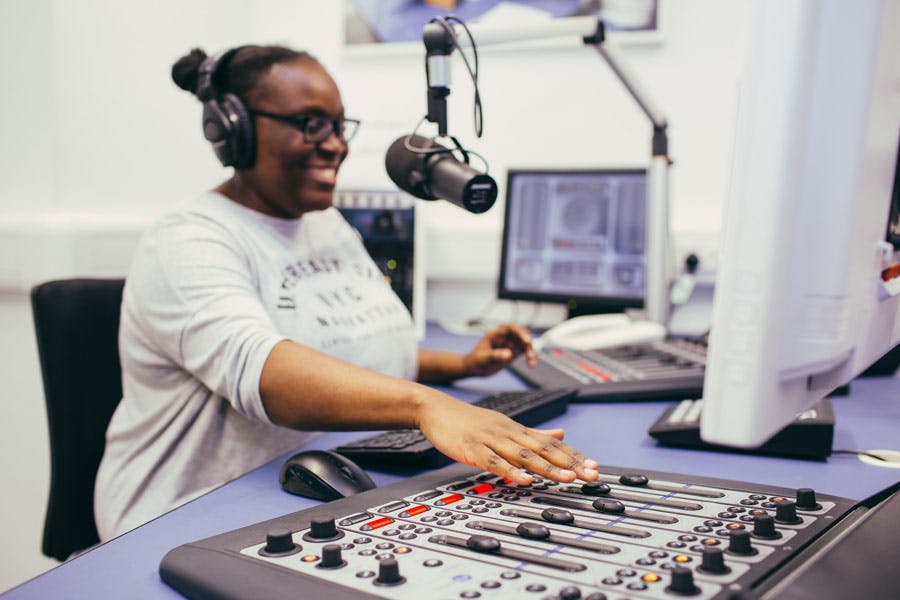
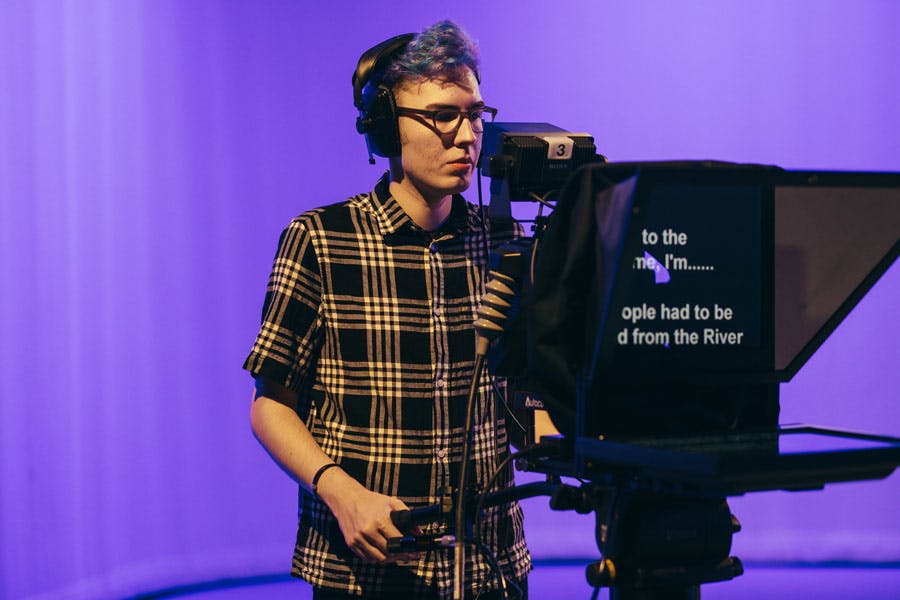
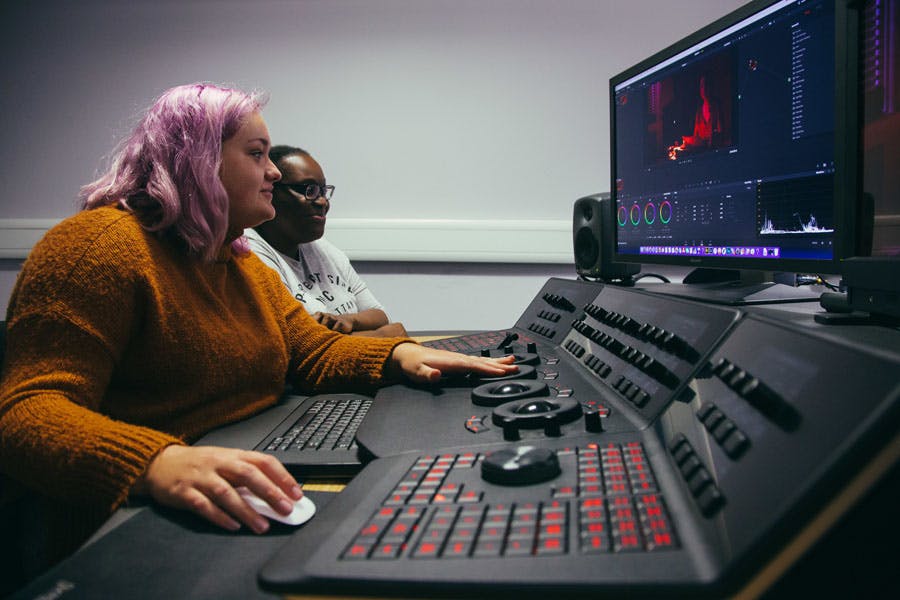
You will learn in our state-of-the-art facilities - including the £62m fully-digital Media Centre - located on the City Centre Campus. You will enjoy access to extensive studio and workshop space including four TV studios, six radio studios and broadcast-standard edit suites, as well as cutting-edge equipment and software.
Facilities include the largest TV floor of any university in the UK, a ‘green screen’ and a BOLT JR+ high-speed camera robot.













Our staff
Dr Matt Grimes
Course Director BA (Hons) Music Business; Senior Lecturer in Music Industries and Radio
Dr Matt Grimes is the course director for the BA (Hons) Music Business course and a Senior Lecturer in Music Industries and Radio, with over 15 years experience in higher education. In 2020, he received his PhD exploring ageing and identity in British anarcho-punks.
More about MattDr Asya Draganova
Lecturer in Media and Communication
Asya Draganova is a Media and Popular Music Culture lecturer. In her research and publications, Asya uses an ethnographic approach to explore topics including contemporary East European subcultural scenes, popular music heritage, and the relationships between identity, place, and myth in styles like heavy metal and the Canterbury Sound. Asya...
More about AsyaRobin Kay
Lecturer
Robin is a Lecturer in Media and Communication with a New Media specialism. He has a background within the music industry having worked for several notable record labels and industry organisations including: Ministry of Sound Recordings, Defected Records, Sanctuary Records and PRS. He has extensive experience within education and teaches creative...
More about RobinDr Simon Barber
Research Fellow
Dr Simon Barber researches, writes and lectures about popular music, the music industries, digital culture and jazz. As a member of the Birmingham Centre for Media and Cultural Research, Simon is particularly interested in the study of songwriting, and relationships between creative workers and industry. He convenes the Songwriting Studies Research...
More about Simon