







Media and Communication - BA (Hons)
Currently viewing course to start in 2024/25 Entry.
How media is made, who makes it, how it is consumed and whose interests it serves are the key questions you will explore in this degree in Media and Communication. These questions have big implications for which stories and voices are prioritised and which are neglected in the world we live in....
- Level Undergraduate
- Study mode Full Time
- Location City Centre
- Award BA (Hons)
- Start date September 2024
- Fees View course fees
- School Birmingham School of Media
- Faculty Faculty of Arts, Design and Media
This course is:
Available with Professional Placement year
Open to International Students
Overview
[00:00:07] Speaker 1 It's a really exciting time to study Media in Birmingham. Firstly, the BBC is coming to Birmingham in 2026 and here we have a multi-million pound campus right in the heart of this city. As a media student, you'll have access to all of these amazing facilities and your tutors will be able to teach you how to use them in line with industry best practices.
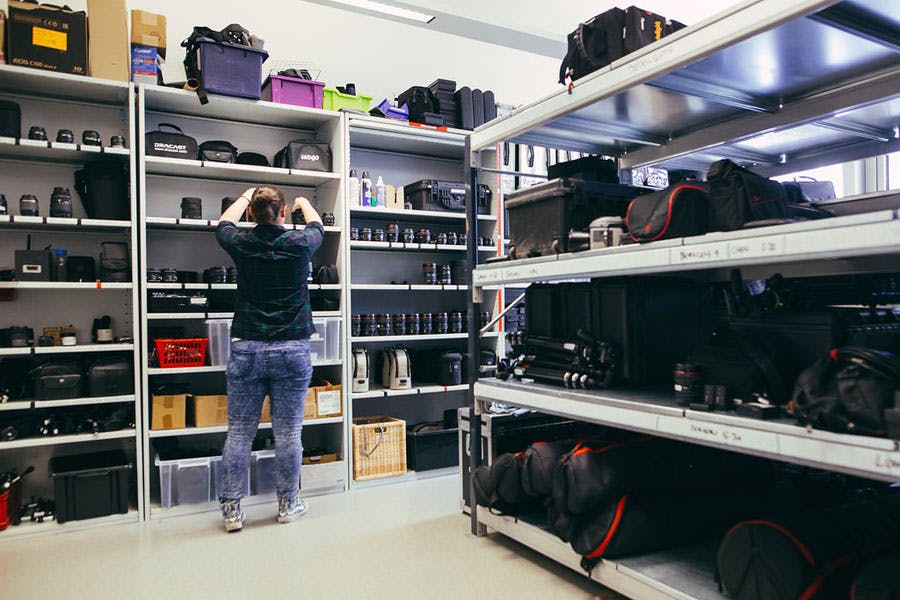
[00:00:31] Speaker 2 My favourite facility personally is Hires and Loans because I can just hire equipment, whatever camera I need, whatever lights I need. Literally everything that relates to media is there.
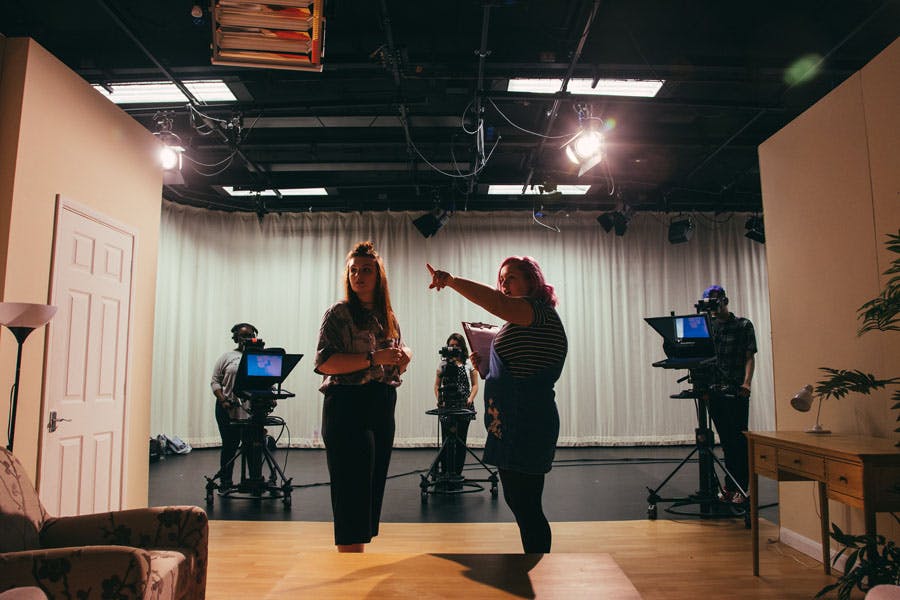
[00:00:43] Speaker 3 We have four professional studios campus. Spaces like these normally cost thousands of pounds a day to rent. So it's perfect that we have them right on our doorstep.
[00:00:52] Speaker 1 The campus is located right in the heart of Birmingham's Creative Quarter, which means that there are lots of opportunities for students to take up work in creative sectors after graduation.
[00:01:04] Speaker 3 You should definitely study Media because it offers you so much new opportunities to learn new skills. It's been perfect to have lecturers with industry experience as they give us the confidence and the knowledge we need to go into our careers. BCU gave me so much confidence, which I didn't have before.
[00:01:22] Speaker 2 I was a presenter. I also worked as a camera operator just to feel how it feels to be in that specific role. And what kind of responsibilities do you have on you.
[00:01:34] Speaker 1 Studying media at BCU is a really exciting prospect because you will be joining a really diverse and creative community with a support network of staff who are totally committed to ensuring that your learning needs are met at university.
How media is made, who makes it, how it is consumed and whose interests it serves are the key questions you will explore in this degree in Media and Communication. These questions have big implications for which stories and voices are prioritised and which are neglected in the world we live in. Within a media landscape that is constantly changing, and where we can access media everywhere, these questions become particularly important for those who want to understand the media and those who would like to work in the media. The transferable, critical and technical skills learnt on the course prepare students for post-graduate study, work in the media industry and in many other sectors.
What's covered in this course?
As a student you will be given the space and freedom to explore and develop your own research and professional interests which will allow you to develop confidence and a clear focus for your next steps. You will learn about how the media industries construct and depict stories and the impact this has on our understanding of media production practices, representation, identity and culture. You will understand how audiences come to those stories, how they understand them and why.
Alongside these critical skills, you will also develop technical skills across a broad range of media forms, such as television, radio, photography and digital. We don’t want you to learn these skills in isolation from each other. Rather, we invite you to combine research and production skills to use your own media content creation to explore those issues creatively. Through your work you will address current societal issues, emergent media forms and platforms, and think about the history, present and future of the media industry.
This course equips students to explore and challenge intersections, to ask and answer questions about why the media is the way it is and to have the confidence and ambition to experiment with media forms to create innovative and responsible media texts which speak to diverse audiences.
Professional Placement Year
This course offers an optional professional placement year. This allows you to spend a whole year with an employer, following successful completion of your second year, and is a great way to find out more about your chosen career. Some students even return to the same employers after completing their studies.
If you choose to pursue a placement year, you will need to find a suitable placement to complement your chosen area of study. You will be able to draw on the University’s extensive network of local, regional, and national employers, and the support of our Careers teams. If you are able to secure a placement, you can request to be transferred to the placement version of the course.
Please note that fees are payable during your placement year, equivalent to 20% of the total full-time course fee for that year.
Jack Walton
As a child of a single parent, Jack didn’t think that attending university was financially possible. With the help of student finance he has been able to go above and beyond during his time at BCU, and is an extremely active member of the student community.
Read in fullWhy Choose Us?
- Top 20 in the UK for Media and Film Studies (Guardian League Tables 2024)
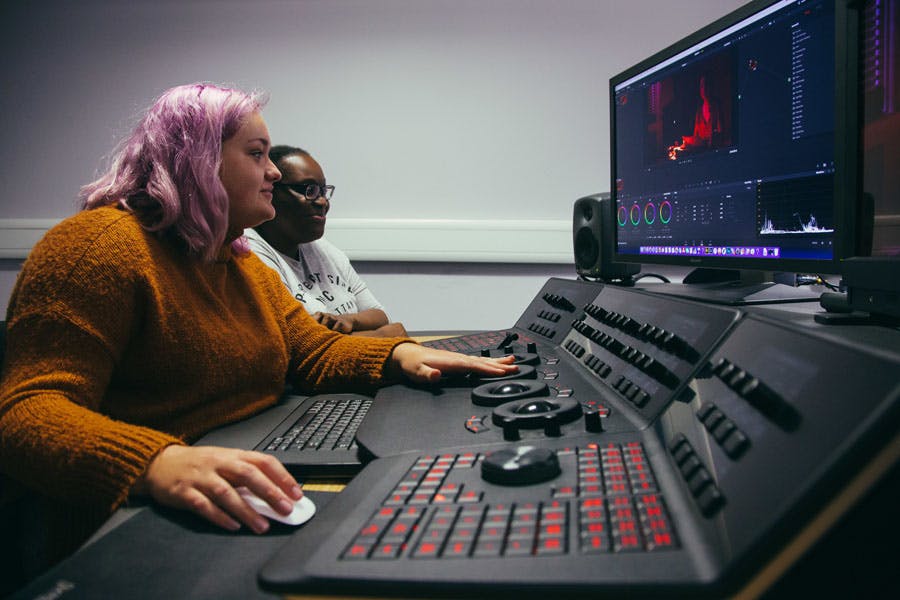
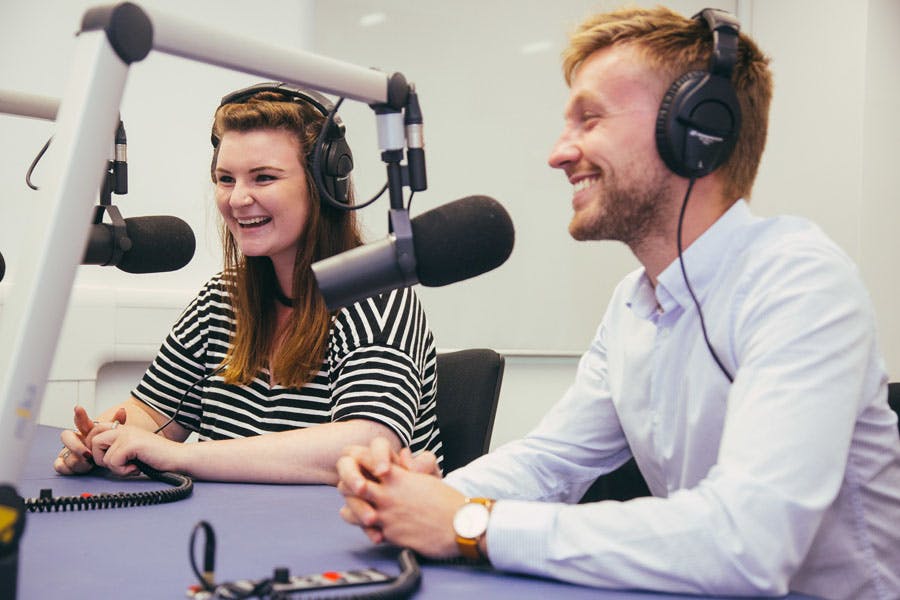
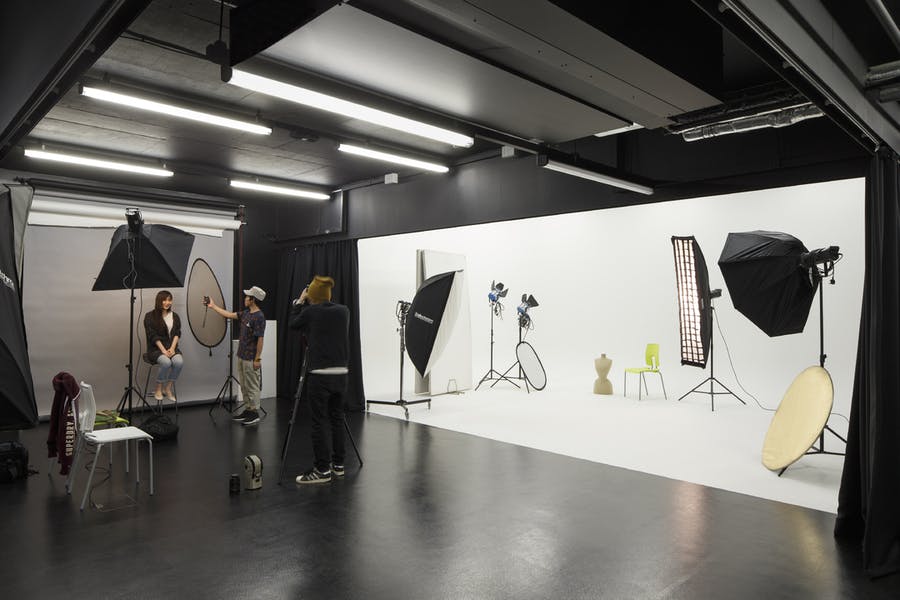
- Specialised, sophisticated equipment for every area in our new £62 million home in the city centre, including six radio studios, four TV studios, the largest free-standing green screen in Europe, edit suites, music production studios and photography studios (including a half and a full infinity cove)
- Research-informed teaching, enabling you to critically engage with contemporary debates and innovations in theory/practice
- Huge range of guest speaker masterclasses. Past talks have included BBC newsreader Huw Edwards, Jo Geary, UB40’s Brian Travers, Vogue fashion photographer Eliot Siegel and BSkyB’s Head of Production Services, Dave Rooke
- The course encourages you to take creative risks and be a ‘thinking’ media worker, and you will also have the opportunity to undertake two (or more) industry placements
- Top 15 for Communication and Media Studies graduate prospects (Complete University Guide 2024).
Open Days
Join us for an on-campus Open Day where you'll be able to meet us in person. Booking for the next event isn’t open yet. Register your interest below and we’ll email you as soon as booking goes live.
Next Open Day: 29 June 2024
Entry Requirements
These entry requirements apply for entry in 2024/25.
All required qualifications/grades must have been achieved and evidenced at the earliest opportunity after accepting an offer to help confirm admission and allow for on-time enrolment. This can also include other requirements, like a fee status form and relevant documents. Applicants can track their application and outstanding information requests through their BCU mySRS account.
112 UCAS tariff points
Please note: If you qualify for our BCU Accelerate scheme, you could receive an offer that is two grades below our normal entry requirements. Find out more about BCU Accelerate.
If you have a qualification that is not listed, please contact us.
Fees & How to Apply
UK students
Annual and modular tuition fees shown are applicable to the first year of study. The University reserves the right to increase fees for subsequent years of study in line with increases in inflation (capped at 5%) or to reflect changes in Government funding policies or changes agreed by Parliament. View fees for continuing students.
Award: BA (Hons)
Starting: Sep 2024
- Mode
- Duration
- Fees
- Full Time
- 3 years
- £9,250 in 2024/25
- Apply via UCAS
International students
Annual and modular tuition fees shown are applicable to the first year of study. The University reserves the right to increase fees for subsequent years of study in line with increases in inflation (capped at 5%) or to reflect changes in Government funding policies or changes agreed by Parliament. View fees for continuing students.
Award: BA (Hons)
Starting: Sep 2024
- Mode
- Duration
- Fees
- Full Time
- 3 years
- £16,085 in 2024/25


Guidance for UK students
UK students applying for most undergraduate degree courses in the UK will need to apply through UCAS.
The Universities and Colleges Admissions Service (UCAS) is a UK organisation responsible for managing applications to university and college.
Applying through UCAS
- Register with UCAS
- Login to UCAS and complete your details
- Select your course and write a personal statement
- Get a reference
- Pay your application fee and submit your application
Guidance for International students
There are three ways to apply:
1) Direct to the University
You will need to complete our International Application Form and Equal Opportunities Form, and submit them together with scan copies of your original academic transcripts and certificates.
2) Through a country representative
Our in-country representatives can help you make your application and apply for a visa. They can also offer advice on travel, living in the UK and studying abroad.
3) Through UCAS
If you are applying for an undergraduate degree or a Higher National Diploma (HND), you can apply through the UK’s Universities and Colleges Admissions Service (UCAS).
You can request a printed form from your school or nearest British Council office. You will be charged for applying through UCAS. Birmingham City University’s UCAS code is B25 BCITY.
Personal statement
UK / EU students are required to submit a personal statement as part of their application for this course.*
The personal statement gives you a crucial opportunity to say why you’re applying and why the institution should accept you.
Here are the key areas you’ll need to address:
- Course choice - Why does this course appeal? What areas are of particular interest?
- Career plans - If you have a specific career in mind, say how your chosen course will help you pursue this goal.
- Work experience - Mention any work that is relevant to your subject, highlighting the skills and experience gained.
- School or college experience - Highlight skills gained at school/college, eg summer schools or mentoring activities.
- Non-accredited skills or achievement - eg Duke of Edinburgh Award, Young Enterprise scheme.
You should also mention your future plans – if you’re planning to take a year out, don't forget to give your reasons. Talk about any subjects you’re studying that don’t have a formal assessment and any sponsorships or placements you’ve applied for. And don't be scared to add in details about your social, sports or leisure interests.
Worried about Personal Statements?
If you've got no idea where to start or just want to check you're on the right track, we’ve got expert advice and real examples from our students to help you nail your personal statement. You can even download our ultimate personal statement guide for free.
*Non-EU students are not required to submit a personal statement when applying for this course.
Course in Depth
First Year
In order to complete this course a student must successfully complete all the following CORE modules (totalling 120 credits):
This module will enable you to transition into studying at university, to become familiar with Birmingham as a city and to form connections with and participate in your new learning community. In workshops you will draw upon your own interests to understand popular culture through discussion, field trips and collective creative activities. You will work together to define what makes culture ‘popular’, discuss the value of the objects of popular culture and understand the relationship between popular culture and the media.
This Level 4 module is designed to introduce you to key concepts and approaches to understanding media texts, industries and audiences. Production, distribution and reception/consumption is at the core of the creative, media and interrelated industries. Through a combination of lectures and workshops you will learn about the relationship between texts, the industries that create and distribute them, and the audiences and consumers that interact with them. You will also consider how these relationships are linked to changes in wider creative and cultural contexts, whilst exploring what implications these relationships have on your own engagement as a consumer, producer and aspiring professional.
Building on the Semester 1 module Understanding Media Texts, Industries and Audiences, this module will introduce you to key approaches and methods to researching and analysing media texts, industries and audiences. Through a combination of lectures and workshops you will develop the knowledge and methods required to investigate an aspect of media texts, industries or audiences of your choosing. You will learn how to analyse research data through a combination of analytical approaches and draw conclusions from your evidence which you will express in an appropriate format.
This module will enable you to transition into studying at university, to become familiar with Birmingham as a city and to form connections with and participate in your new learning community. In workshops you will draw upon your own interests to understand popular culture through discussion, field trips and collective creative activities. You will work together to define what makes culture ‘popular’, discuss the value of the objects of popular culture and understand the relationship between popular culture and the media.
This Level 4 module offers you the opportunity to begin to develop a range of practical skills relating to the creation of music-based media content. This module will consist of practical skills-based workshops with an approach is practice-led, with theoretical knowledge applied.
In this module you will work collaboratively with other students on a real-world project that is related to your production area and that is connected to a specific community. The module will explore a range of methods for group working, supporting you and your team to collaborate effectively to produce a media artefact (or series of artefacts) and to present the results to a general audience. You will identify a community who would benefit from your project – this benefit might be felt as audiences for your artefact, or as contributors or co-creators. Participation, with your fellow students and with an identified community, are at the heart of the module. The module will enhance your employability through ensuring you respond to the challenge of collaboration in a professional manner, respecting both your peers and those external to the University that you may be working with.
Second Year
In order to complete this course a student must successfully complete all the following CORE modules (totalling 60 credits):
In this module you will be introduced to some of the key cultural theories that are relevant to studying the media in contemporary times. Starting by defining culture, the module will explore how cultures operate through rituals, routines, languages, behaviours and beliefs – and the media. By considering the wider societal impact of different cultural theories from capitalism to colonialism you will learn to analyse media texts through a theoretical lens. This module will therefore enable you to understand the broader frameworks in which media operate, consider how media are cultural objects, and the meanings that they carry.
This module takes a cultural studies approach to understanding the media and creative industries, as well as enabling you to explore what creativity may mean in the media and to your own practice. Some of the themes covered by the module are alternative and marginal economies, cultural entrepreneurship, cultural policy and media regulation, media making and production practice, and equality and diversity in the media, creative and cultural industries. In your sessions, we will be exploring different themes and contexts that directly impact the media/creative industries, your role(s) within them and how these affect you as an individual going into different areas of the 'media and creative industries'.
The module draws upon your learning in Cultural Theory, enabling you to further specialise in applying range of conceptual themes and frameworks to your own interests and creative practice. The module offers a dynamic, critical, and intersectional exploration of identity through sites of popular consumption, lived experience and personal subjectivities, creative practice, and protest. Importantly, you will consider the role of ethics and your own positionality when engaging with topics, attitudes, and beliefs that you may or may not agree with. Themes in the module consider a range of contexts and circumstances enabling you to navigate and consider the diversity of voice, histories, visibilities and absences, and stories (personal, political, etc.) that shape how we encounter identity, how it is mediated and why considering identity matters to everyone. Based on your own interests and creative practice, the assessment is a research portfolio comprising a research report and a creative artefact inspired by what you have found in your research report.
In order to complete this course, you must successfully complete at least 20 credits from the following indicative list of CORE Faculty modules.
The purpose of this module is to enable you to develop professional attributes and subject skills through experience in the work place, and to critically reflect upon your learning in that context. You will normally be expected to arrange your own placement, with support from academic staff and ADM Careers+.
This module provides an opportunity for you to apply your knowledge and skills to an external, professional brief. The brief will be set by an external client/ agency, in consultation with your supervisor, and it could be a ‘real life’ problem to be solved, or a simulation. It is an opportunity for you to engage in a professional manner with an aspect of your subject area, which contributes to the development of employability skills within the supportive infrastructure of the University. Where appropriate, the project may involve interdisciplinary collaboration with students from other courses. In this way, it reflects the collaborative, flexible nature of employment within the Creative Industries.
The module is an opportunity to learn and critically reflect on the skills of collaboration by enabling you to create an interdisciplinary project with students from complementary disciplines, or with academic staff. Collaboration is a vital employability skill within the Creative Industries and this module allows you to develop these skills, making use of University facilities and with the support of academic staff. Within this module framework, several kinds of collaborative opportunities are available. For example, with the approval of your supervisor, you can determine a project based on your own interests; your supervisor may set you a predetermined project to enable you to work with other students in a way that is appropriate to your subject area; or there may be opportunities for you to collaborate with staff on research projects. In all cases, you must apply your subject skills to an interdisciplinary project which will be agreed in advance with your supervisor.
In order to complete this course, you must successfully complete at least 40 credits from the following indicative list of OPTIONAL modules.
This optional module will help prepare you for undertaking a drama related final Major Project in your final year, in either radio or television.
You will build on your previous studies by developing skills in connecting research and practice. Through set readings, class discussions, e-learning and directed study tasks, we will identify and explore key debates, theoretical perspectives and concepts in humour and comedy studies so that you can develop your familiarity with these theoretical fields. You will then test theoretical perspectives and key concepts through your own innovative comedy production. In this work, you will offer research based, critical reflection on your own practice and on political, moral and ethical issues that emerge from the relationships between humour, comedy and power, on both a national and an international scale.
This module offers an introduction to some of the ongoing academic debates on media fandoms and subcultures. Through readings, lectures, seminars and independent research, you will engage with key theoretical perspectives, methodological approaches and case studies in these academic fields. This module is intended to develop the knowledge and skills that you established in your first year, to develop your critical thinking and research skills and to enable you to gather, organise and use secondary and primary sources to express arguments coherently and effectively.
This module is for students wishing to further their photographic abilities, exploring the professional working practices and the visual language specific to photojournalism with due consideration to the context in which photojournalists and documentary photographers, music photographers and sports photographers operate within the media industries. You will continue to develop camera, lighting and post-processing techniques to a more advanced and appropriate professional level as a complementary skillset to your media interests.
This module will help prepare you for undertaking a television studio related final Major Project in your final year.
The ability to create compelling content is an essential communication skill and the key to employability in a range of media careers, not least in Public Relations. As well as being engaging and accessible, effective communication almost always involves the ability to produce professional content across a range of platforms and channels. This module concentrates on developing the writing and crafting skills that are highly valued by media employers.
Digital Storytelling techniques have evolved to include everything from film techniques, still images, immersive-audio, environmental storytelling, and more. In this module we will consider the different ways in which these techniques can be effectively utilised to allow creative citizens to share their stories and to create engaging and meaningful stories through digital platforms.
This module will encourage you to develop original ideas for innovative radio documentaries, within a recognised professional industry context. You will identify a clear target audience for your work. You will produce an individual, self-contained radio documentary with an accompanying reflective written report. A live presentation will showcase your documentary concept and its audience / station in a mock ‘commissioning’ style pitch.
This module is for students wishing to further their photographic abilities, you will continue to develop camera, lighting and post-processing techniques to a more advanced and appropriate level whilst working towards distinct areas of photographic practice within defined professional contexts. The module encourages you to explore and evaluate a range of styles, approaches and working practices of commercial photographers enabling you to engage in creative photographic production utilizing appropriate techniques relevant to contemporary professional photography practice.
It’s easy to be dismissive of emotion, and often phrases such as “you’re being over-emotional” are used pejoratively. However, cultural theorists and sociologists are increasingly discovering that emotion underpins what it means to be human and that even decisions and positions we take that we assume to be based on rational thought are informed by emotion. These emotions can be constructed by the people, law-making and media texts that we encounter. This module invites you to explore the links between emotion, media and culture. You will examine how media texts are constructed to provoke emotional responses, how audiences respond and the cultural discourses which frame production and reception.
This module introduces students to key issues and debates around the media and environmental sustainability. Students will engage in critical analysis of media representations of climate change, environmental activism and the environment more generally (as well as the larger questions these raise about what sort of future economy and society we want). The module explores ideas and theoretical concepts drawn from Media and Cultural Studies and the Humanities more generally for thinking about our relationship to the planet, how the effects of the climate emergency are experienced unequally across race, class, gender, sexuality, and in the global North/global South This includes (but is not limited to) the Anthropocene, ecofeminism, queer ecologies, post-humanism, and perspectives on legacies of colonialism and environmentalism racism.
This module will explore the historical, cultural, social, and political context of both television and emerging screen practices. The approach to screen media in this module will enhance students’ knowledge of production, consumption, and industry context, and will build on the critical and analytical skills learnt in year one.
Graphic design is an important element in media communication that is used across all mediums in a variety of formats, from print to screen. How designers and communicators use imagery and form to transmit messages evolves as new technology and practices emerge. Whether this is in advertisements, promotional material, entertainment, or raising awareness of societal and environmental issues, design can draw attention and change the perceptions of the intended audience and casual viewers alike.
PR Campaign Planning explores the many and varied creative solutions the PR industry employs to attract the attention of the public and the media to a particular cause, subject or activity. The module considers how PR campaigns can be developed to serve different purposes, including brand building, commercial gain and social change. It draws on a range of examples from across sectors and around the world to inform your understanding and inspire your own creative communications solutions.
In this module you’ll explore alternative news media formats and examine the way they are challenging the traditional platforms of journalism. You will get the chance to engage with tools which are increasingly being used in everyday journalism practice, such as Tiktok, Whatsapp, Twitter and email newsletters. This will help you understand how traditional journalism is being influenced and reshaped by digital platforms, whilst preparing you for the workplace, where adaptability to new technologies and platforms is increasingly expected. You will engage in independent secondary research of industry, instructional, case study and scholarly materials, to inform your experimental and exploratory approach to creating your own portfolio of work.
Public Relations is all around us. Brands, businesses, celebrities, charities, politicians, and everyone in between use PR as a means to spread messages, inform understanding and influence the way we behave. In practice, PR involves a range of different communications techniques and activities, including media relations, social media, and influencer engagement.
As revenue streams for recorded music are put under increasing pressure, live music remains one of the important financial strands of a professional musician's career. This Level 5 module introduces you to the various elements and roles of the live music sector. The organisation, planning and delivery of live music events speaks to its interconnectedness across the wider music business and creative industries, including media production, PR and promotional strategising, communication, journalism, photography, marketing and social media management.
On this module you will develop specialist practical skills in live radio production. You will learn about the critical role of the Producer in generating ideas for programme content and in directing members of a production team. You’ll apply editorial judgement in selecting items suitable for the target audience, producing short features, programme trails and handling studio and remote guests. You will develop a critical understanding of social media marketing in radio and consider how it can be used to enhance audience engagement.
Core modules are guaranteed to run. Optional modules will vary from year to year and the published list is indicative only.
Professional Placement Year (optional)
In order to qualify for the Professional Placement Year, you must successfully complete the following Level 5 module:
This module is designed to provide you with the opportunity to undertake a credit bearing, 40- week Professional Placement as an integral part of your Undergraduate Degree. The purpose of the Professional Placement is to improve your employability skills which will, through the placement experience, allow you to evidence your professional skills, attitudes and behaviours at the point of entry to the postgraduate job market. Furthermore, by completing the Professional Placement, you will be able to develop and enhance your understanding of the professional work environment, relevant to your chosen field of study, and reflect critically on your own professional skills development within the workplace.
Final Year
In order to complete this course, you must successfully complete all the following CORE modules (totalling 40 credits):
Media products are powerful tools with potential to spread messages, change the status quo, and challenge those in power, though there are limitations to what they can do. In this module you will engage with a variety of media texts that aim to intervene in human behaviour in order to shape society and culture for the better. Media texts will explore issues such as equality, sustainability, education and economy, considering the different methods that are used to target audiences, foster change, build communities, convey narratives, elicit affect, and create interventions across local and global platforms. The module will draw from on the UN’s Sustainability Development Goals and consider how media can help to shape future ideologies and discourses. You will be encouraged to think of a social cause that is close to your heart, and to create a media product based on your research that aims to raise awareness around this issue.
In this module you will develop a plan for the delivery of your Major Project. You will build further on project management skills, techniques and processes introduced elsewhere on your course, enabling you to bring together a project plan that can be successfully realised. You will synthesise your existing knowledge of your subject specialism and formulate your own approach to addressing a specific problem, question or topic. The module will look at how to evaluate the usefulness of primary and secondary source material in relation to your project and ensure you consider ethical issues in your project plan design. The module aims to ensure that you judge the appropriateness of a variety of critical and analytical approaches to developing a major project and ensure that you create a plan that is within scope and can be delivered successfully to a high standard.
In order to complete this course, you must successfully complete one module from the following list of CORE-OPTION modules (worth 40 credits)
The Major Project - Dissertation module is where you will put into practice the creative thinking, initial research, proposal, and plan developed in the Major Project Preparation module and wherein you will undertake a sustained, in-depth and theoretically informed research project exploring an area that is related to an aspect of media and culture and is of personal interest to you. Completion of the Major Project represents the culmination of your studies.
The Major Project - Hybrid module is where you will put into practice the creative thinking, initial research, proposal, and plan developed in the Major Project Preparation module and wherein you will undertake a sustained, in-depth and theoretically informed research and production project exploring an area that is related to an aspect of media and culture and is of personal interest to you. Completion of the Major Project represents the culmination of your studies.
The Major Project - Production module is where you will put into practice the creative thinking, initial research, proposal, and plan developed in the Major Project Preparation module and wherein you will undertake a sustained, in-depth production media project exploring an area that is related to an area of personal interest to you and wider audiences. Completion of the Major Project represents the culmination of your studies. You can produce a single media product or portfolio of products either individually or as part of a group.
In order to complete this course, you must successfully complete at least 40 credits from the following indicative list of OPTIONAL modules.
Media Activism is a practice-based research module for students who wish to study media activism, and engage in media activist work in practice within social justice, community media and voluntary sectors. This module will examine the role of media in political campaigns and social movements, with a focus on the role of digital communications. It will draw on a range of interdisciplinary literature from media studies, social movement studies and political theory, and examine case studies of political campaigns and social movements in the UK and globally.
This module is intended to give an overview of the current state of scholarly research into the use of social media platforms as a communication tool. The module provides a systematic understanding of the approaches to studying social media and its social and cultural role. The module looks in detail at the ways in which social media is utilised by citizens and media producers and ask whether these platforms can help alter traditional power relationships in society. There is a focus on how students can put social media to use as a tool for furthering their professional ambitions or to help create advocacy networks.
This module will enable you to look towards the future innovations occurring within the fields of digital media. Starting with a history of digital emergence, considering concepts such as remediation, convergence culture, and the post-digital, we will then begin to unearth some of the more experimental and emerging practices, and consider their viability for a digital future. We will ask why some mediums prevail and others pass us by and to question what is really “new” about new media, and how we might escape certain structures and practices that constrict our developments. This module will also engage critically with ideas of utopian and dystopian predictions of the future and engage with concepts such as posthumanism and transhumanism to ask what the long-term impact of digital media usage might mean, from AI to cyborgs and beyond.
This module is for students wishing to further their creativity and provides the opportunity to develop a unique visual style as a photographer in line with appropriate professional practice. You will engage with a variety of creative photographic approaches and explore innovative practice, informing your own photographic style and enabling you to work professionally within specific fields of photography.
On this immersive module you will develop the skills and knowledge to design and format a new radio station brand. You’ll work with peers to plan, launch and run an online radio station and will pitch for and undertake a range of production and station management roles. The module will build on the practical and theoretical skills developed earlier in the course. It will offer you the opportunity to apply these in the conception, marketing, launch and operation of a publicly available radio service and in the production of other associated social media, podcasting and visual content.
The United Kingdom commissions, produces and broadcasts more audio drama – online, on digital and on radio – than any other country in the world. In this diverse and dynamic medium, writers can tell human stories set anywhere in time and space, at a fraction of the cost of television and film production. What’s more – as an old industry saying goes – ‘you see it better on radio’. In this module you will learn how to write and produce compelling audio drama scripts and episodes of a podcast drama series by engaging practically and theoretically with the key principles and techniques involved. You will also be introduced to editorial collaboration, the pitching of projects, and appropriate methods of presentation, including recorded voice essays that can incorporate sound effects. You will learn how to communicate ideas clearly, accurately and effectively both orally and in writing.
Audience and user experience design is the reference point for meeting audience and user needs for most media products. User experience is the understanding of who your audience is, what motivates them, what frustrates them, and how to add value to their lives. User experience enables the designer of experiences and media products to meet their audience’s needs on an emotional level through a creative process called "design thinking" and encourages repeated use. In an increasingly user-focused world, user experience design is an area that transcends its home of digital media design and can be applied to any field that requires an audience and consumer interaction, with many employment and further education opportunities to consider.
This module applies and develops critical and theoretical study of gender and sexuality across a wide range of media. The module will draw from cultural theory and a range of qualitative and ethnographic research to explore historic and contemporary discussions, issues and debates around gender identity, sexuality and sexual practices, and attitudes towards ‘the body’. The module will develop key modes of analysis and research related to the study of gender and sexuality, and how these are informed by and through culture. You will explore how associated socio-cultural, political and ideological contexts ‘produce’ issues, but also how certain identities and ‘practices’ offer ways to challenge ideological views concerning gender, sexuality and what we ‘do’ with/to our bodies.
This module examines key issues, concepts and debates relating to race, culture and the media, and how the diversity of lived experience is represented in the media. The module takes an intersectional perspective, considering race in relation to gender, sexuality, citizenship, etc. It engages with literature from Media and Cultural Studies, and also draws on Postcolonial Studies, Critical Race Theory and other aspects of Humanities scholarship. A range of media examples will be considered, ranging from film and television to digital media platforms. Students will have the opportunity to explore their own personal and research interests in relation to the module themes, and explore methodological approaches for doing so. Students are encouraged to consider their own positionality and identity as media workers/scholars in relation to the module themes and their own work.
This module examines both the historical and contemporary fields of popular music and their relationship to music business and the wider media, creative and cultural industries. You will have the opportunity to reflect on issues of production, distribution, and reception, through the lenses of theoretical concepts and approaches such as genre, ethnicity, gender, and many others. You will undertake research that explores the changing ideological, political, technological, and cultural contexts related to popular music and will consider the role of popular music in relation to societal and cultural contexts.
In this module you will set up an innovative media production company that explores the opportunities available for new enterprises in contemporary audio or video production. In doing so you will start to establish yourself as a professional media worker, exploring the possibilities for change and innovation. You may work independently or as a team member.
Communication in Action takes a critical look at how organisations operating across a wide variety of sectors use communications techniques to achieve operational goals. It examines the PR strategies and practices they use to enhance their credibility and reputation with a range of stakeholders through effective messaging.
In this module you will explore alternative storytelling methods to create engaging feature articles for different publications. From profiles through to in-depth interview articles, you will analyse and apply the structures and techniques used by feature writers in the professional journalism industry.
Core modules are guaranteed to run. Optional modules will vary from year to year and the published list is indicative only.
Download course specification
Download nowAcross each of our undergraduate degree courses there is an equal emphasis on production, theory and professional studies.
The Professional and Academic Development strand of the course prepares you for at least two placements in a media or cultural industries organisation, such as the BBC, Maverick Television, Warwickshire County Cricket Club, newspapers, magazines, PR companies and local radio stations.
Teaching is conducted across a range of environments, including radio and TV studios, editing suites, computer classrooms, lecture theatres, seminar rooms, and online.
You will use blogs, create wikis and other interactive media to support your work and self-development.
All production teaching staff at the School are established media professionals who bring with them a range of expertise. They are able to recognise and respond to the rapidly changing demands of the media, ensuring that the course remains relevant to the industry.
The School maintains close contacts with a variety of media organisations including Sky, BBC, Maverick Television and Future Publishing, and visiting tutors and guest speakers regularly hold masterclass sessions to enhance and enrich your learning.
There is a thriving and inclusive research culture at the School. This includes academic staff who are research active, and undergraduate and postgraduate students too. The Birmingham Centre for Media and Cultural Research (BCMCR) in the School of Media, welcomes visiting researchers from across the world and holds regular research seminars which mix presentations from staff, postgraduate students and speakers from a range of our collaborative partnerships. BCMCR welcomes all students to research seminars, which are free to attend.
Classroom activities and projects
Interactive teaching and learning is important to us, especially as this fosters an active and engaged community of thinking media workers. Twitter has been used in modules to enable more students to engage in informal, fun and diverse ways of learning. This gives students a sense of ownership of the module content and greater freedom to discuss topics through applying their own examples/practice.
The showreel below gives you a glimpse into what some of our incredible students have created during their time at Birmingham School of Media, featuring the best in TV, journalism, radio and more.
Employability
Enhancing your employability skills
Our track record for graduate employment is excellent, with the majority of graduates going into a media-related role. Each course opens up specific employability avenues related to the production route chosen. A high number of graduates have gone into producer/director roles, journalism, public relations, web development, freelance, and setting up their own businesses.
Placements
The School strongly believes in the practical application of learning and is fortunate to have very strong links with employers and the media industry. Students on placements have worked with a wide range of organisations including the BBC, Maverick Television and Endemol.
Graduate stories

Tom Hall, graduated in 2018
Imaging Producer at Bauer Media
“I create a range of imaging items for both national and local radio stations within the Bauer City Network. We work across 52 stations and productions can range from promos, sponsors, spotlights, partnerships and more. My degree really helped prepare me for this role, not only with learning practical skills such as radio production and audio editing but also the essential skills like communicating in a professional environment and working within a big team of creatives to achieve a mutual goal. It also provided the fundamentals for me to develop contacts which came in handy when I was trying to get into the industry."
International
Birmingham City University is a vibrant and multicultural university in the heart of a modern and diverse city. We welcome many international students every year – there are currently students from more than 80 countries among our student community.
The University is conveniently placed, with Birmingham International Airport nearby and first-rate transport connections to London and the rest of the UK.
Our international pages contain a wealth of information for international students who are considering applying to study here, including:
- Explore some of the good reasons why you should study here.
- Find out how to improve your language skills before starting your studies.
- Find all the information relevant to applicants from your country.
- Learn where to find financial support for your studies.
Facilities & Staff
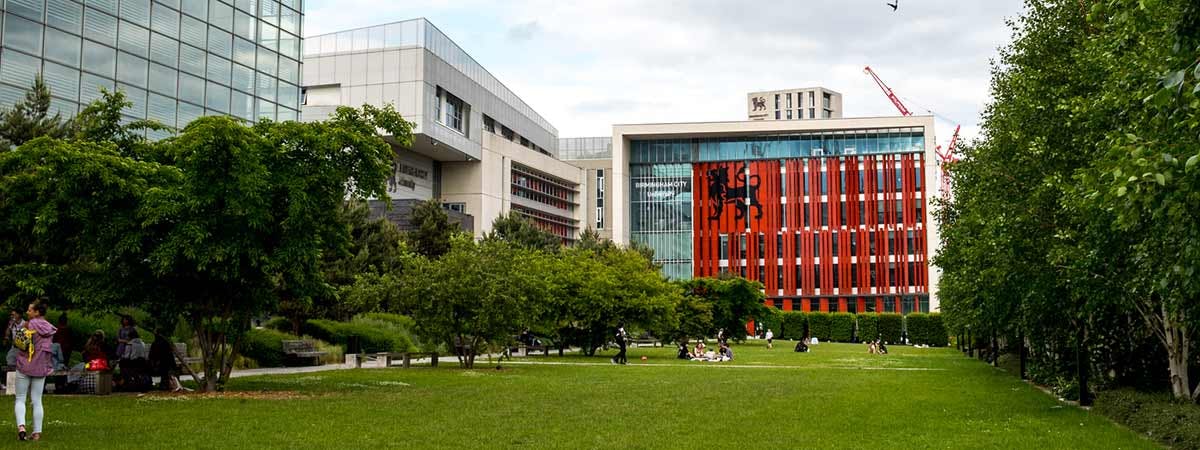
Our Facilities
When you join Birmingham City University, the first thing you will notice is the high standard of our campuses.
With an investment of over £400 million across our buildings and facilities, we are committed to giving you the very best learning environment to help shape your experience.
State-of-the-art facilities
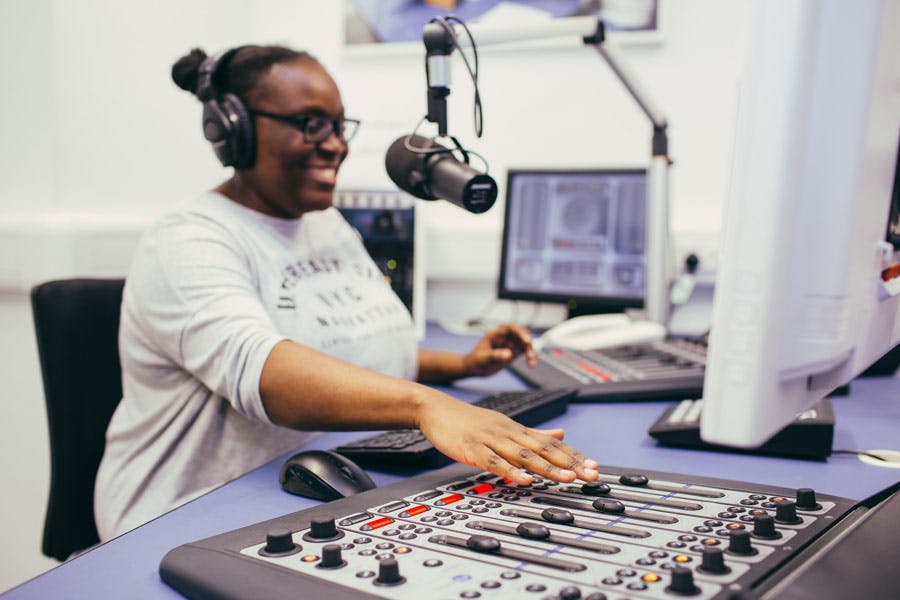
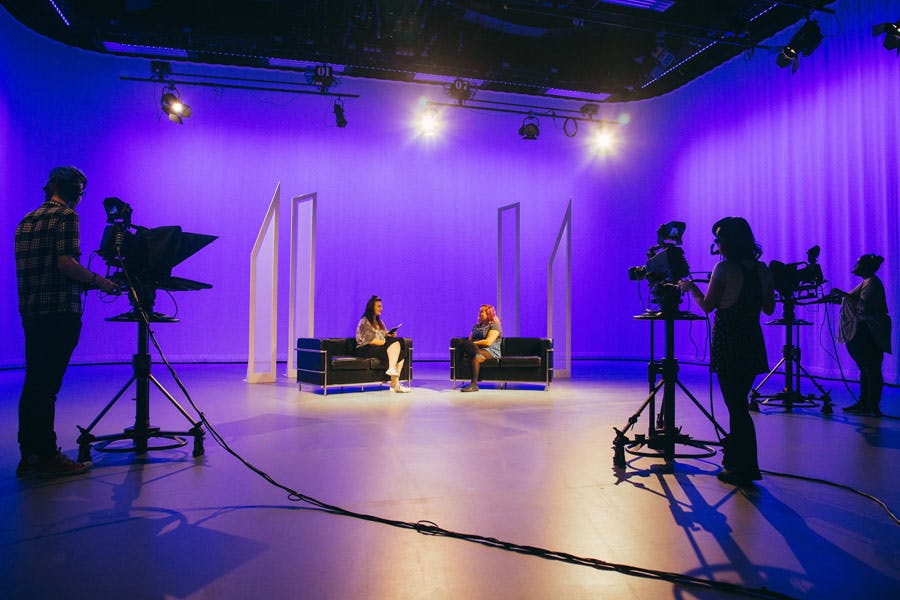
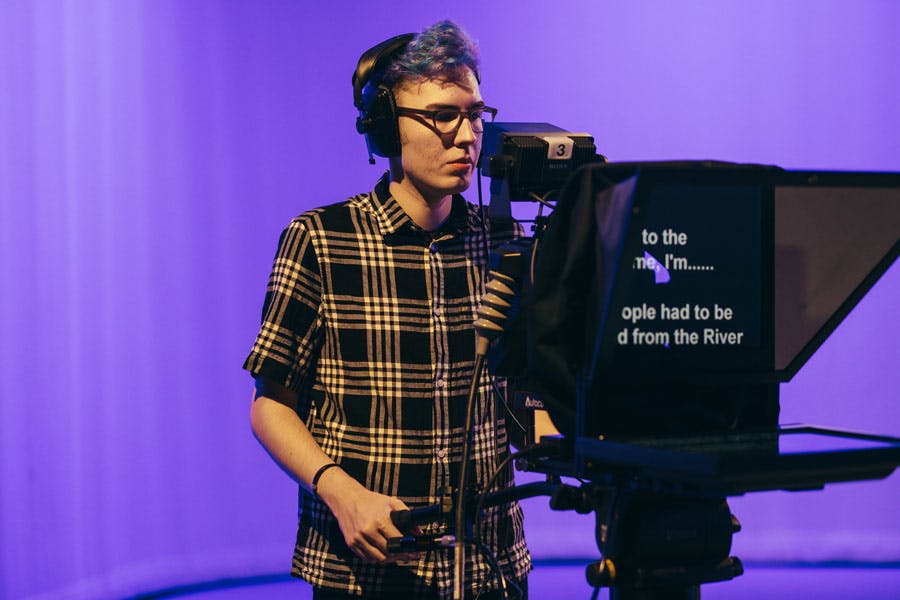
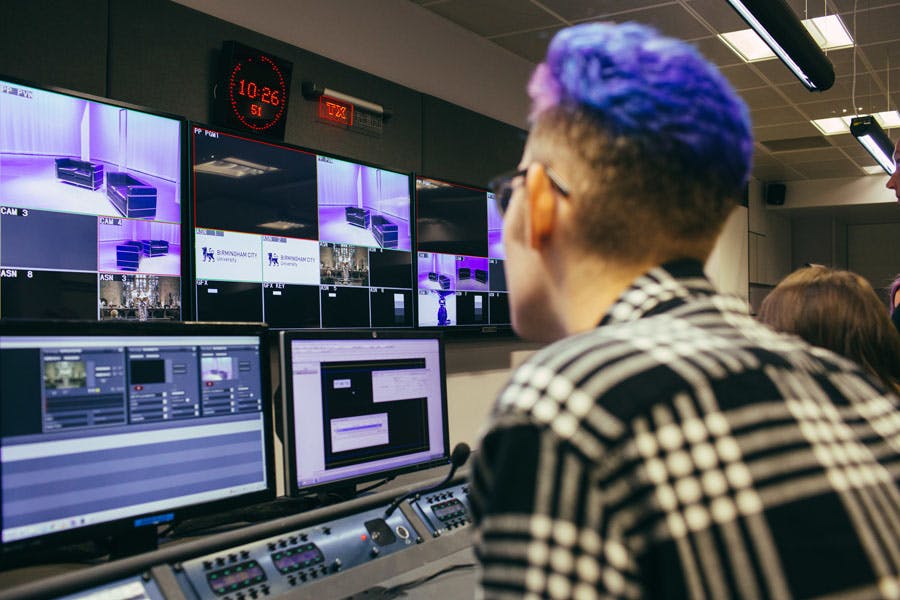
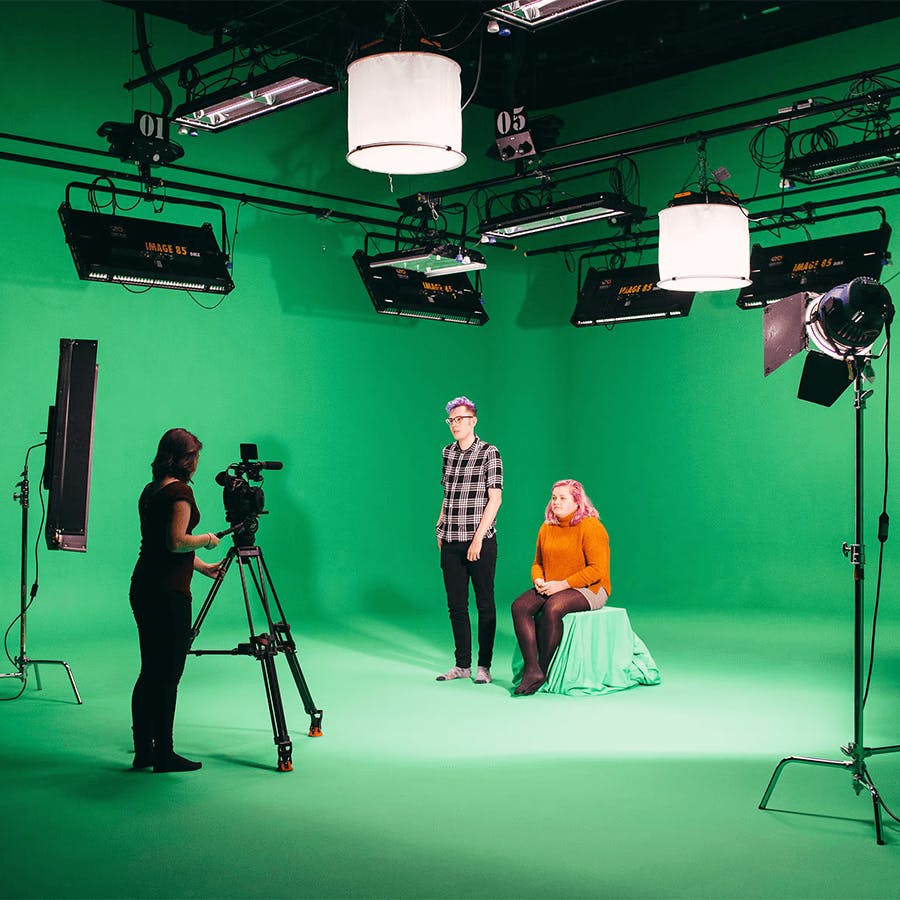
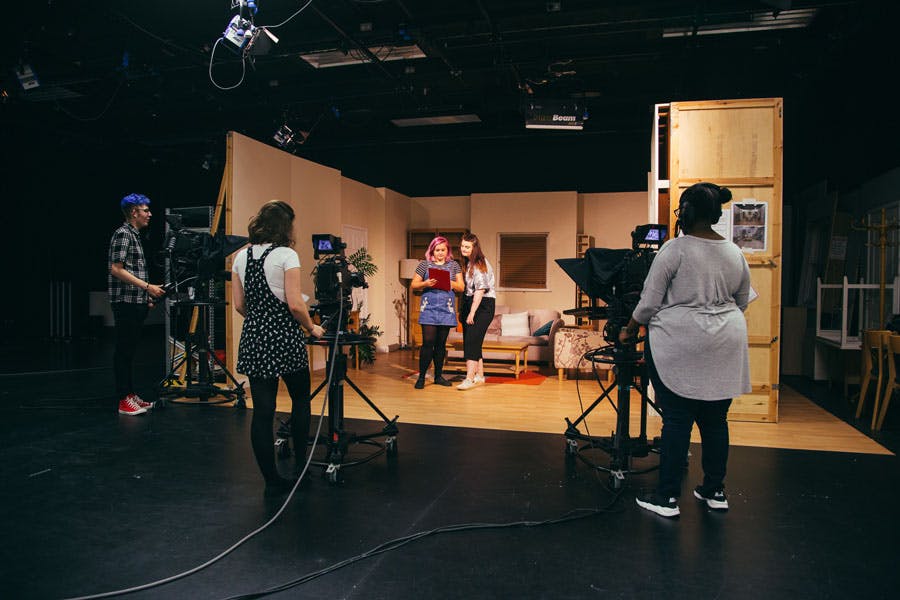
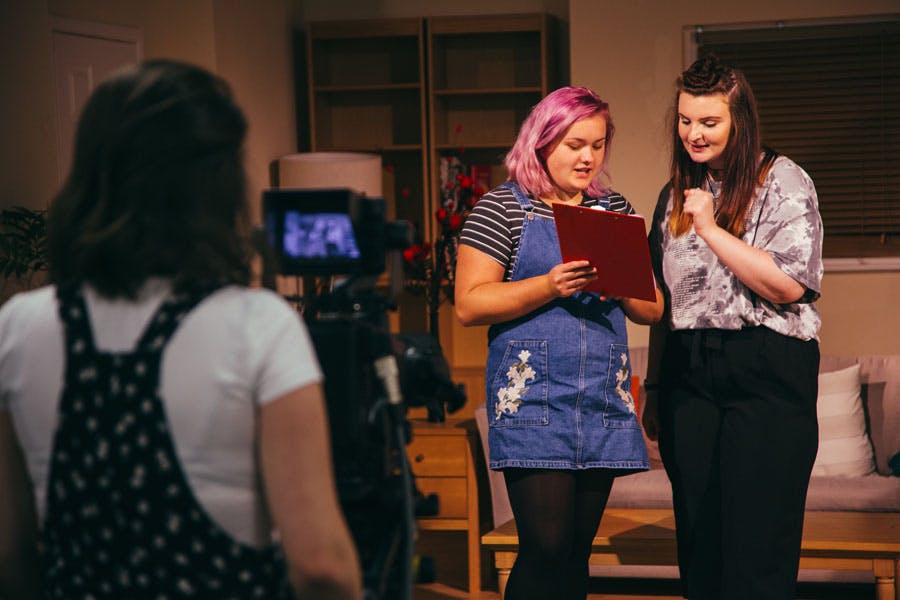
You will learn in our state-of-the-art facilities - including the £62m fully-digital Media Centre - located on the City Centre Campus. You will enjoy access to extensive studio and workshop space including four TV studios, six radio studios and broadcast-standard edit suites, as well as cutting-edge equipment and software.
Facilities include the largest TV floor of any university in the UK, a ‘green screen’ and a BOLT JR+ high-speed camera robot.






Our staff
Dr. Hazel Collie
Course Leader - Media and Communication
Hazel Collie teaches on research based modules across all three years of the BA Media and Communication degree. She is the ethical review co-ordinator for BCMCR (Birmingham Centre of Media and Cultural Research) and is the student welfare officer in the School of Media.
More about HazelDr Poppy Wilde
Senior Lecturer in Media and Communication, Course Director for MA Media and Cultural Studies
Dr Poppy Wilde is a Senior Lecturer in Media and Communication and Course Director for the MA in Media and Cultural Studies. Her research focuses on what it means and how feels to be posthuman, by exploring how posthuman subjectivities are enabled and embodied. Her research, sometimes autoethnographic, explores game subjectivities, zombies,...
More about PoppyDave Harte
Deputy Head of English and Media and Associate Professor in Journalism and Media Studies
Dave Harte is Associate Professor in Journalism and Media Studies. He researches the emerging trend of local community ‘hyperlocal’ news websites and has published widely on the subject. Within the School of Media he leads on teaching and learning initiatives and teaches modules on Journalism Studies, Social Media, and Alternative and Community...
More about DaveDr Sarah Wood
Head of English and Media
Sarah Wood holds degrees from JMU, the University of Liverpool, and Birmingham City University, where she gained her PhD. Her research interests are in feminism and science fiction. She has an article on Octavia Butler forthcoming in FEMSPEC and is working on further studies of Butler as well as of Nalo Hopkinson and slave narrative.
More about SarahRoss Hawkes
Ross leads the journalism pathway. He was previously a sports writer, sub-editor, page designer, news reporter, web editor, features writer and editor, before leading Trinity Mirror's digital programme in the Midlands. He also founded and currently runs award-winning hyperlocal website, LichfieldLive, which has been used an example of...
More about RossDr Gemma Commane
Senior Lecturer in Media and Communication, MA Cultural Studies
Dr Gemma Commane is a Senior Lecturer in Media and Communications. Broadly the areas of her expertise span the fields of media and cultural studies and gender and sexuality. Her research interests focus on contemporary cultural studies, gender and sexuality, queer studies, sexual economies and entrepreneurship, dangerous femininities and...
More about GemmaHilary Weston Jones
Lecturer in Professional and Academic Development
Hilary specialises in embedding employability within modules across all years and supporting students with securing work placements. Having spent 24 years working as a Television Production Manager (BBC and Independents), Hilary teaches and mentors students within this area.
More about Hilary