
Criminology - BA (Hons)
Currently viewing course to start in 2024/25 Entry.
Looking to study a criminology degree at university? Our BA (Hons) Criminology course is supported by our close links with local criminal justice organisations in the voluntary, public, and private sectors, including West Midlands Police Force. Make sense of the world of criminal justice by getting the big picture perspective on crime, punishment and victimisation....
- Level Undergraduate
- Study mode Full Time/Part Time
- Location City Centre
- Award BA (Hons)
- Start date September 2024
- Fees View course fees
- School School of Social Sciences
- Faculty Faculty of Business, Law and Social Sciences
This course is:
Available with Professional Placement year
Open to International Students
Overview
[00:00:09] Caitlin I looked around so many different universities, and I was like what is the one that kind of stands out to me. And the reason I chose Birmingham City University was the security studies side of that course. It delves so much deeper into security studies than any other university did. And then on top of that, obviously Birmingham has fantastic facilities. There's great lecturers with specialities and something for everybody as well. Like, you always feel like you fit in whether that's in the course or something else externally in societies. Plus, I loved Birmingham as a city.
[00:00:39] Caitlin So one of the great opportunities I've gained through being part of criminology society is we're actually going on a trip to Shrewsbury Prison, hopefully next semester and we're going to be toured around by an ex-prison officer and get to sort of learn the practical world of criminology in the real life. Get to learn prison experiences, do activities such as escape rooms and crime scene activities, so something practical based on what we learn.
[00:01:03] Leannah There's a lot of the lecturers that have lots of experience of the outside world and the jobs that we want to get into and have lots of connections, so you always get emails of different opportunities that you have the chance to get into.
[00:01:17] Sophie So the reason why I chose Birmingham City University is just because of the opportunity to be able to volunteer with West Midlands Police and with it being the second biggest force, it was just was a complete benefit for me.
[00:01:28] Tyler So alongside academics on the course, we have former officers who are past superintendents, past Ministry of Defence and Firearms Officers. So it's good to have that kind of academic and practical experience from the teaching team to give their knowledge and their experiences to us.
Looking to study a criminology degree at university? Our BA (Hons) Criminology course is supported by our close links with local criminal justice organisations in the voluntary, public, and private sectors, including West Midlands Police Force.
Make sense of the world of criminal justice by getting the big picture perspective on crime, punishment and victimisation.
This course aims to develop knowledge and understanding of the core schools of criminological thought, their historical and political foundations and practical application.
What's covered in this course?
Our curriculum offers you a variety of subjects, through which you will be able to develop your interests before focusing on specialised fields within criminology, such as homicide and harms of the powerful. This is an exciting and dynamic course that explores real-world problems, focusing on cutting edge and topical issues relating to crime and social justice.
The course uses research-informed teaching and learning to develop a range of transferable academic and practical skills which will be attractive to employers. The course also uses external visits, as well as unique assessments to enhance your understanding of the discipline.
The course's real-world applications are supported by its close links with local and national agencies, including police forces, charities, criminal justice agencies, probation service and prisons. You will have opportunities to gain work experience with relevant organisations, and there is an option for you to undertake international study.
You will be taught by expert staff in the fields of criminology, policing, and security, and you will also enjoy regular guest lectures from highly influential voices in the discipline.
Professional Placement Year
This course offers an optional professional placement year. This allows you to spend a whole year with an employer, following successful completion of your second year, and is a great way to find out more about your chosen career. Some students even return to the same employers after completing their studies.
If you choose to pursue a placement year, you will need to find a suitable placement to complement your chosen area of study. You will be able to draw on the University’s extensive network of local, regional, and national employers, and the support of our Careers teams. If you are able to secure a placement, you can request to be transferred to the placement version of the course.
Please note that fees are payable during your placement year, equivalent to 20% of the total full-time course fee for that year.
Why Choose Us?
- We aim to infuse learning with exposure to real-world experiences. Through participation in the Social Impact Hub, we give students the chance to work on real-life projects. These offer a unique opportunity for students to gain this invaluable experience while they study.
- We pride ourselves on being the University for Birmingham and our commitment to contribute to the city and local community. As part of this commitment, we have forged strong links with local organisations across the city and many graduates end up playing valuable roles in the local community.
- We have strong links with West Midlands Police and regularly welcome serving officers and experts to give guest lectures and provide opportunities for exposure to real-world activities.
- We have a strong focus on employability and through placement opportunities and our links with local businesses, we aim to ensure you graduate not only with your degree but also with the skills and knowledge needed to embark on your chosen career.
- Each module receives a guest lecture from a professional expert in that field.
- The course team has valuable links with the regional criminal justice system and leading non-Government organisations, including therapeutic prison HMP Grendon, where the University holds an annual debate.
Open Days
Join us for an on-campus Open Day where you'll be able to meet us in person. Booking for the next event isn’t open yet. Register your interest below and we’ll email you as soon as booking goes live.
Next Open Day: 29 June 2024
Entry Requirements
These entry requirements apply for entry in 2024/25.
All required qualifications/grades must have been achieved and evidenced at the earliest opportunity after accepting an offer to help confirm admission and allow for on-time enrolment. This can also include other requirements, like a fee status form and relevant documents. Applicants can track their application and outstanding information requests through their BCU mySRS account.
112 UCAS tariff points
Please note: If you qualify for our BCU Accelerate scheme, you could receive an offer that is two grades below our normal entry requirements. Find out more about BCU Accelerate.
If you have a qualification that is not listed, please contact us.
Fees & How to Apply
UK students
Annual and modular tuition fees shown are applicable to the first year of study. The University reserves the right to increase fees for subsequent years of study in line with increases in inflation (capped at 5%) or to reflect changes in Government funding policies or changes agreed by Parliament. View fees for continuing students.
Award: BA (Hons)
Starting: Sep 2024
- Mode
- Duration
- Fees
- Full Time
- 3 Years
- £9,250 in 2024/25
- Apply via UCAS
- Part Time
- 5 Years
- Show fees
- £1542 per 20 credits
- Year 1 - 80 credits
- Year 2 - 80 credits
- Year 3 - 80 credits
- Year 4 - 80 credits
- Year 5 - 40 credits
Fees for Part-time students
This course can be studied on a Part-time study basis. The cost per year of study is based on credit requirements for that year.
International students
Annual and modular tuition fees shown are applicable to the first year of study. The University reserves the right to increase fees for subsequent years of study in line with increases in inflation (capped at 5%) or to reflect changes in Government funding policies or changes agreed by Parliament. View fees for continuing students.
Award: BA (Hons)
Starting: Sep 2024
- Mode
- Duration
- Fees
- Full Time
- 3 Years
- £16,085 in 2024/25


Guidance for UK students
UK students applying for most undergraduate degree courses in the UK will need to apply through UCAS.
The Universities and Colleges Admissions Service (UCAS) is a UK organisation responsible for managing applications to university and college.
Applying through UCAS
- Register with UCAS
- Login to UCAS and complete your details
- Select your course and write a personal statement
- Get a reference
- Pay your application fee and submit your application
Guidance for International students
There are three ways to apply:
1) Direct to the University
You will need to complete our International Application Form and Equal Opportunities Form, and submit them together with scan copies of your original academic transcripts and certificates.
2) Through a country representative
Our in-country representatives can help you make your application and apply for a visa. They can also offer advice on travel, living in the UK and studying abroad.
3) Through UCAS
If you are applying for an undergraduate degree or a Higher National Diploma (HND), you can apply through the UK’s Universities and Colleges Admissions Service (UCAS).
You can request a printed form from your school or nearest British Council office. You will be charged for applying through UCAS. Birmingham City University’s UCAS code is B25 BCITY.
Personal statement
UK / EU students are required to submit a personal statement as part of their application for this course.*
The personal statement gives you a crucial opportunity to say why you’re applying and why the institution should accept you.
Here are the key areas you’ll need to address:
- Course choice - Why does this course appeal? What areas are of particular interest?
- Career plans - If you have a specific career in mind, say how your chosen course will help you pursue this goal.
- Work experience - Mention any work that is relevant to your subject, highlighting the skills and experience gained.
- School or college experience - Highlight skills gained at school/college, eg summer schools or mentoring activities.
- Non-accredited skills or achievement - eg Duke of Edinburgh Award, Young Enterprise scheme.
You should also mention your future plans – if you’re planning to take a year out, don't forget to give your reasons. Talk about any subjects you’re studying that don’t have a formal assessment and any sponsorships or placements you’ve applied for. And don't be scared to add in details about your social, sports or leisure interests.
Worried about Personal Statements?
If you've got no idea where to start or just want to check you're on the right track, we’ve got expert advice and real examples from our students to help you nail your personal statement. You can even download our ultimate personal statement guide for free.
*Non-EU students are not required to submit a personal statement when applying for this course.
Course in Depth
First Year
In order to complete this course, you must successfully complete all the following CORE modules (totalling 120 credits).
This module explores and examines the origins of criminology, highlighting some of its key debates and concepts. It will outline what are often considered the core perspectives and theories related to crime and criminality. The module will provide you with an introduction to the history and development of criminology and will help you to appreciate the ‘rendezvous’ nature of the subject – or in other words, how subjects such as history, sociology and law have aided our understanding of crime. You will be encouraged to consider some of the most important criminological questions, namely, what is crime; why do people commit crime; and what can be done to prevent or reduce the level of crime in society?
In this module you will explore the relationship between various media forms and crime, offending and victimisation. This module engages with both fictional, and non-fictional representations of crime and locates them within relevant theoretical perspectives. In exploring news representations of crime, we adopt a critical lens to examine the role of the media, paying particular attention to gendered and racialized portrayals of crime. As such, we draw on the concept of ‘news values’ to examine the different values that are prioritised when constructing news media.
This module will be focused on helping you to develop your criminological imagination. It will give you the tools to be able to recognise how major developments in criminology relate to the social and political context of historical moments. Topics include major historical eras such as the Enlightenment, the Industrial Revolution, and major shifts in the economy from the Post-War State to the rise of Neoliberalism, as well as changes in social attitudes and demographics through social movements like labour, feminism, anti-racism/imperialism, and LGBTQ+ activism, as well as immigration, the rise of surveillance, and environmental politics.
This module provides you with an overview of the Criminal Justice System from point of entry to rehabilitation, and the roles and responsibilities of different actors within the system. You will develop an understanding of the evolution and structure of the different components of the Criminal Justice System. You will critically engage with the political, social, and economic factors which influence the delivery of justice and the consequences of these for suspects, victims, and wider communities. We will explore how gender, race, class, and other socio-economic circumstances influence the encounters and experiences of those within the Criminal Justice System. The module will critically engage with contemporary debates and issues surrounding the purpose our Judicial System. You will also learn how to access and interpret statistics on those who encounter the Criminal Justice System and the implications of these.
The aim of this module is to explore research, theories, and contexts that shape policing, investigation and society. You will examine the origins of policing and investigation, the role and function of policing, its structure, contemporary policing issues and debates, informed by academic literature and research. You will study the broader principles of policing, together with police responses to crime and examine the political context of policing linked to broader notions of social regulation and control. The module introduces you to the history, development, and application of policing as an academic discipline. Policing does not exist outside of society and as such, you will gain an understanding of the role of media (including social media), technology and ever-changing societal attitudes.
This module introduces you to the discipline of Security Studies. The module provides an overview of different theoretical approaches to the study of security, the historical development of the discipline, and a range of relevant and contemporary topics such as terrorism, global security, environmental security, and cybersecurity. Security is an area of tremendous contemporary and international significance, this module aims to provide you with the requisite knowledge and understanding to appreciate the international and contested nature of the concept, key areas of debate in the field and the manner in which security physically and symbolically manifests itself in the world.
Second Year
In order to complete this course, you must successfully complete all the following CORE modules (totalling 80 credits).
This module will explore, examine, and critique relevant criminological theories in the way we understand the trajectories associated with the cessation of criminal behaviour, paying specific attention to ‘desistance’ and ‘re-entry’. It will further locate desistance and re-entry within wider debates in relation to crime and punishment as a whole.
Traditionally criminology has focused on those who perpetrate harm and given far less attention to those who experience harm, and this module seeks to address this discrepancy. This module will give some consideration as to why some events which cause harm are formally labelled and treated as crimes when others are not, and in doing so we will consider the impact of this upon those who experience these harms.
This module is designed to develop learners’ understanding of the emergence and development of key theories of punishment through an exploration of the history of penal theory and its contemporary challenges and controversies. Furthermore, this module seeks to refine and expand upon traditional theoretical perspectives of punishment and the current reliance upon imprisonment as a dominant form of punishment in England and Wales. In doing so, it requires students to critically engage with some of the limitations of such an approach.
This module is designed specifically to make you a confident social researcher, prepare you for writing an undergraduate dissertation, and enhance your employability, particularly project management skills. You will have a chance to engage with major and emerging methods of researching criminological, policing and security issues. The module will encourage you to think critically about choosing appropriate research approaches, ensuring ethical conduct, designing and using data collection tools, analysing data, communicating and disseminating your research, and managing projects. All these skills are what employers expect from criminology graduates.
In order to complete this course, you must successfully complete at least 40 credits from the following indicative list of OPTIONAL modules.
In this module we will take a critical look at the shifting nature of crime, social contexts, and the impact of crime on space and place as linked to the urban city as a social milieu. We will also investigate the nature of contemporary city living and how this is experienced across intersections of identity, and what this means for vulnerabilities to being victims of crime or being led into criminal pathways. We will also look in detail at forms of criminological theory and consider newer emergent aspects of cultural and critical forms of criminology
Youth Crime and Justice aims to equip students with a sound theoretical knowledge of juvenile offending and justice. In essence, the understanding of the complex relationship between young people and criminality fits within the wider aims of the degree programme and associated pathways as it draws on sociological, psychological and criminological understandings, furthering students’ ability to understand and problematize crime and its causes. The module also recognises that the separate and distinct administration to criminal justice to young people is a topic worthy of consideration in its own right, and considers important debates around justice, welfare, education and the construction of youth and childhood. It takes both a contemporary and historical focus, considering how the nexus of crime, control and youth have variously been considered during different historical periods.
This module considers the role of forensic science in criminal investigations. You will examine a variety of methods and practices of forensic science, including crime scene analysis, DNA evidence and blood spatter analysis, and will discuss how these are interpreted to solve criminal cases. You will explore the theories and academic debates surrounding current practice.
Black theoretical perspectives and debates on crime, criminal justice, and criminology are seldom heard, seen, or referred to, within so called ‘mainstream criminology’. A possible explanation pertaining to this ‘invisibility’ could be as a consequence of ‘implicit biases’ within the discipline itself. It is argued that these implicit biases further reproduce and reinforces privilege of some perspectives, whilst at the same time subordinating others. Russell (2002) calls for the development of a ‘black criminology’, Phillips and Bowling (2003) further call for the need to develop ‘minority perspectives’ in criminology, whilst Glynn (2018) sees the need for a Critical Race Criminology to transcend the current subordinate status of non-white criminological perspectives.
This module provides you with an opportunity to critically engage with key aims of your course by examining contemporary debates that surround the phenomenon of homicide. You will be introduced to various theoretical perspectives and case studies, focusing on both historical and contemporary examples of homicide, in order to achieve an informed understanding of this unique form of offending. By presenting both a theoretical discussion and real-life cases, you will be able to develop knowledge and a critical understanding of criminology and related disciplines both in theory and practice.
This module seeks to enable you to examine the nature of both illegal and legal drugs. Within this remit the evolving and ever changing nature of both how substances are supplied and consumed will be discussed. How such substance use/misuse is linked to various forms of deviancy and crime will be considered. To enable a rounded perspective of the subject to be garnered, the content will be global in scale, with the development of the ‘war on drugs’ and related criminal justice policies included. Finally, contemporary issues in both supply, demand, official policy and practice will be at the fore, raising questions around the nature of illicit substance usage.
All core modules are guaranteed to run. Optional modules will vary from year to year and the published list is indicative only.
Professional Placement (Optional)
In order to qualify for the award of BA (Hons) Criminology with Professional Placement Year you must successfully complete the following module.
This module is designed to provide you with the opportunity to undertake a credit bearing, 40- week Professional Placement as an integral part of your Undergraduate Degree. The purpose of the Professional Placement is to improve your employability skills which will, through the placement experience, allow you to evidence your professional skills, attitudes and behaviours at the point of entry to the postgraduate job market. Furthermore, by completing the Professional Placement, you will be able to develop and enhance your understanding of the professional work environment, relevant to your chosen field of study, and reflect critically on your own professional skills development within the workplace.
Final Year
In order to complete this course, you must successfully complete all the following CORE modules (totalling 80 credits).
This module provides students with an opportunity to critically explore the concepts, debates, literature and research relating to rights. It encourages students to develop an informed and systematic approach to thinking about rights and to develop their knowledge of the main theories of rights. Given the centrality of rights to liberal democracy, the module assists students to better grasp the ideological context within which criminological thinking takes place.
With rising prison populations and high rates of reoffending, the problem of how to support people back into the community and thus, help them cease offending has long been ignored in mainstream Criminology. This module, therefore, examines what theories might support this process.
This module provides you with the opportunity to carry out a self-directed, critical investigation of a specific topic relating to Criminology, Policing, or Security Studies.
In order to complete this course, you must successfully complete at least 40 credits from the following indicative list of OPTIONAL modules.
This innovative module will engage your critical thinking to situate emotions at the forefront of contemporary criminological thought by examining the experience and role of emotions in criminal behaviour and criminal justice responses to such behaviours. The approach to emotions within the legal system and criminal justice agencies is often paradoxical. Your module content will draw on diverse theoretical approaches to define emotions and the affective role of emotions in our everyday lives. Building on this, the module seeks to examine the social construction of emotions in comparative British and international contexts. The intersection of emotions, power and gender is central to your analysis of representations of offending and criminal justice policy and practices across cultural and jurisdictional contexts.
The module will examine surveillance and the extent to which everyday life is now subject to an extensive array of monitoring and data collection. The module questions how and why state surveillance practices operate and also explores the extent to which civil liberties and personal freedoms have been affected by recent surveillance developments. We will consider the revelations of Edward Snowden, Julian Assange, as well as theorists such as Foucault and Bentham. The module will expand on how governments, big business and new technologies are aiding and easing the collection of personal and targeted data.
Organised crime has become a significant concern and appears to be on the increase. In this module, you will study contemporary global crimes such as drug and human trafficking, terrorism, illegal arms trading and financial crime through the lens of critical criminology. In addition, you will examine the extent of transnational organised crime, its historicity at a global level and law enforcement responses.
This module is tied to an emergent research field that unites a multi-disciplinary network of academics, researchers and postgraduate students who explore the boundaries of crime, consumption, leisure and deviance. The topic is informed through critical engagement with a range of perspectives intersecting with the sociological interpretations of crime and deviance, drawing on Criminology, Law, Sociology, Urban Studies, Geography, and Leisure and Tourism. The overarching theme of deviant leisure therefore unites a wide range of research areas, including leisure and consumption practices, intoxication, media, urban exploration, sport and violence, dark tourism, the leisure activities of the rich and powerful, deviancy within videogames, and the impact of internet/social media in correlation with issues of criminological and sociological theory.
This module will explore the gendered nature of crime and criminal justice. In doing so, we will consider the gendered perspective of victims, perpetrators and those working within the Criminal Justice System. This module will draw on a broad theoretical framework; including feminist, psychological, biological and human rights perspectives. This module is central to the students’ development of critical appreciation of the relationship between the individual and social aspects of crime and victimisation.
The module will introduce students to the complex world of cyber-crime and issues related to cyber technology and how the police deal with cyber issues from cyber terrorism, cyber bullying and cyber hate. The module will work well alongside the other modules related to security studies where students will examine the rationale of cyber-crimes.
This is a Level 6 optional module which will introduce students to hate crime and issues related to hate crime and how multi-agencies have to deal with such complex issues. It will examine the issue of vulnerable groups such as children, those with a learning disability and people who have suffered anti-Muslim hate and Islamophobia as potential victims of religiously motivated hate crimes.
Harms of the Powerful encompasses the damaging and victimising behaviours perpetrated by privately or publicly operated corporations, as well as the state facilitated legalistic and political responses to these activities. Within criminology and wider academia, we generally fail to scrutinise those who operate within the upper echelons of society – those individuals or institutions with much economic and cultural capital. This module will address such deficiencies by providing a nuanced and holistic overview of the actions of such individuals, organisations and State actors.
All core modules are guaranteed to run. Optional modules will vary from year to year and the published list is indicative only.
Download course specification
Download nowTrips and visits
You’ll have the opportunity to gain a practical insight into the processes of the Criminal Justice System through self-organised visits to prisons, courts and police establishments.
We’re the only university in the country to hold an annual debate at high-security prison HMP Grendon. This unique opportunity offers criminology students the chance to gain an exceptional insight into how criminological theory and practice combine, through direct interaction with inmates.
Employability
Enhancing employability skills
This course is suitable if you wish to embark on a criminal justice-related career, including jobs in the police, revenue and customs, probation, youth justice, community safety and the Prison Service as well as the voluntary sector. It’s also suitable for serving police officers and civilian support staff, customs officers, prison officers and those working in the Immigration and Nationality Service.
Part-time study in Criminology is often followed by people who are already employed within the Criminal Justice System and who are intending to improve their career prospects.
You’ll also develop transferable skills such as analysis and decision making, commercial awareness, accessing information, problem solving, and cultural and political awareness.
These skills are appropriate to a range of careers from teaching to retail management.
We have partnered with the national charity New Bridge to offer undergraduate students the unique opportunity to gain experience in a variety of voluntary roles. You’ll be given an insight into prison systems and how the realities of life in prison at the same time enhancing your skills and experience ready for future employment.
You’ll also gain valuable experience through our Employability Challenge Weeks, as well as our Leadership Challenge programme. Both give you the chance to apply your skills to innovative and exciting projects, industry talks and workshops. You’ll also receive guidance on how to complete application forms and how to write effective CVs.
Placements
You’ll have the opportunity throughout your study to work with a number of organisations such as Centro Safetravel, Citizens Advice Bureau and Victim Support.
Criminology student Leonie Folan is currently working on The Priority and Prolific Offender (PPO) Scheme, which is available to students who choose to take the third year Working in Criminal Justice module.
International
Birmingham City University is a vibrant and multicultural university in the heart of a modern and diverse city. We welcome many international students every year – there are currently students from more than 80 countries among our student community.
The University is conveniently placed, with Birmingham International Airport nearby and first-rate transport connections to London and the rest of the UK.
Our international pages contain a wealth of information for international students who are considering applying to study here, including:
- Explore some of the good reasons why you should study here.
- Find out how to improve your language skills before starting your studies.
- Find all the information relevant to applicants from your country.
- Learn where to find financial support for your studies.
Facilities & Staff
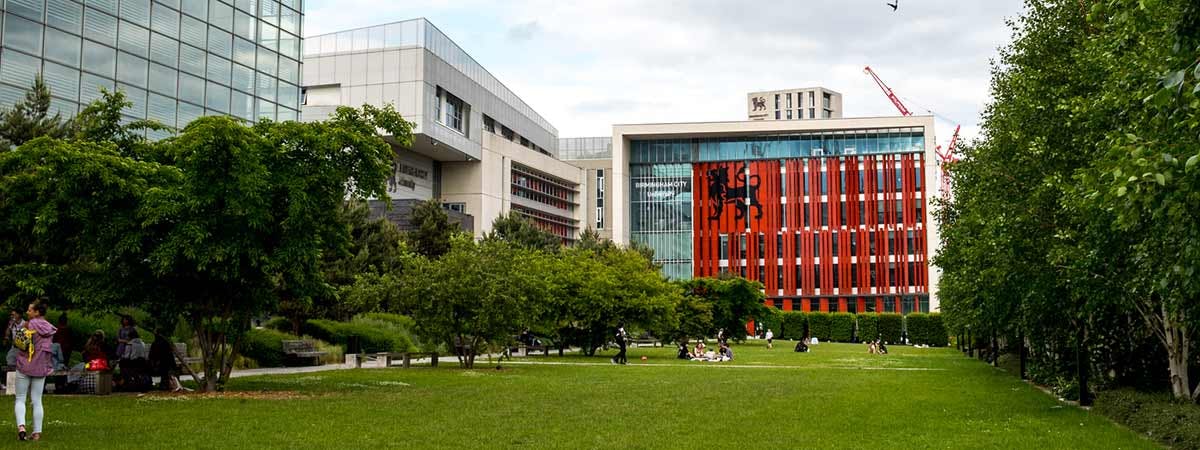



Our Facilities
We are constantly investing in our estate and have spent over £400 million on new learning facilities.
The Curzon Building
This course is based at our City Centre Campus – and specifically The Curzon Building, alongside other social sciences, law and business students.
The £63m building offers students a unique social learning space, including a dedicated student hub incorporating student support services, in the heart of Birmingham’s Eastside development.
Realistic, simulated environments include two mock court rooms, a Magistrates' and Crown Court, and an interviewing suite. We’re also exploring the use of virtual environments as a way to develop case study analysis.
For those studying on the BSc (Hons) Professional Policing or BA (Hons) Criminology, Policing and Investigation degrees, you’ll experience simulations of police interviewing environments for both suspects and witnesses, with access to tape recording and video playback analysis. You’ll also be able to utilise our unique mobile crime scene to simulate true-to-life and interactive situational simulations.
Crime investigation files are prepared using computer-based technology, and the crime data analysis requirements of the degree are supported by appropriate statistical and analytical software.
Psychology students can look forward to using state-of-the-art equipment as well, including the latest in eye-tracking software, and our new EEG machine, all geared towards giving you true hands-on experience with tools you’ll be using in your later career. You will also benefit from facilities across the wider campus including the Parkside and Millennium Point buildings.
The Curzon Building also features:
- An impressive library with access to over 65 million full text items and stunning views of Eastside City Park
- Your Students’ Union which is located in a beautifully restored 19th century pub, The Eagle and Ball
- A modern 300-seat food court with space to study and socialise
- Accessible IT facilities with full Office365 for all students for free
- Shared facilities with the wider campus including the Parkside Building and Millennium Point
Our staff
Professor David Wilson
Emeritus Professor
David Wilson is an expert on serial killers through his work with various British police forces, academic publications, books, and media appearances.
More about DavidProfessor Elizabeth Yardley
Professor of Criminology
Professor Elizabeth Yardley is passionate about making a difference to the lives of those affected by violence and challenging the myths and stereotypes around crime.
More about ElizabethProfessor Imran Awan
Professor of Criminology
Professor Imran Awan is one of the country’s leading criminologists and experts on Islamophobia and countering extremism.
More about Imran