About Birmingham City Business School
Birmingham City Business School is built on business. Part of Birmingham City University, we have a unique relationship with the extraordinary city we’re rooted in, renowned for its entrepreneurial and commercial past, present and future.
Building your career
With us, everything starts with business. So we provide you with the building blocks for a successful career, by developing your skills for life as well as teaching you what you need to learn for work. Business can’t be studied in isolation.
So we deliver work-integrated learning, going beyond connecting you with business alone. Through short projects, long placements, partnerships with business and all the right accreditations, you start your career the minute you walk through our door.
Birmingham and beyond
Business demands innovation and performance. So our research is applied and relevant to the organisations around us, as well as further afield.
With us, so much is informed by Birmingham’s distinctive economic profile and the wider world of business beyond. Our subjects and courses include what you’d expect of a business school, and so much more.
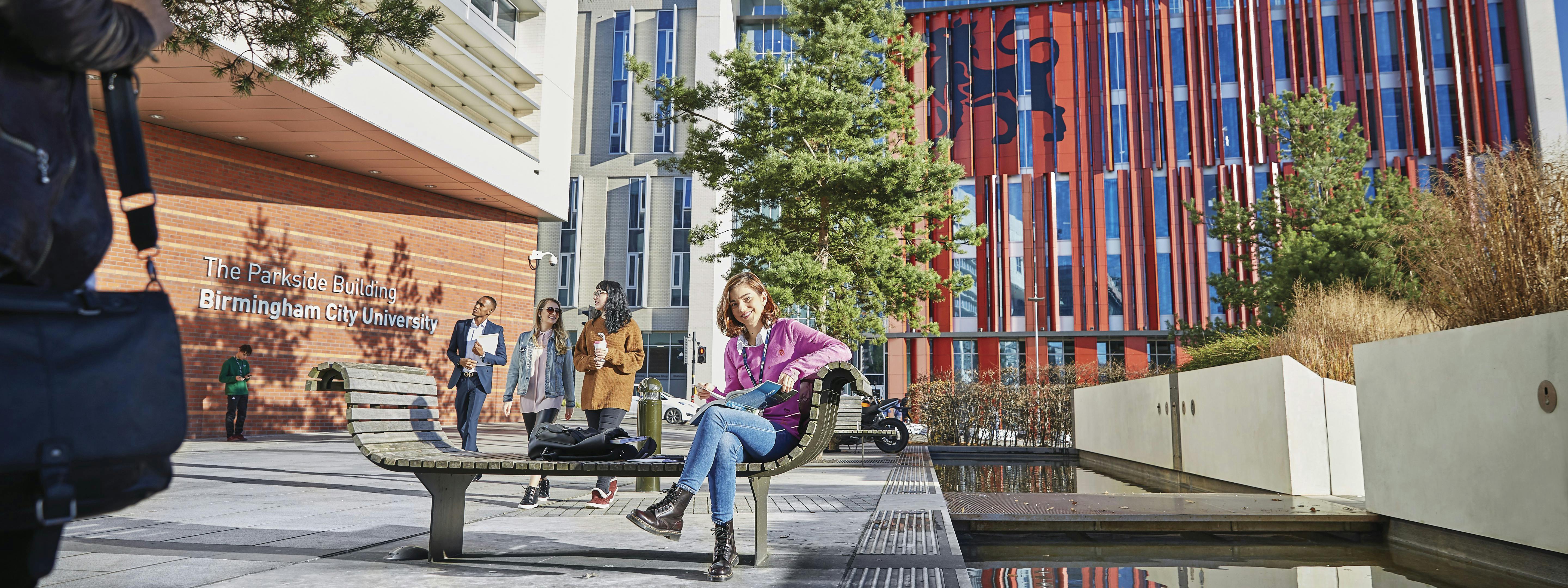
Walk around our stunning city centre campus. You’ll find us at the heart of the renaissance of our world-leading city, where energy and ambition meets opportunity. Join us and become a part of it.
Placements
A business placement gives you hands-on industry experience and the ability to connect with professionals in your field of interest.
More about placementsOur Staff
Our staff come from far and wide, from experienced industry leaders to top-class researchers.
Our City
Our City Centre Campus is a multi-million pound centre of excellence in the heart of Birmingham’s Eastside development.
More about Birmingham